What is a socialist?
No, it is not someone who wants to take away your land, your job, your religion, your farm, your house, your vehicles, your guns, your business, your freedom, or anything else we hold dear as Americans.
No, they are not anti-American. They're like many Americans, like democracy, fireworks, eagles, that awesome picture of Teddy Roosevelt riding a moose, George Washington, Abe Lincoln, apple pie, good steak (I have nothing against vegetarians), great pizza, whether it be from New York or Chicago, freedom, Captain America, peanut butter and jelly sandwiches, and the colors red, white, and blue, as much as anyone else in this great land of ours.
No, they do not endorse the actions of the USSR, China, North Korea, Nazi Germany, or any other dictatorship that has called itself socialist.
And no, they are not necessarily hippies, hipsters, or Communists.
Now that those misconceptions are cleared up, let's talk about socialism.
The fact that I had to clear up these misunderstandings means two important things: that it has been manipulated by powerful people throughout history, and it has been manipulated because it has historically been a popular idea with common people. Socialist ideas, such as free public education, social security, pensions, food assistance programs, workers' rights, public housing, and government-provided health care, have been popular, because they cover major expenses and make life easier and more affordable for the poor and middle-class.
In fact, free public schools, housing, health care, and the other ideas listed above have already been somewhat implemented in America. Since Lyndon Johnson's presidency, we have had Medicare and Medicaid, which provide health care to the elderly and underprivileged. We have free public elementary, middle, and secondary schools already available, and there are also public colleges with lower costs than private colleges. Labor unions, which have been legal since the 1842 case Commonwealth v. Hunt, have paved the way for workers' rights, such as minimum wage, safe conditions, benefits, breaks, maternity leave, and collective bargaining. Nearly all Americans have held a job at least once in their lives, so we know the importance of all workers' rights, because, if we are mostly workers, then workers' rights are nearly everyone's rights, and are a large part of why the United States has one of the best standards of living in the world.
However, not everyone is able to work, because some people have physical or mental disabilities, some are too old or sick, some do not have enough time to juggle raising their children and having a paid job, and others, who are perfectly healthy and free to work, apply for numerous jobs and cannot get one. It's all these reasons—we need programs for the unemployed, disabled, and poor, so that they can pay their expenses instead of going hungry and homeless. I knew the importance of programs like food stamps and WIC in theory, but it was not until I started bagging groceries at a local supermarket, where I have seen countless people who use these programs to make ends meet. These people are not lazy or trying to game the system, as some politicians have said, rather they are trying to sustain themselves and raise their families. These are compassionate, necessary programs that people need to survive.
Indeed, these programs are socialist ideas, in that they are government programs for the benefit of the people. We already have socialist programs in America, at moderate levels. However, all of these have to go further, so we can have a nation of well-educated, well-fed, healthy people who all have a place to live and a place to work.
Moderate and conservative readers are probably wondering how to pay for all of these programs, and that is indeed a very valid question. Fortunately, that complex question got answered about 80 years ago, by Franklin Roosevelt: a New Deal, but in our time. Specifically, reducing the unemployment rate considerably by the government hiring the many who need jobs, to fix national infrastructure.
Full employment sounds well and good, but how would one pay for it? It pays for itself, especially if one raises the minimum wage closer to a living wage or the popular figure of $15/hour, and raises taxes, which people would be able to afford easily if various expenses were supplemented by government programs. Billionaires and corporations would be taxed not only on their wealth and income on American soil, but also on their international savings and business. Businesses would not flee America, because access to American markets is extremely important, as the US is the world's largest economy. However, taxing the rich is not the only way to begin to pay for government programs, because government spending pays for itself. By raising the minimum wage and having nearly full employment, the 99%, who by necessity would put much less into savings and circulate more money back into the economy than the 1%, would spend that money at local businesses, who would pay their employees well, and they would spend the money, in a positive economic cycle. As more people and businesses would be making more money, the tax base would be much larger, so the government would have much more revenue, which would be used to pay for the programs and pay back the trillions of dollars of debt we have acquired by spending without taxing enough.
Socialism, in this way, would balance the budget, while helping job growth and the economy, which liberals, moderates, and conservatives all claim as goals. We all agree that paying back the debt and balancing the budget (the latter happened under Bill Clinton's presidency) are great goals, but there are different approaches to it. Conservatives generally support economic austerity, which means cutting the budget, especially with programs for the poor, but this becomes a negative cycle, because as the amount of taxable income decreases, so too does the government revenue, leading to more cuts, as explained by this video on the Greek debt crisis.
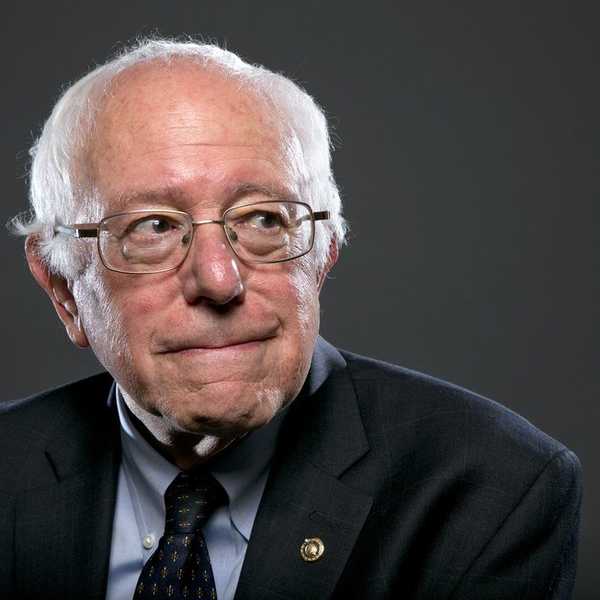
All of these issues are always important, but this year, the idea of socialism is more important than in others, because it is becoming a real possibility that the next President is the independent socialist running in the Democratic primaries and caucuses, Senator Bernie Sanders of Vermont. In 1980, the same year that most of America voted for conservative Republicans and elected Ronald Reagan to the highest office in the land, the city of Burlington, Vermont elected Bernie mayor, who worked with businesses and workers to make the city thrive, and potentially could do the same for the whole nation.