


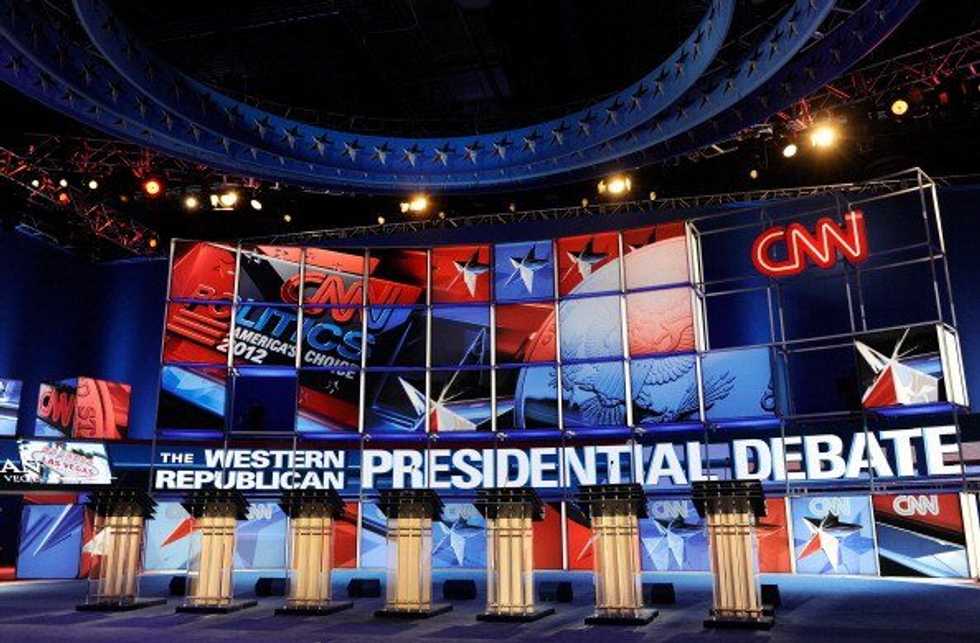
The GOP debate aired at 6 p.m. on Wednesday, September 16. Many venues around town held viewings, but one in particular was filled with Democrats from the University of Montana, including myself.
I became interested in politics only recently, after spending extensive time listening to what “the others” had to say. Nothing gets me more fired up than hearing the lengths that those in power might take in order to ensure that my future is insecure. I recently found that voting, a seemingly small and simple act, has opened me up to an entirely new conversation: politics are important; being a critic matters to the health of our country. I’m not going to lie and say that I have a firm grasp on the ins and outs of foreign policy, economics, social security, etc., but while watching the debate, I found myself doubting whether the men and woman hoping to lead our country did either.
The talking points only left room for a narrow range of topics. Beside the nearly 30 percent of time dedicated to individual questions of “Mr. Trump said [half-assed insult] about you. How do you respond?” the floor made space for other ground-shaking topics such as building a wall at the Mexican-American border, each politician’s personal gains toward defunding Planned Parenthood, how great Reagan was, looking at the cool plane Reagan flew in, whether or not each politician voted for Reagan 30-something years ago, how to do away with vaccinations for good, and wondering why so many people are learning Spanish.
No more than a few minutes, if any, were given to discussing affordable healthcare, affordable education, wage equality, or racial injustice. Instead - and I’ll give Gov. Huckabee the credit for pointing this out - each candidate felt the need to declare his or her own accomplishments. After 10 minutes of this, Huckabee stated that instead of tooting one’s own horn, they should be talking about the accomplishments of the American people (not a direct quote). Thanks for the shout out, Huckabee! If only he hadn't assumed, only minutes before, that women aren’t capable of making their own informed decisions about their bodies.
Next on the list following “Building a Wall” was the best strategy for getting rid of immigrants that are already here. A select few of the GOP want to do away with birthright citizenship, meaning children born on United States soil to immigrant parents will no longer be considered US citizens. The way I see it, the time and money spent on “making America great again” would be better spent “keeping Americans healthy and educated.”
This leads me to my final critique, innate contradiction Republican arguments. First is the idea that we need to make America great again, a slogan coined by Trump. His aim is to turn America into the world power we were during WWII, get the job market booming, and be the cool kids on the playground again. Right now nobody wants to play with us, and for good reason. We don’t play fair. Those same politicians are the ones closing up shop, shipping jobs overseas, and putting themselves on the do-not-call list.
Secondly, the arguments fueled by the idea that all life is sacred. Yes, babies are great, but so are the women that carry them in their wombs for nine months. Since when does a life that a woman (and a man) created have more rights than the woman herself? On top of that, the argument stands that all lives are sacred, unless that life isn’t American. Then we don’t want it here, and no way in hell are we going to pay for it.
As I said before, I entered the political conversation initially because I started hearing values that directly conflicted with mine. I started paying attention to the actions and the words, and as we all know, words are power. So let’s start talking.
The other half of the conversation, The Democratic Debate, airs on October 13, at 6 p.m.

















