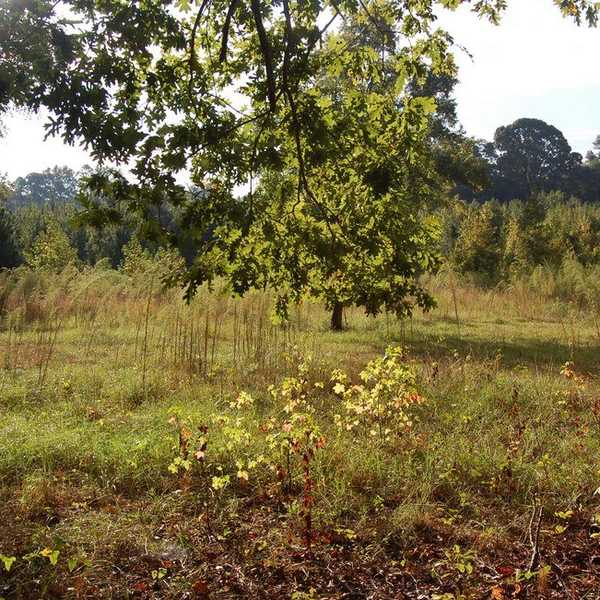

If you visit my family’s property in western Pennsylvania’s Laurel Mountains, you can wander over manicured grounds that wind through a mature forest of oak, maple, ash and hickory trees. In one of the “manicured” zones on the property, you will see a “natural, organic garden.” In apparent contrast, if you visit a property outside Nairobi, Kenya, you will see another kind of “natural, organic garden.” Though supposedly both are “natural,” they both reflect a human hand at work. However, in visiting both gardens, I came to a new understanding of the term “natural.”
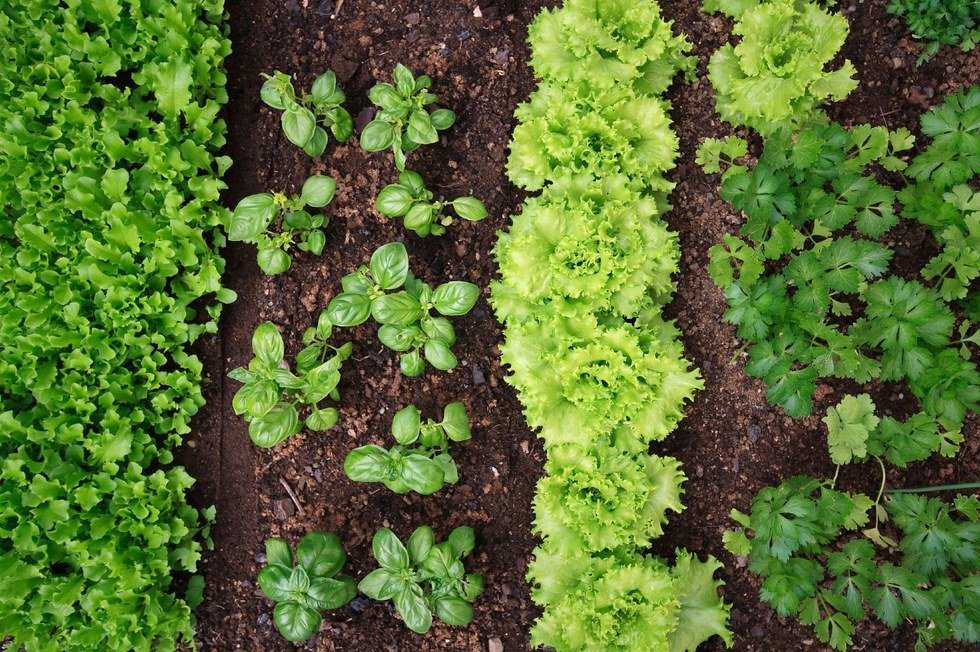
This past summer, my father decided he wanted to plant a pesticide-free garden to provide “natural” food for the restaurants on our property. Rather than put the gardens directly on the soil, he decided that he would place the plants in planters, surrounded by a fence to keep out deer, but lined with walkways for anyone to use. The highly enriched, “natural” soil for the garden’s numerous planter boxes enabled a rapid and magnificent growth.
From that garden I have extracted some of the best cucumbers I have ever tasted, and all seem to be better than the ones I consume from grocery stores. Supplied with water organically from rain and artificially from a hose, the plants in the garden thrive, and the vegetables seem “unnaturally large.” The innate soil sometimes being artificially watered makes me contemplate–how many times do we go throughout the day making perfectly natural commodities artificial? If we choose not to water the plants, will mother nature provide an adequate supply of water for the garden to flourish? Unfortunately, we will not know the authentic answer as we try to hide all of nature’s hiccups via our contrived methods.
At home in western Pennsylvania, I have a substantial choice for foods: I can eat at home from a well-stocked refrigerator or simply go to a restaurant. Food is not only plentiful, but it is incredibly diverse. I can choose from dozens of cereals and the same choices are true of almost any food. I am a product of that affluence and of a “manicured, natural environment.”
Upon awakening in Kenya, I woke to sunlight and looked at an environment that would be my home for the next two weeks. The buildings were like the airport and the roads were rather primitive. The house was a one-floor dwelling constructed of mud brick and topped with a tin roof. There was a doorway but no door. Upon greeting us in the morning, the innkeeper went about making breakfast. Now, this is where her green thumb plays the role.
Outside the home, she had these enthralling prodigious trees. I asked her in a puzzling tone, “What are these huge trees?” In broken English, she responded, “These are my trees, my banana trees, which I take great pride in. You must eat a banana every morning to ensure you have good health the rest of your life.” I did not believe she had so much satisfaction in the trees until I watched her use a long bamboo pole to physically knock down bananas.
In a matter of two days’ travel, I had gone from the polished “natural” garden of Nemacolin Woodlands to the banana trees in Kenya. Sitting beneath those trees, in that ambience, made me realize how close I was to earth. Yet, I knew the banana trees were planted in the same manner Nemacolin’s garden was planted. The human hand is everywhere. I was in a wilderness without really being in a wilderness. The human hand suddenly appears to be an ubiquitous agent.
I wondered as I wandered through the banana trees. Is there really any “natural setting” anymore? Have we so cultivated the planet that we have almost totally transformed it? There I was, not far from the section of the Great Rift Valley where anthropologists tell us humans might have started their journey on the planet and, in that ancient and primitive place, I was eating a banana from a tree.
Each morning in Kenya, I ate a banana. Each morning I awoke in a place without electricity, mirrors and doors. The people around me seemed to live in a harsh reality compared to my home in the “woods” of western Pennsylvania. They had survived there for nearly 200,000 years, maybe eating wild fruit for much of that time, but eventually realizing that they could have their own organic garden. The human hand imposed some order on the environment for the benefit of the human body. After ten thousand generations, humans can now put the plants in neatly lined up boxes in a fenced in area with a beckoning golden statue.
As I sat eating my banana that the innkeeper had freshly knocked from the tree with her long pole, I said to myself, “We’ve come a long way.” Then I realized that I was sitting on the ground eating my breakfast, probably not much different from both pre-humans and the humans who inhabited Kenya long before she and I were born. At that moment I realized that I might be closer to nature than I ever thought when I picked vegetables from my “natural” garden at home. I guess I belong to the planet as a continuation of my species, and I guess my job is to continue cultivating nature, even when I think I am being “natural” in the process.
If humans have been altering nature for 200 millennia, “natural” settings must be very rare. However, with our human hand we can find nature in an organic environment. Yes, sometimes we have to artificially create these setting and convince ourselves they are “natural,” but as we realize our tiny essence in the grand scale of the universe and see our rebirth and regeneration in nature's landscape, we can induce ourselves in a natural setting by not altering their life span or their roadway in life.
We must use our human hand to show oblivious others how fortunate their natural element is–simultaneously, we must draw back our hand after we have already altered nature enough to have a “natural” garden in unnatural soil. There should not be so many modifications to nature that the saying, “Brings me down to earth,” will no longer have a sincere meaning. We need organic soil to truly appreciate and watch plants’ cycle from life to death. Our species has already modified much of the planet. Nature, for its part, has responded by providing us with delicious bananas for breakfast in Kenya and delicious cucumbers for supper in Pennsylvania.