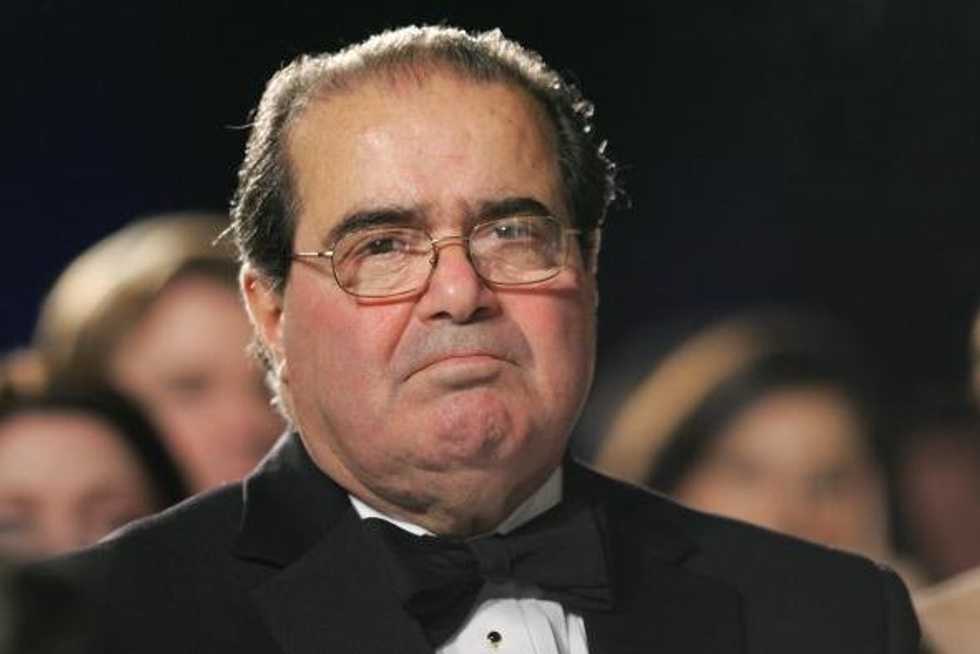
This past weekend, Supreme Court Justice Antonin Scalia died of natural causes at the age of 79. When the news first broke, the messages of sorrow and loss flooded out from people who had known him. After all, Justice Scalia had served nearly three decades on the Supreme Court and seen the making of many laws, court cases and rulings. After the initial shock and grief had subsided, an inevitable debate struck the country. This debate centers around two questions: Who is going to be the next Supreme Court Justice, and will Barack Obama be able to appoint one before his time in office is complete?
Antonin Scalia was a conservative on the Supreme Court, and was no stranger to voting against issues such as same-sex marriage and abortion. Out of all nine justices, there were a total of four conservative judges, two moderates and three liberals.

Since there are a number of very important cases to soon be decided upon, many government officials and members of the judicial system are now very apprehensive about their outcomes due to the fact that things might not go as planned. With eight justices, a 4-4 tie in any case could be affirmed without any reasoning at all. In the mix of cases are controversial topics such as Whole Woman's Health v. Cole where all but 10 abortion clinics in Texas will be closed, or United States v. Texas in which the deportation of four million immigrants hangs in the balance. In cases such as Fisher v. University of Texas, a case that will decide if Affirmative Action used to grant admission is constitutionally equal, some judges might recuse themselves as Elena Kegan has. This leaves only seven judges to decide, with most judges being conservative. In short, the longer Antonin Scalia's position is vacant, the more detrimental to the court's decision-making process an empty chair will become.
Now we get to the part that is really difficult to decipher. The process of deciding a new Supreme Court Justice isn't always common knowledge but, it probably should be considering it is the highest court of law in the country. The President of the United States is given the duty of appointing a new justice, but the Senate has final say and has an outrageous (basically however long they want) amount of time to decide if they accept or deny this new judge. There are other aspects of this including questioning for hours upon hours but, for the sake of understanding the argument the two main parties to look at are the President and the Senate. This is where the new conflicts lie. Usually, Presidents will appoint a person who is politically similar to them. This means President Obama will most likely appoint a judge with progressive-liberal sympathies. Many officials, in reaction to this, are pushing to wait until the next President is sworn in for the Supreme Justice to be decided. This is highly unlikely since President Obama has over 300 days left in office and it has never taken 200 days to elect a new judge, let alone 300.
Yet, GOP Candidates like Ted Cruz stand firm in their effort to say that in a presidential election year it is the duty of the American public to nominate a president to replace Scalia. He even went on to say in the GOP debate that American has gone 80 years not nominating a justice during an election year which proves to be false. Anthony Kennedy was elected in 1988, which was in fact an election year.
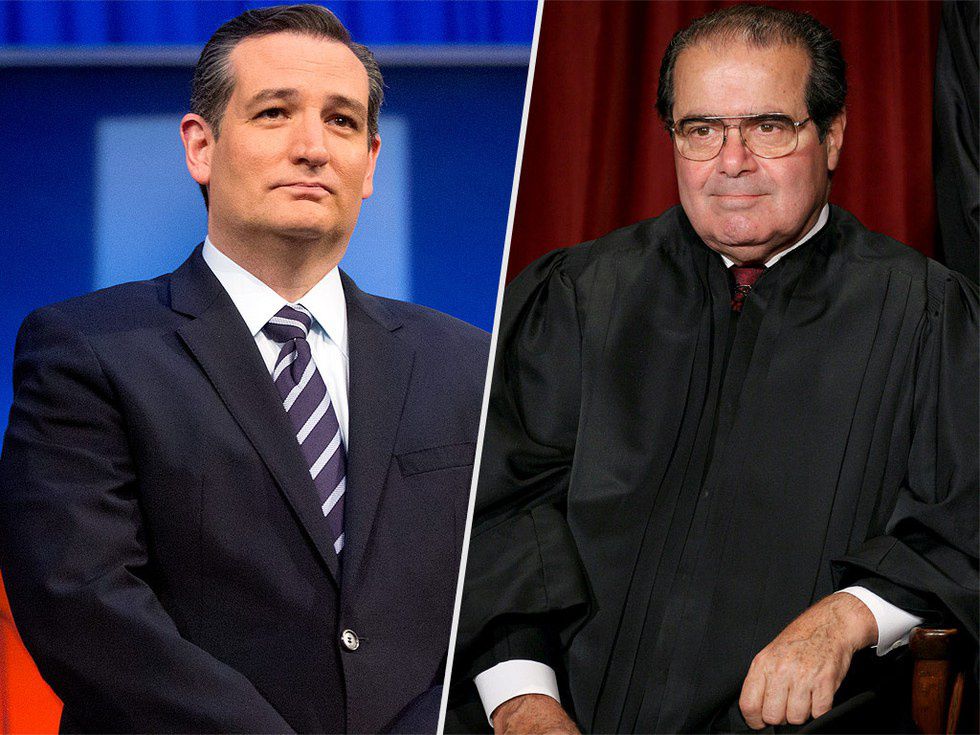 Many people who are conservative like Cruz have stood behind many Republican senators and government officials who say that there should be a waiting period before the new justice is taken, one as long as 11 months just to have someone who isn't Barack Obama. The reasoning is simple: The chance of having another liberal Justice will mean for the first time in quite awhile, the Supreme Court will be composed of more liberal justices than those that lean conservative.
On the opposition of this are people who believe Barack Obama rightfully was appointed President and still has more than enough time to choose. One of the many supporters of this is Elizabeth Warren. In a Facebook post on the U.S Senator's page she wrote:
"...Article II Section 2 of the Constitution says the President of the United States nominates justices to the Supreme Court, with the advice and consent of the Senate. I can't find a clause that says '..except when there's a year left in the term of a Democratic President.'
Senate Republicans took an oath just like Senate Democrats did. Abandoning the duties they swore to uphold would threaten both the Constitution and our democracy itself. It would also prove that all the Republican talk about loving the Constitution is just that — empty talk."
The two sides of this debate are clearly drawn and now what will happen is Senate will try to prolong finding a new Supreme Court justice by shooting down all of Barack Obama's ideas. Ted Cruz has already personally said that's what he would do in this situation, and that seems to be what will happen. As this is seemingly in accordance with the law, there is nothing that can be done to prevent the Senate from continuously rejecting Obama's nominations.
In the end, Barack will most likely get to pick a worthy new justice before the end of his term seeing as it is extremely detrimental to the Supreme Court if the Senate drags this out any further than it needs to go.