Modern weddings have more variety than ever before, but most still hold a few of the same traditions that have survived for so long that few still remember how they started. They stem from a variety of religious, pagan, and cultural traditions, and some...well, there's no telling. For example, weddings in my family involve the wedding parties sneaking off to their respective bathrooms with a bottle of alcohol and singing a surprisingly vulgar song that everyone mysteriously knows the words to. That's one tradition we don't need to know the backstory of.
1. "Tying the knot"
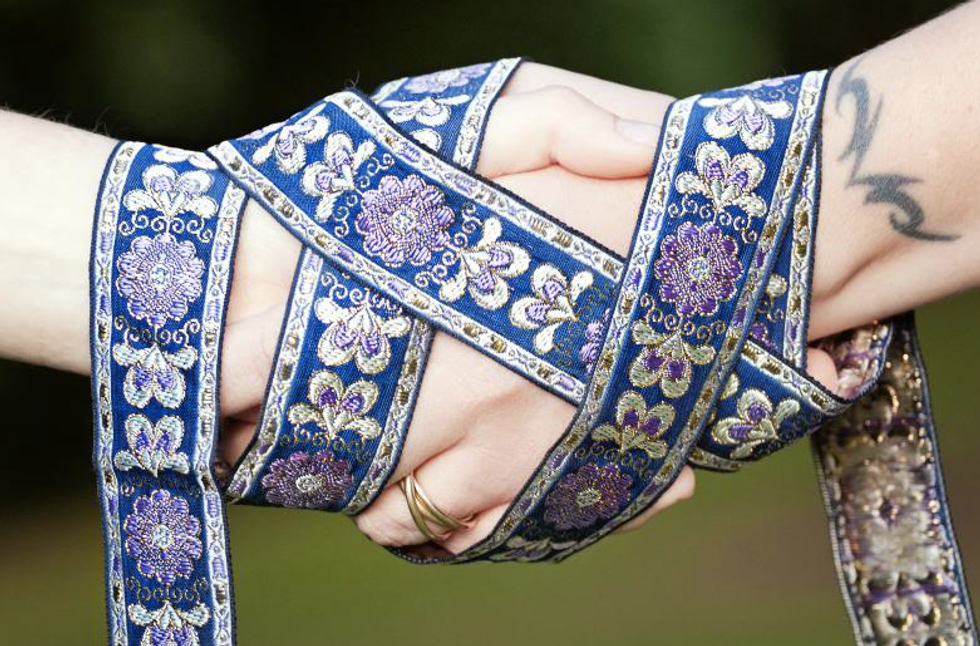
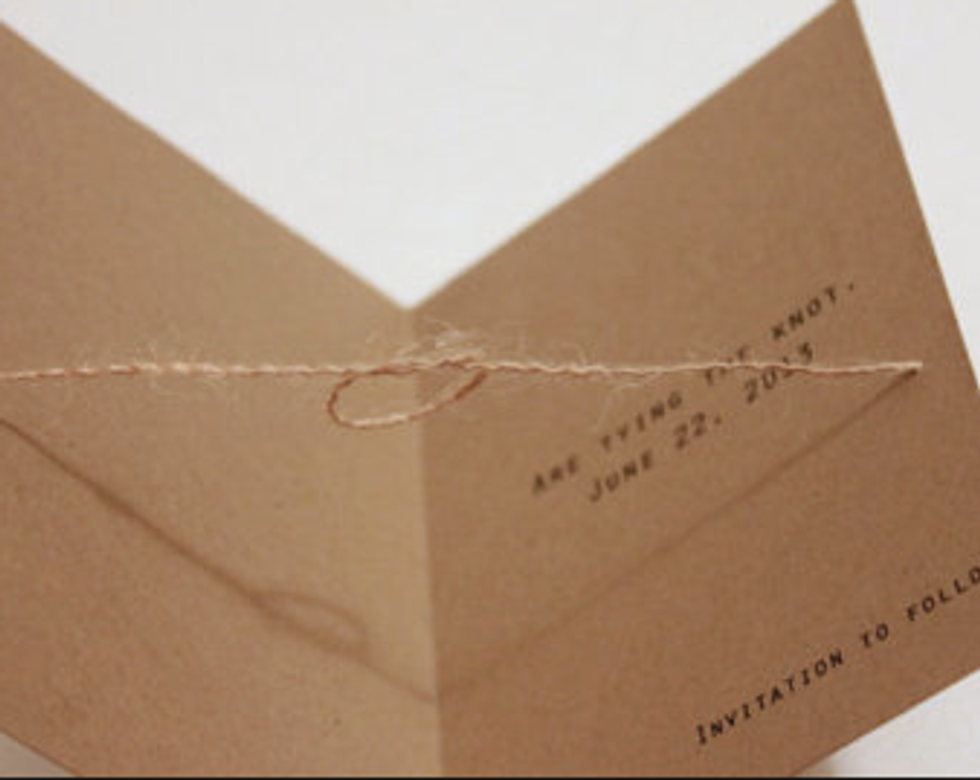 This term comes from the Celtic ceremony known as "handfasting," in which the bride and groom's hands were tied together as a symbol of their contract to stay together for at least one year and one day following the wedding before the marriage was finalized.
Some people like to say that it refers to the knots tied in the bride's girdle that the groom must untie in order to consummate the marriage. Those people would be incorrect.
2. Carrying the bride over the threshold
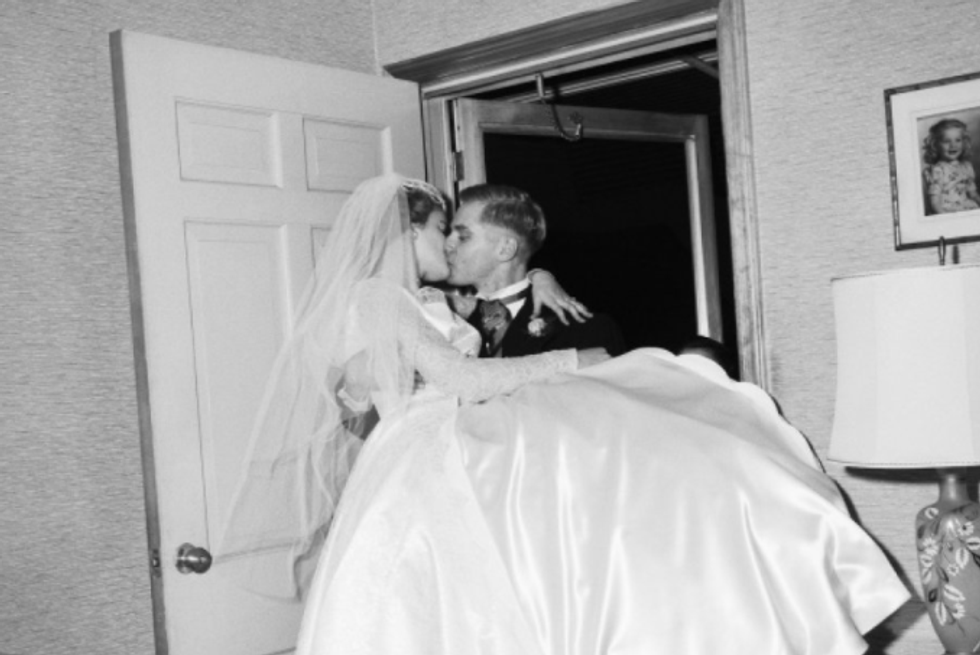
One theory is that it was once believe that evil spirits hovered outside the home in a last attempt to curse the marriage so the groom, ever the gentleman, would carry his bride past them.
The more likely origin of this tradition dates back to the lovely tradition of bride-napping (see #6), when the groom essentially had to drag his new bride to his home.
3. It's a nice day for a white wedding (dress)
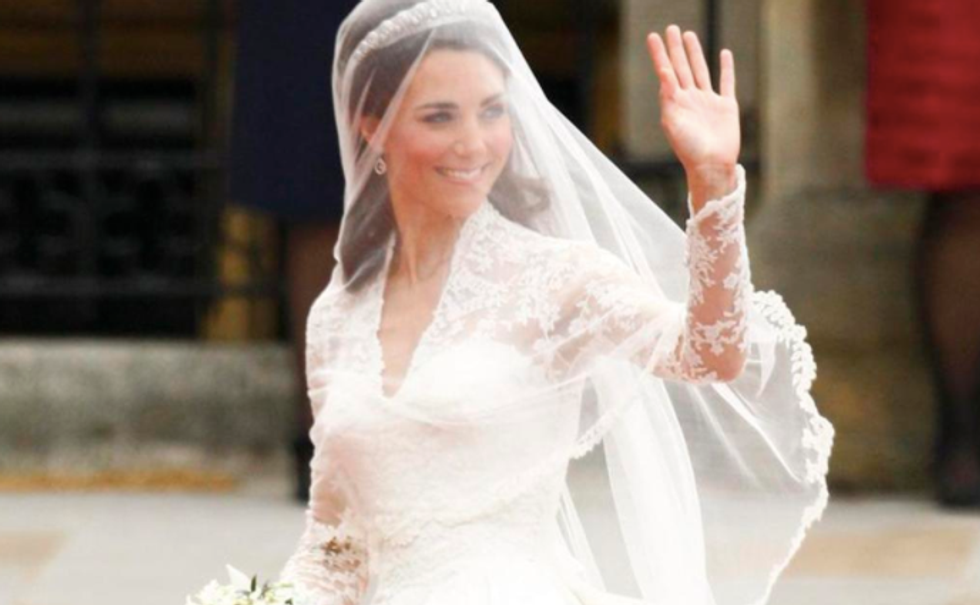
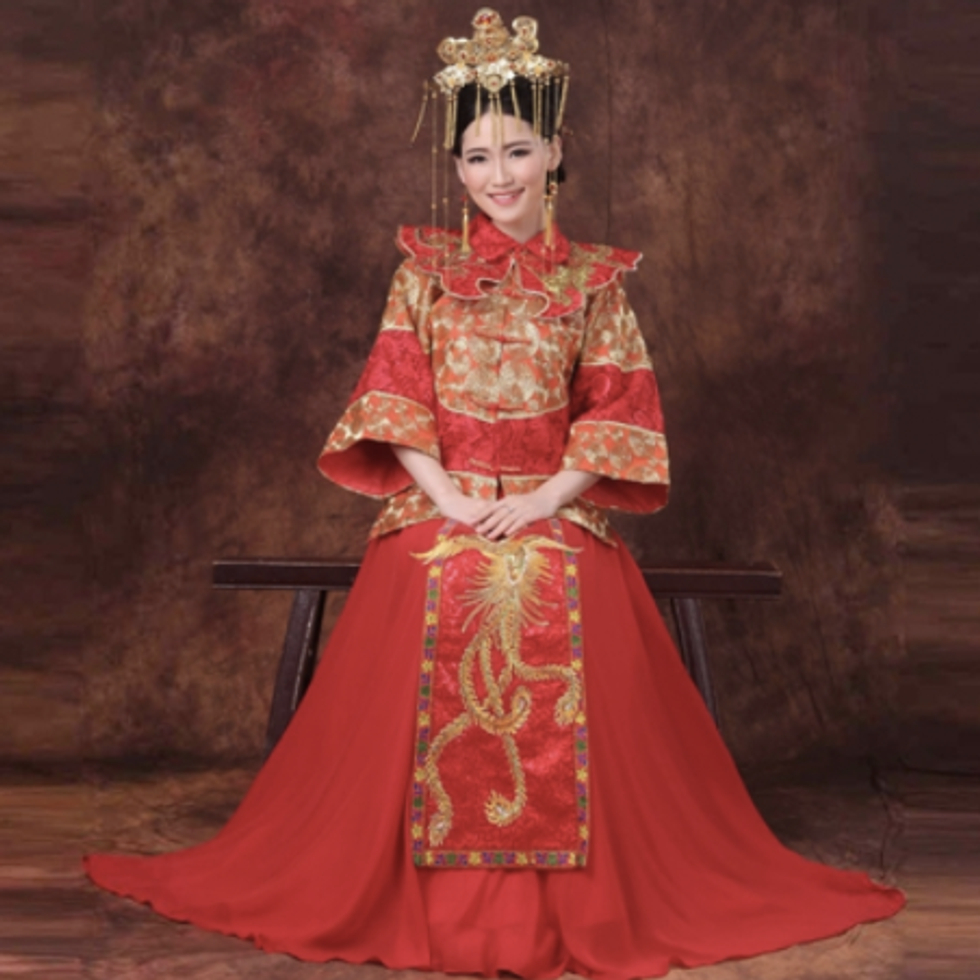
I was surprised to find out that this practice did not stem from the traditionally religious focus on the bride's virginity/purity, but from people simply copying Queen Victoria, who was married in a white wedding gown to incorporate some prized lace that she owned. This tradition has been adopted by the majority of Western brides, while brides in many other eastern countries may still don traditional red gowns.
4. Engagement rings
 Pre-historically, cavemen were thought to have used strands of braided grass or other objects around the mate's wrists or ankles as a way of owning and controlling their spirit. Again with the marking of the "territory"...at least these days we get a diamond out of the deal. The first diamond engagement ring, with diamonds in the shape of an "M," was given by Archduke Maximilian of Austria to Mary of Burgundy. This practice became even more common when diamonds were discovered in South Africa in 1867. The ring is traditionally worn on the fourth finger of the left hand because of an ancient belief that the "vena amoris" ran directly from this finger to the heart, which is a lovely thought but not exactly scientifically accurate.

5. Giving the bride away
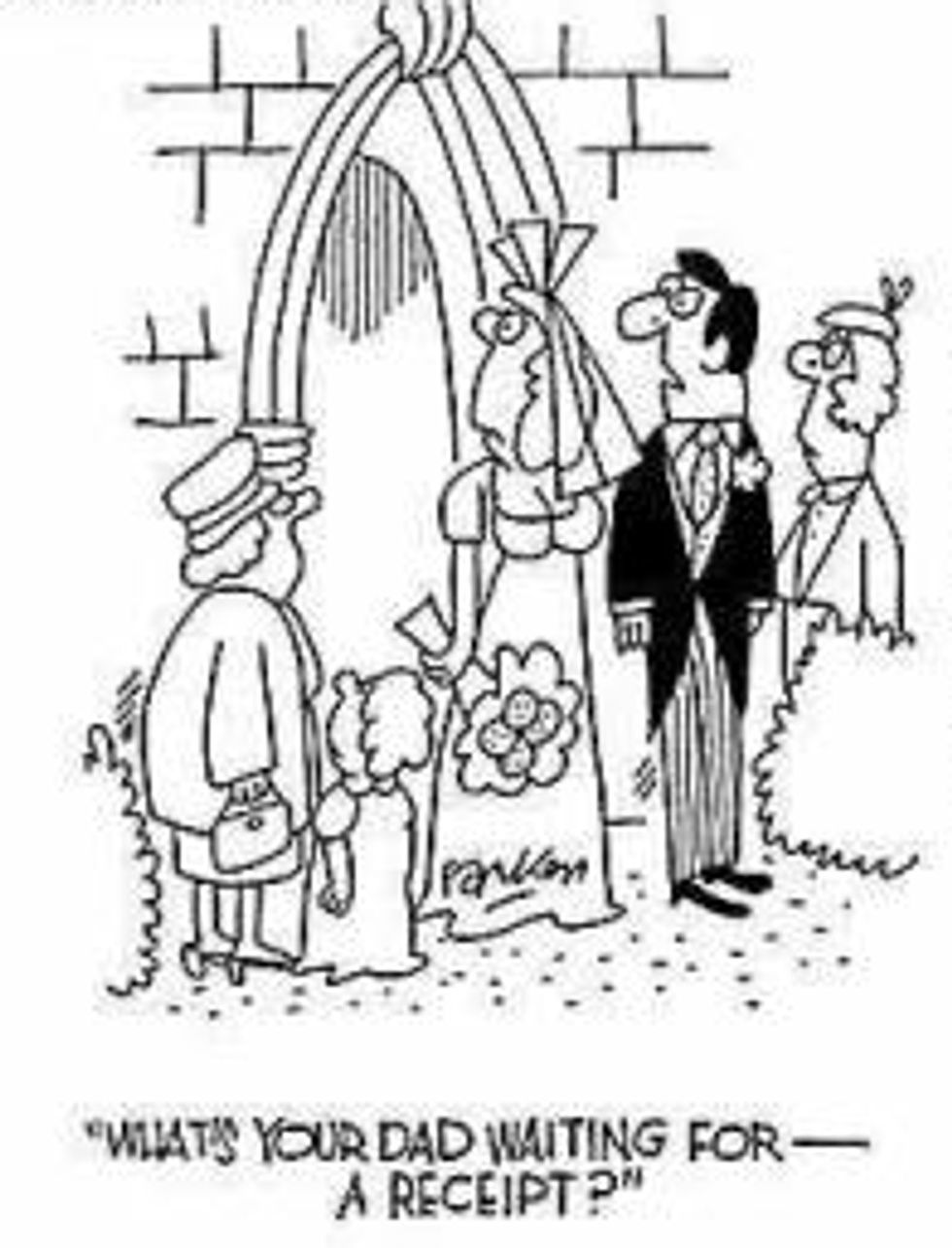
Isn't it cute how many of these traditions stem from the taking/stealing/giving of women? In not-too-ancient times, women were viewed as being the property of their father until they were given (along with a dowry) to the husband that had been selected for them. A father "giving away" his daughter at her wedding was a representation of a very real transaction (see "Traditions I will not be taking part in").
6. Wedding parties
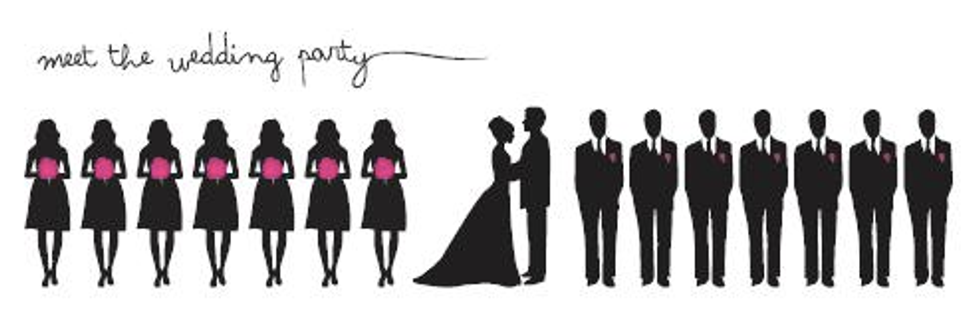
Originally, groomsmen were less of a group of your best pals and more of a very small army that would assist the groom back in the "marriage-by-capture" days. Bridal parties did not become commonplace until a while after groomsmen became a tradition, and their original purpose was to help the bride get ready and prepare the wedding feast.
7. The bride's bouquet
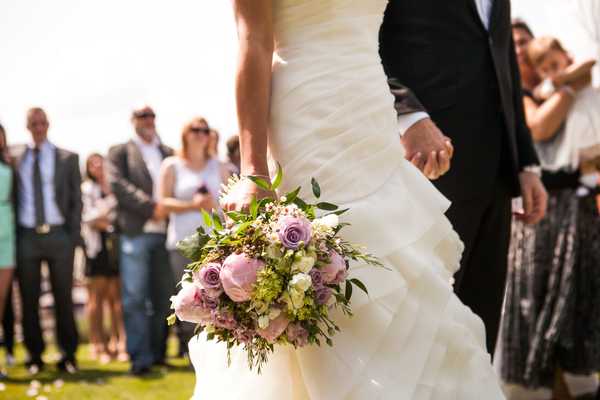
Originally, the bride's bouquet consisted of herbs which symbolized fertility. Over time this evolved to a bouquet of flowers, because who wants to get married holding a bunch of oregano?
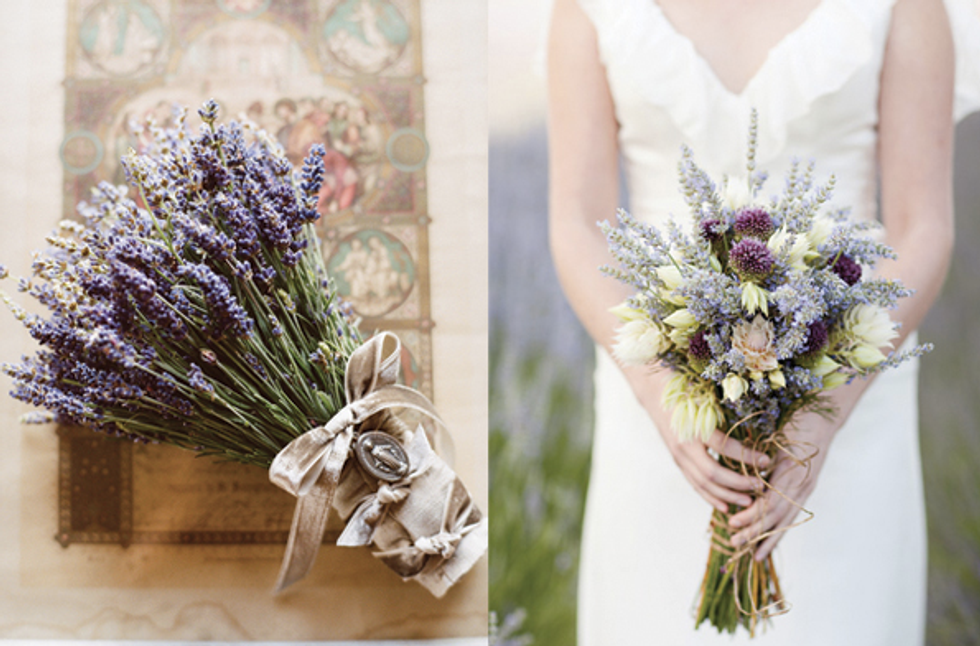
The bride began tossing her bouquet because wedding guests would try to tear her dress and flowers in an attempt to obtain some of her good luck, so she would throw it into the crowd and run away.
8. The garter toss
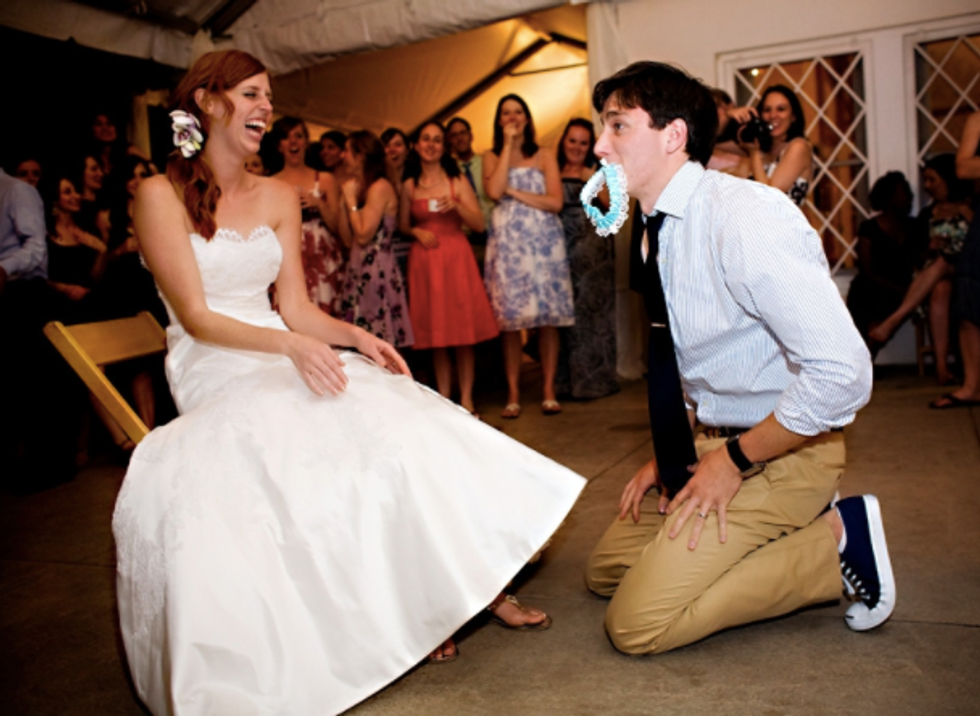 Much like the bouquet, wedding guests would try to steal the bride's garter, which traditionally held up her stockings, as a sign of good luck and as proof of the consummation of the marriage. Now, also like the bouquet, this practice has evolved into a tradition in which the groom removes the bride's garter and tosses it into the crowd of bachelor's. Occasionally the groom even removes the garter using his teeth but, as my roommate says, "I don't need a guy up near my no-zone with my dad in the crowd." The recipient of the bouquet and garter are predicted to be the next to marry out of the group.
9. Breaking the glass
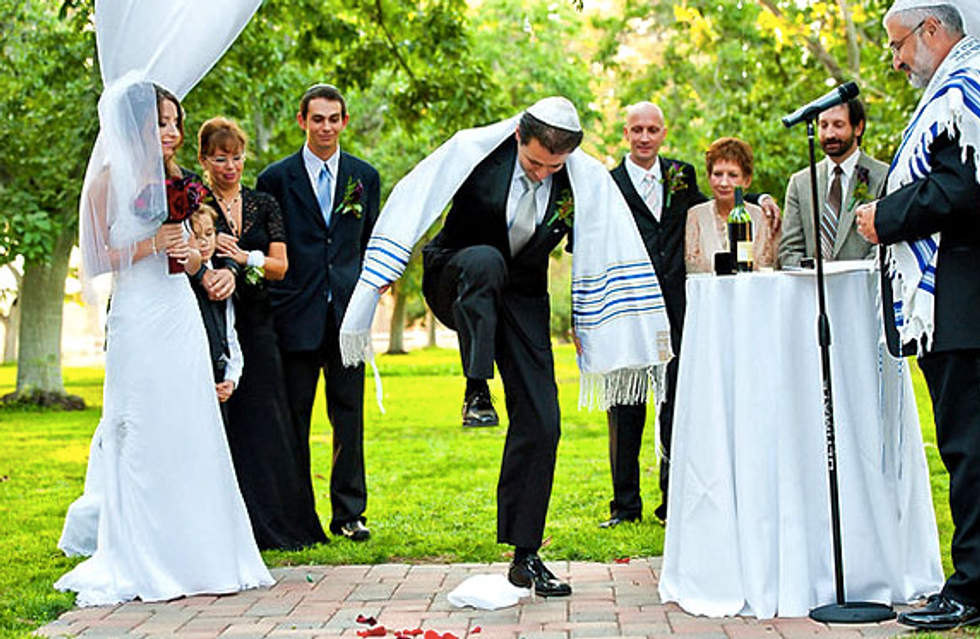
A traditional Jewish wedding is concluded by the groom and occasionally the bride as well stomping on a glass, generally wrapped in a cloth for the sake of safety and convenience, followed by shouts of "Mazel tov!" This tradition could be symbolic of multiple meanings, but the most common interpretation is that this practice is a symbol of the destruction of Jerusalem. Some couples even recite, "If I forget thee, O Jerusalem," preceding the stomp.
10. Jumping the broom
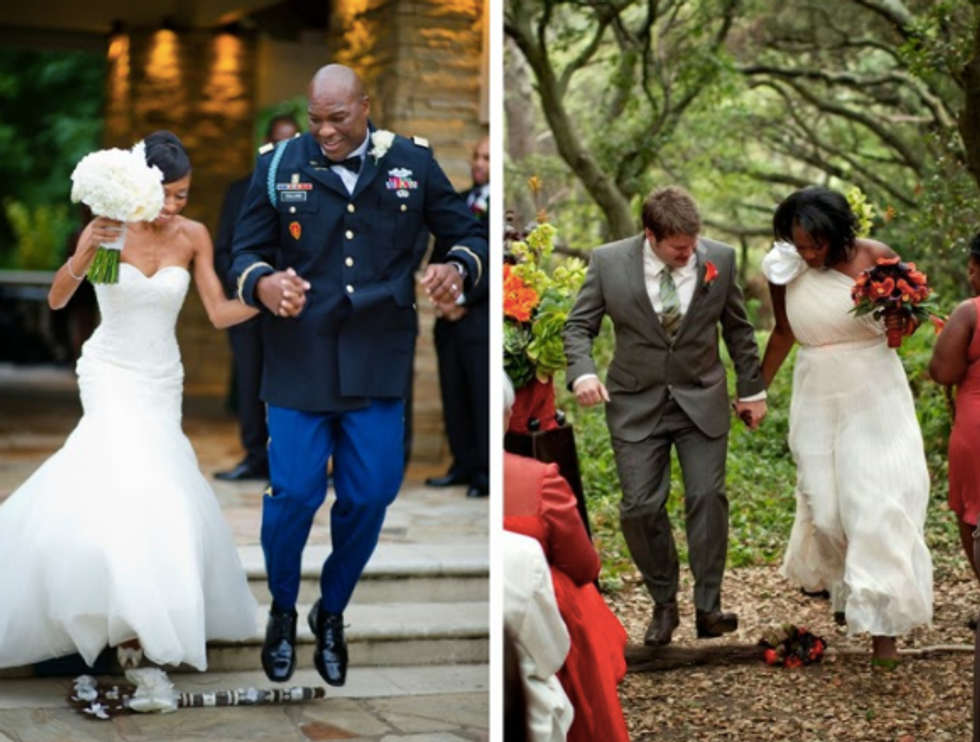 Historically, African slaves were not allowed to legally wed, so a couple would be waved at by a broom to ward off evil spirits before jumping over the broom to represent their domestic commitment. This remains a tradition in many African-American weddings as a tribute to their heritage and has been popularized by various books and even a movie over the years.
Many of these traditions stem from practices that we wouldn't be too crazy about today but have become central to modern weddings. Including these traditions in your wedding doesn't have to mean that you're in love with the history behind them. Make your wedding your own with traditions new and old!