I was an undecided major once. It’s not a major I recommend staying in, but it’s an honest way to let your school know “hey, I’m here for a reason but I don’t know the reason yet.” The people you know who are set in a certain major may not even know what they want to do. According to the University of La Verne,
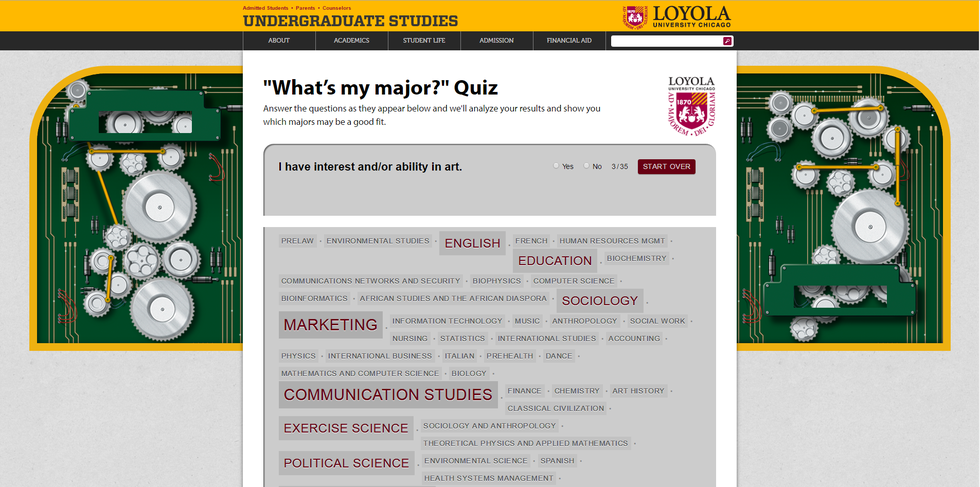
50-70 percent of students switch their majors at least once and the majority of students will change their major three times before graduating. Sounds like scary business, right? But life has the fascinating quality of change and you can adapt to it by exploring your interests. These sites may answer your questions and hopefully set your future in a direction you'll love to explore.Loyola University's "What's My Major?" Quiz
It's free! No need to pay a fee or sign up with an email to get your results! By asking a user personality-based questions, Loyola's Major Quiz enlarges the type of career fields you can most efficiently apply those skills. It doesn't just enlarge one career field either, it enlarges fields that could be alternatives. It's quite simple, and hey, we all like to take personality quizzes right?
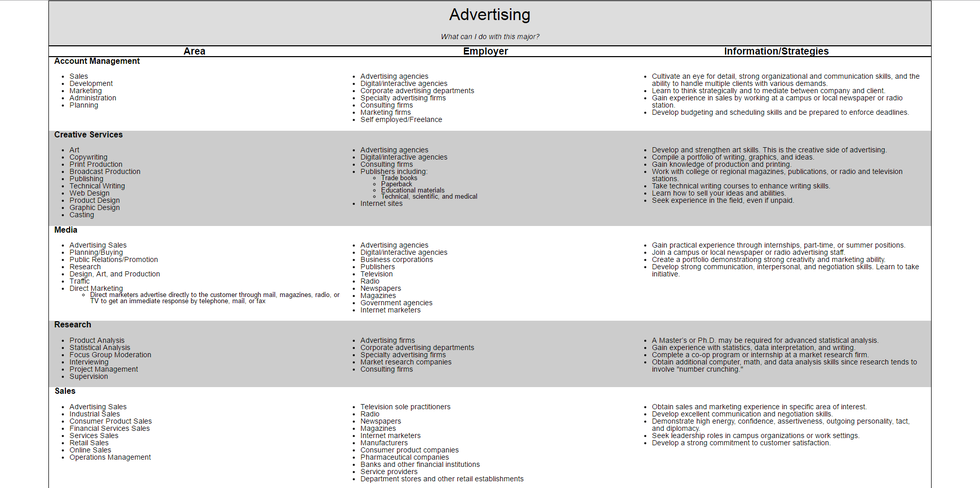
Idaho State University's Major-Career List
Overwhelmed about how you can use your major? Nothing is more reassuring than a career layout of what you can do with a chosen major. The uniqueness of this site is that it provides a variety of career fields with employers and strategy tid-bits. Sometimes it's overwhelming to look at the various tabs and side links of a website. What Can I Do With This Major? is very straightforward and uncluttered with a clear text and an easy-to-use format.
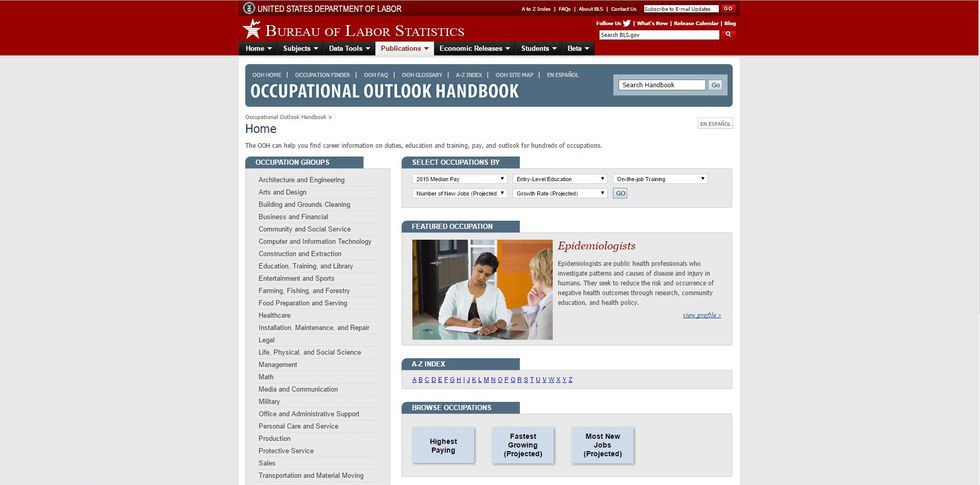
BLS Occupational Handbook
The United States Department of Labor has actually formed an Occupational Handbook with the Bureau Labor of Statistics to help citizens find the right careers. The online handbook has numerous features you can personalize in a search engine like the level of pay, education needed, and job growth, for example. Once you find a career field, it gives you even more optional specifics like the work environment, how to become the job title and similar occupations. Because the handbook is tapped into the BLS, all the information is current. You are essentially looking at the current job rates and yearly wages from a research center that analyzes the current and future state of the economy. Isn't that neat?