
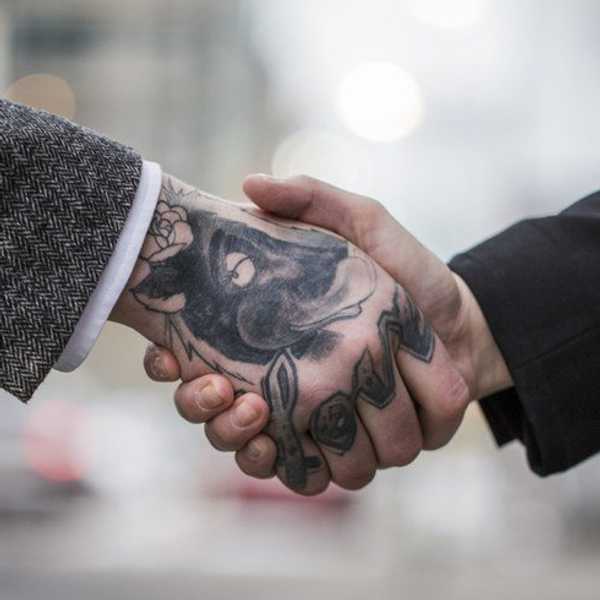
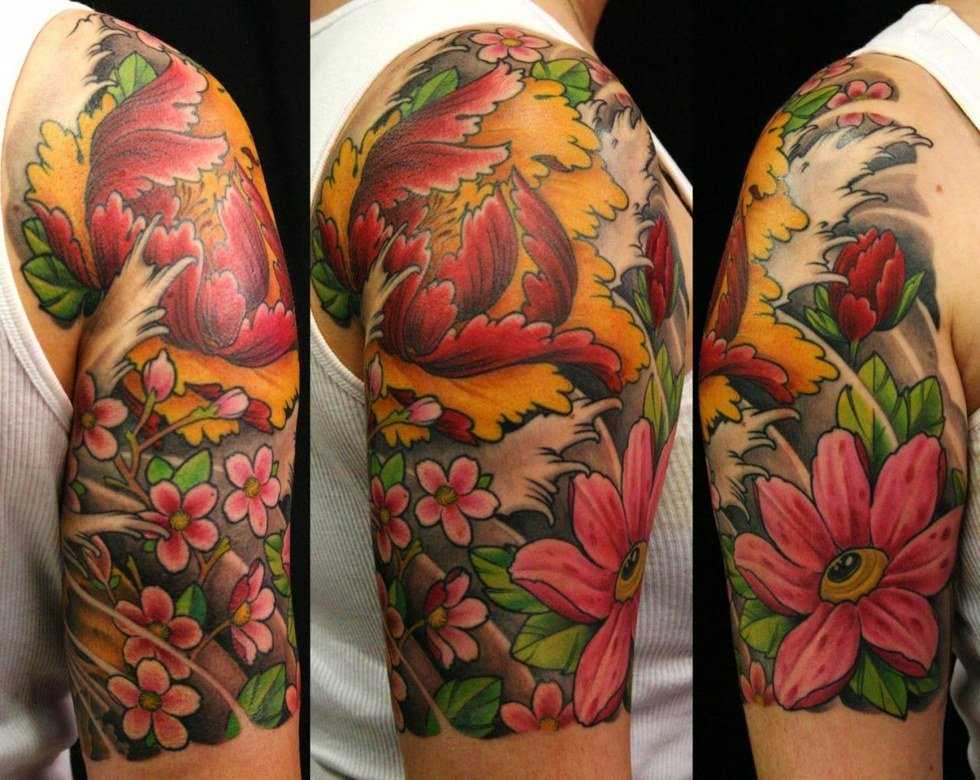
Ink on skin. Piercing pigment on dermis. Memories. Aspirations. Freedom. Growth. Tattoos have always been an enigma to me. As an artist, I am impressed with the exquisiteness of truly fine body art. Furthermore, I am in awe of the ability of tattoo artists to create masterpieces on one of the toughest mediums ever – skin. And yet I wonder about the motivation behind getting tattoos as well as the element of permanency it adds to life. In this day and age with technology making photographs and images accessible at the tips of our fingers, there appears to be an intensifying sentiment to possess something so personal that it is not represented on social media platforms. There is an almost iconoclastic gratification to be had from paying the price of pain to pierce a graphic element through layers of one’s own flesh. Tattoos tell their own stories, but at the same time the act of a permanent tattoo on your person is a message in its own right. “This is mine, uniquely,” it says. “You can’t take it away from me.” Tattoos have been around for a very long time, but today, when Snapchat and Instagram provide lightening speed, customization and massive outreach for personal self-expression, the use of the body as a platform for art is communicating a more potent message. The medium, as McLuhan declared, is the message.
Over the centuries, tattoos have been used as symbols of identity, used for tribal branding, inscribing names, and characterizing communities. Tattoos can be seen as both distinctive and unifying. In ancient Polynesian culture tattoos were used to deliver information about a person. Tattoos represented character, position, and hierarchy. The location of tattoos on the body was thought to be determined by genealogy and personal achievements. In other settings, they served as a badge of unity. Popeye, Disney’s famous sailor man, compliments the tradition of seafarers by bearing anchors on both forearms. The culture of prison tattoos also depicts this language. Clinton R. Sanders in The Art and Culture of Tattooing discusses the different examples of prison tattoos and analyzes their meanings. Cobweb tattoos, for example, depict the duration of how long an inmate has been imprisoned. Small teardrops near the eye describe those who have been convicted of murder. These are used to distinguish groups and create a community within a community. They can be perceived by most as dangerous and deviant manifestations.
Symbolic, sacred or scandalous, tattooing as a form of art has evolved into mainstream body art for all. According to the Pew Research Center, 36% of Americans from the age of 18-25 have at least one tattoo. The illustrated teenager on the street corner is wearing her personality on her sleeve – her tattoo sleeve. Tattoos are not a form of a virtual self, such as an Instagram profile or Snapchat profile. They are a message you have decided to become a medium for. J. Kehaulani Kauanui, an associate professor of Anthropology describes tattoos as a “symbolic and often provocative form of expression and communication.” Tattoos begin a conversation you never initiate. Before anyone can even speak to you or ask you your name they can see your tattoos and form perceptions about your views, what you like and what you believe in.
The movement of tattoos from subculture to pop culture has been slowly but surely evident. One or two tattoos are simply not enough as celebrities cover their arms in sleeves of ink. This is a prime example of when the medium overshadows the message of the content. After the first three or four tattoos filling in a sleeve becomes the priority rather than the content of the art involved. Embarrassing as it may be, portraits of former girl or boyfriends remain etched indelibly as part of a well-exhibited pictorial biography.
Marshall McLuhan states that “we shape our tools and thereafter our tools shape us.” If we look at tattoos as an expression of individuality, we aim to create our tool of expression the way we would like it to be perceived. We wear our personalities on our bodies and attempt to state what we think of ourselves. We introduce ourselves without reservations to the world. We embrace permanence, and defy the act of deleting with the click of a button. We compel the medium to define us for all time. However, as we shape our tools they in turn shape us. The medium remains the same, binding us forever to a message which demands to be fluid. Is your heart safe on your tattooed sleeve?