
I carry a messenger bag around me wherever I go. The navy blue bag is covered in pins which vary from ones that I obtained from bands at their shows, Magritte pins from Brussels, as well as a few political pins. One pin in particular, however, sticks out in vital importance to me. The pin states cogito ergo femina sum, which is Latin for “I think therefore I am a woman,” a play on the French philosopher René Descartes’ cogito ergo sum, “I think therefore I am.” Under the phrase is a replication of a tondo, a circular portrait, of a Roman woman holding a stylus to her lips in a typical thinking gesture. From an art historical standpoint, the stylus indicates that the subject is an educated woman who empowers herself through knowledge in a patriarchal society.
This woman is a feminist, and so am I.
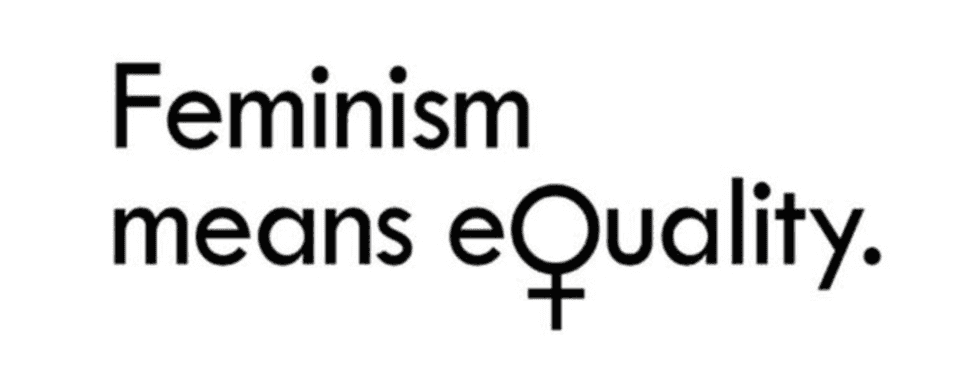
According to the New Oxford American Dictionary, feminism is “the advocacy of women's rights on the grounds of political, social, and economic equality to men.” By definition, the term feminism is objective—a belief that women should be viewed equally to men. Despite this definition, however, the word “feminist” has negative connotations in our society. Countless women are afraid of calling themselves “feminists” because much of popular culture dismisses the feminist movement as “radical” and “anti-man.”
This is not the case, however. In fact, most women who consider themselves feminists simply want to be equated with men. In a world where society often demeans and objectifies women in media, music, and popular culture, many females wish to separate themselves from that stereotype. Women empower themselves through feminism in order to succeed in their own pursuits and careers without the restriction of their gender. Women are writers, artists, business owners, lawyers, politicians, and teachers.
The notion of females advocating for their own rights has become more commonplace since the women’s rights movement began in the 19th century and it is not unusual to see politically active women advocating for equal pay and women’s medical reforms. In addition, contrary to popular belief, feminism is not confined to members of the female sex. Both males and females, regardless of gender, can call themselves feminists.
I, a woman, am proud to call myself feminist. I believe that women should have the same rights and opportunities as our male counterparts. Just like the woman with the stylus, I am a female who empowers herself through learning and knowledge. I live by the phrase of the pin attached to my bag—“I think therefore I am a woman.”