

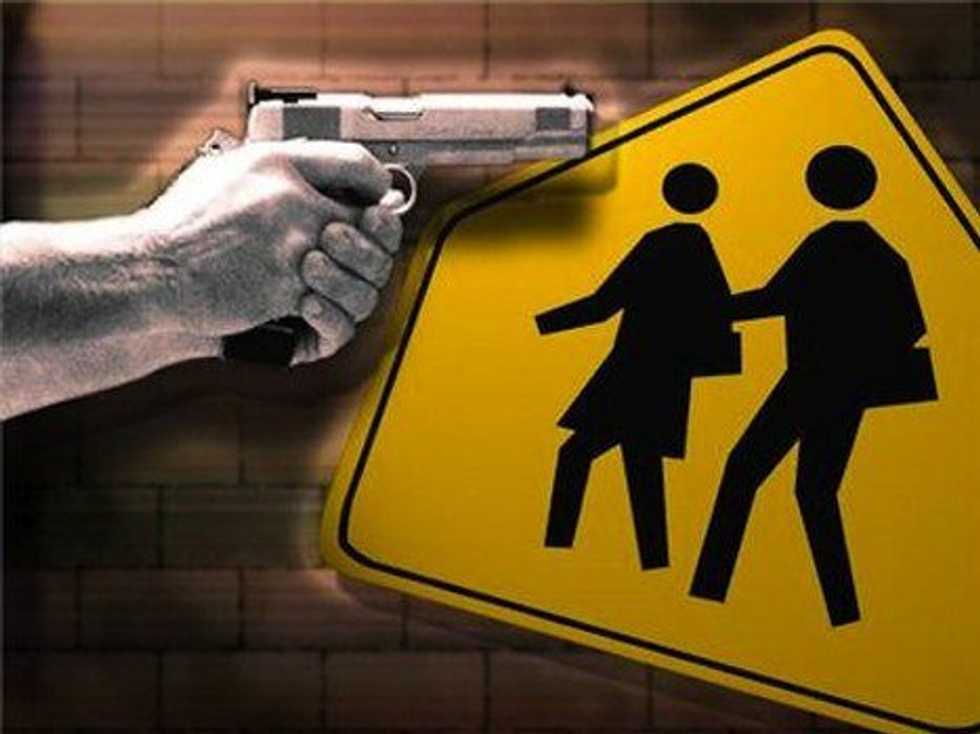
To start off, I do not want to detract from the tragedies which local communities have experienced due to school shootings. Rather, I would like to shed light on the other communities which are affected by school shootings, and the mourning that comes with it. Within this issue, there is another level of anxiety -- the anxiety which lives in the rest of the country that is not directly involved in the shooting.
Researchers from Harvard and Northeastern claim that the frequency of mass shootings has tripled since 2011 in the united states. They define mass shootings as "pubic attacks in which the shooter and victims were generally unknown to each other and four or more people were killed." In the past 29 years, a mass shooting occurred about once every 200 days, but in the last three years they occurred about once every 64 days. As they are happening more frequently, more and more people are talking about school and mass shootings. It is a hot topic found everywhere from political debates to suburban kitchen conversations. The phrase “school shootings” has become a hot-button term across the nation.
Despite recent events, I typically still feel fairly safe on my campus. However, I was recently struck with the thought that maybe I should not feel so safe. I have always been taught, and understood, that if I mind my own business in potentially unsafe situations, I will be fine. Unfortunately, this is not a reality any more. There is no such thing as a place which is entirely safe; school shooters have made that concept nothing more than an idea.
A few weeks ago, there was a threat made over Yik Yak at Seton Hall University. I did not see it personally, but the Yak basically told students to steer clear of the cafeteria at 12:25 or else they would regret it. My roommate asked if I thought it was okay to go to lunch. I had already eaten, but I laughed a bit and said she would be fine. But then I sat in my room, anxiously keeping an eye on the clock. At 12:25, and even in the minutes following, all I could do was imagine the worst. Usually, I try to remain fairly rational, so this brief anxiety was out of the ordinary for me; but the reality is this -- imagining the worst is rational because it is a real possibility.
Students too often do not take Emergency Action Plans or lockdown drills seriously because being afraid or cautious is not the “cool” thing to do. But students do take it seriously when there is a school shooting somewhere else in the country; it has a strong influence on students’ mindsets throughout the day. Unlike communities which are directly involved in a school shooting, other students around the country, myself included, soon forget about the gravity of their potential situation until another incident occurs.
On the other hand, the idea of going to college for prospective students has become a dangerous one. Safety is climbing on the “must-have” lists of enrolling freshmen. Education should not be dangerous. Beyond college, students of all ages are beginning to understand that their school is not a “safe space” like they once thought. Also, parents are becoming more nervous about sending their children to school, understanding the possibility of school shootings.
How can anxiety over school shootings increase while students not directly affected by school shootings are not taking precautions seriously? It is a confusing concept, and I do not fully understand it. But what I do understand, and this is important, is that we cannot stop talking about school shootings. Politics and kitchen table discussions should involve the reality of school shootings, because we have not found a solution to the problem. Even if students do not always take lockdowns and EAPs seriously, they are deeply affected and frightened by school shootings. We need to continue talking about it until there is a realistic solution to prevent more families from experiencing the hardship that so many have already had to experience.