

There are some age-old adages about friendship. One that strikes me as relevant to my article this week: You should never talk politics or religion with friends.
This week marks my 10th week writing with the Odyssey and for my 10th article, I thought I should explain something. For the last 9 weeks, I've written articles mostly geared towards political issues and events. My bias has been generally pretty clear: I'm a conservative who agrees with small government and has what some would call "family-based values". For some of my friends, the opinions and comments I've made have been less than shocking. For others, it's probably come as a bit of a shock.
Civil conversation when it comes to sensitive topics like politics seems to be difficult for a number of reasons, especially in the current generation. It's easy to go on Tumblr, Facebook, or Instagram and find and surround yourself with people who agree with you on just about everything. We have trigger warnings now to mentally prepare for difficult topics and safe spaces if we don't want to listen to them. Members from either side of the line vilify one another as ignorant, racist, or idiotic publicly through platforms like Twitter. Having different opinions is no longer a question of different viewpoints on how to solve a problem.These are conversations and issues that are personal in nature for many. For some, disagreement on Obamacare or entitlement spending is a direct jab at their character. The things that are going on in the world can be difficult to talk about especially given how emotionally charged a lot of these topics are. Just look at abortion, Syrian refugee migration, guns, Black Lives Matter.
I'm not entirely sure I have the answer to fixing our inability to talk. You can't just say "Be objective! It'll solve all our talking problems!" The closeness of these issues in many people's lives makes that impossible. Conversation seems like something so simple but it becomes so much more difficult when we're not willing to respect other viewpoints or look to see the argument even as we rebuke it.
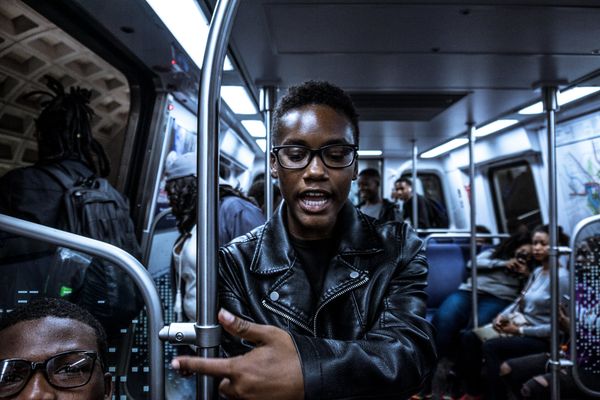
In a discussion this week with one of my friends, Keon, we talked about how having different viewpoints shouldn't be the be-all, end all of a friendship. Keon self-identifies a little more to the left of things, while I personally find myself to the right. Our conversation went in a few different directions. Ultimately, though, we agreed that the most important thing about having different viewpoints was the ability to have a conversation and understand why you believe what you believe and understand why somebody else believes what they believe.
So this is the note to my friends: I love all of you guys. If we're friends, then clearly we share enough values and experiences to where our political ideas don't necessarily need to line up. If they do, great. If they don't, still great. We can disagree, but it doesn't mean that I hate you. The phrase I mentioned at the beginning -you should never talk politics or religion with your friends- is one that I think is closed-minded. Politics and religion and all the sensitive issues, they're important conversations that need to be had. If you can't talk about them with your friends who can you talk about them with?