
We all make distinctions. We put people in different categories. We don’t mean to do it, but we do. And sometimes we find that maybe we put someone into the wrong category, or that we have been put into a category that we don’t like. But where do these categories come from? How did we get here? Did we just one day decide that some people were better than others? Where did we get this example?
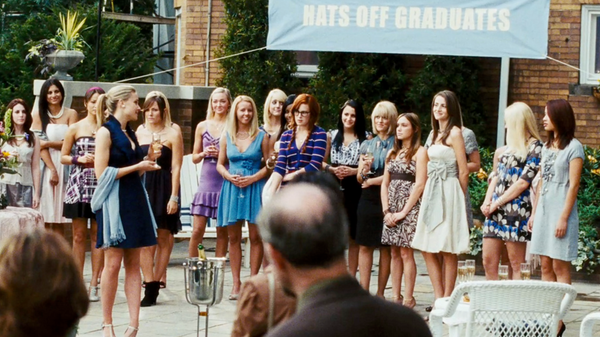
I remember at one point I was so afraid to be put in any other group other than the “popular” one. You know the group. The people that are always hanging out with each other, the ones that have all the inside jokes and the hottest new item. I wanted to be part of that crowd. But there were a few problems. I didn’t live in the area I went to school, we couldn’t afford all the latest and greatest things, and I was constantly being left out of things I wanted to be a part of. I was suddenly in the group of people I didn’t want to be in: the unpopular group.
As I grew older this bothered me more and more. I would do anything I could to show them that I was as “cool” as they were. I even told my parents kids wouldn’t talk to me at school because I didn’t have my ears pierced. I mean, I did absolutely anything to get into that crowd. In fact, once I got to middle school things escalated to a level that I never want to admit to. Those were probably some of my darkest days.
The days of sneaking out of my friends’ homes to go out and party with the high school guys. The days of watching friends smoke packs of cigarettes and then taking the occasional they would offer me. We were 13 or 14. We thought we owned the world. In fact, most days we did. At some point though I started asking if all of the people pleasing was worth it. And it’s a question I’ve really been asking myself until today. Until the First Lady of the Iowa Conference of the United Methodist Church said something that I wasn’t expecting to hear, but I was also only half listening. “God doesn’t make the distinctions we make. As both lay and clergy, we stand side by side at God’s table.”
Okay, disclaimer here, I am currently exploring a call to ministry. But the way she said it, I guess since it was just a room full of laity (nonpastors, priests, ministers) and herself being a seminary graduate but a laity member, it just struck something. Something that I had been struggling to hear. Something that the broken, ashamed, and hurt eighteen-year-old me needed to hear.
Scripture tells me in 1 Corinthians that as the body is one unit we all form the body of Christ. The saint and the sinner. The broken and the whole. The prostitute and the faithful wife. We are all made of the same body of Christ. How crazy? A girl who has felt unworthy and completely without worth all of her life be made into the body of Christ? Where can she fit in? Where can anyone who is so messed up that they can’t go home be a part of the body of Christ? How can that person be as equal as the preacher giving the message on Sunday morning?
I’m broken, but Christ makes me whole. I’m ashamed of my mistakes, but Christ washes them away. I’m hurt, but Christ is my healer. Christ took my place. I should have been the one on that cross. I should have taken the lashing. I should have taken the nails. I should have suffered. Yet I didn’t. Christ took that for me. For you. And for every person who places their faith in Him alone.
My point here is this. We are equals. Being black, white, tan, purple, straight, gay, lesbian, bisexual, transgender, men, women, poor or rich it doesn’t matter. If we place our faith in Christ we are equal. Handing the reins of our lives over to God, saying “Here I am. Send me,” will be what frees you from those feelings. Believing them each and every day will be what frees you from the pain, the sorrow, and the hurt.
Don’t think that they will all go away overnight, because they certainly won’t. The transition will be uncomfortable. It won’t always be a smooth and straight path. Prepare for lots of bumps and curves. I’ve fallen off, and you might too. The key is to reach out and grab the hand that so desperately wants you to hang onto.
It doesn’t matter the group we may place someone in. It doesn’t matter where others place us. Call me a Jesus freak, I don’t care. I stand side by side with my brothers and sisters in Christ at the table to which I was carried. I stand next to the people with pasts worse than my own. I stand next to the people with lives much better than my own. And I stand next to those who understand where I’m at. For we are all members of the same body.
Jesus, come and stand next to me. Take my pain, take my burden. Be with those hurting. Be with those rejoicing. But most of all, be with the soul reading this. For sometimes it is in the strangest ways in which you speak to us.
Quit using distinctions. Quit using groups. We are all people. We are all equal in the body of Christ.