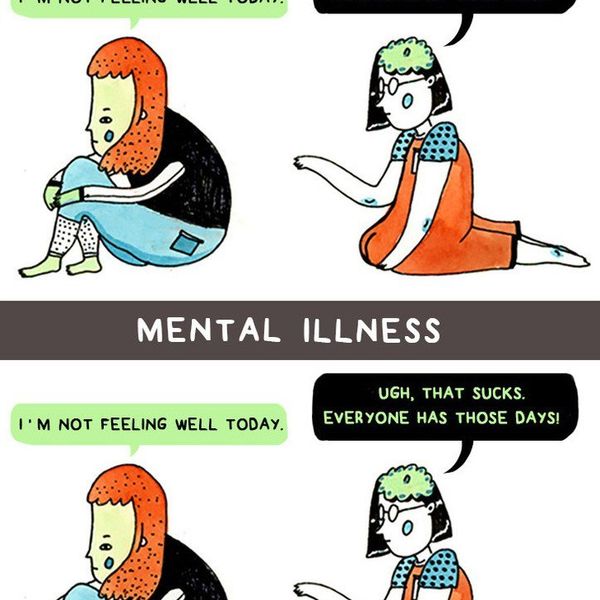


Mental illnesses are, sadly, a reality many of us are dealing with everyday. For others, if we are not suffering ourselves, then we know and love someone who is. There is so much focus today on those who are sick and how they should help themselves, and less on the support system surrounding the ill and how they can be useful.
Watching a loved one battle a mental illness can seem like a helpless and hopeless circumstance. It is so painful to watch someone be eaten away by a disease that cannot even be seen. It can have you on your knees, feeling unequipped and useless.
I think the most beneficial action we can perform is to be present. Our loved one, in the midst of their hurt, needs to know that you are there. That you will be still with them, be patient with them and just be with them.
Be encouraging. It is so easy to drown in negative thoughts, and they need to be reminded of the silver linings of life. You don't have to be unrealistic, but being a positive force may be the only light in their day.
Don't treat them differently. It is so easy to focus on their illness rather than who they are. Something you have is not something you are. No one wants to be tiptoed around and it is obvious when someone is seeing you as a stereotype.
Be patient. Your loved one is not going to feel like doing everything you want to do or everything they used to do. Lifestyles, interests and capabilities will change, and you need to be supportive and roll with the punches. Your loved one needs to know you are being understanding and empathetic with their feelings.
Keep their hurt confidential. No one wants to be a charity case or have people feel bad for them. When they confide in you, don't spread their struggles to others. What is told to you, should stay with you. You should be a safe place to go.
Keep the routine. Even though you should be sensitive to the needed changes, it is important to keep a sense of normalcy, so that your loved one doesn't slip away completely from their old life.
There are a million other little things that go into taking care of someone with a mental illness, but what is most important is that you are there and you are actively supporting them. Do not bail out, check out, or be selfish with your time. Give yourself up and hold on during the hard seasons. The most you can do is prevent them from being alone.