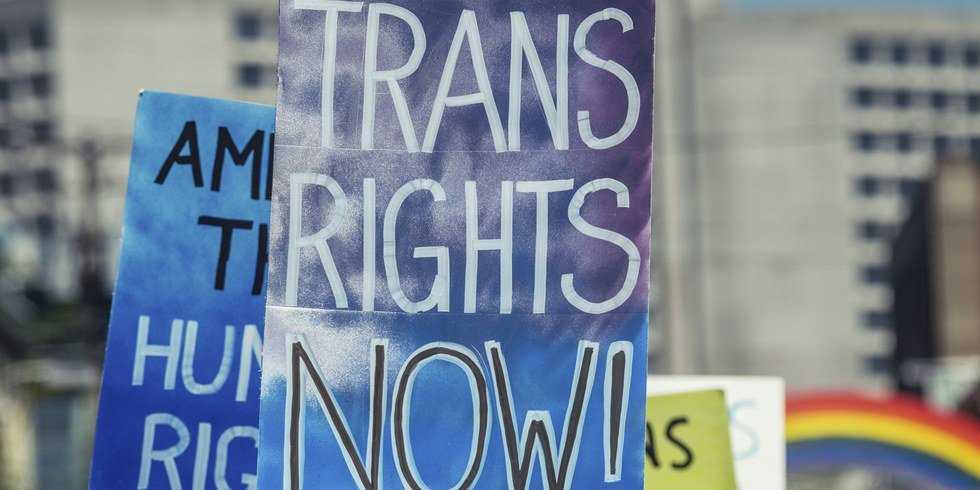
The City University of New York is often regarded as a liberal haven, both by its supporters and opponents. Regardless of personal political views, CUNY has made several meaningful strides toward equality and respect for more than 245,000 students across 24 campuses. However, there is a noticeable lack of accommodations for its population of transgender students. These disadvantages aren’t the usual frustrations presented to CUNY students caused by chronic underfunding, but instead a result of a big lapse in consideration for a group of people who take up a much greater portion of CUNY studentship than generally thought. It could — and should — do better.
1. Standardize and publicize information on changing one’s gender on CUNYFirst.
CUNY offers a straightforward way of changing one’s name, address, and Social Security Number, but, oddly, not one’s gender. As a matter of fact, there is no online information speaking to how one would go about changing one’s gender in the system: something that’s important when delivering rosters to professors (more on that later) and reflecting on one’s identity. Speaking from personal experience, I went to the Registrar’s Office at Hunter College to have my gender changed, and then got rerouted to the Office of Legal Affairs…from which I was rerouted back to the Registrar’s Office, from which I was sent to the Registrar herself. Once I met with her, it took just a few seconds for her to update my information, supplied with the required documentation.
It would be more efficient and effective for both the student and the Registrar to just add gender to the list of things that one can change on the standardized form for updating personal information.
A note on gender nondisclosure and lacking legal proof of name and gender change: unfortunately, CUNYFirst is the one part of a student’s identity that is linked to a student’s Social Security Account and FAFSA. As such, the information on CUNYFirst must correspond with federal documentation, or else one could be denied financial aid or be accused of fraud on tax documents. This issue must be tackled on a political level before CUNY can change that policy.
That being said, the distribution of that information is a completely different story. This leads into the next point…
2. Allow students to use their preferred name on their ID cards.
It’s not a passport, and CUNYFirst allows a preferred name, anyway. The CUNY ID doesn’t have a date of birth on it, so it often isn’t valid ID for age-restricted locations like bars or clubs. Its main use is entrance to CUNY buildings and libraries, which doesn’t require proof of name either. All that is practically important on one’s card is the ID number and photograph. As long as the ID number is connected to the right student account and the picture is current, there isn’t any problem with allowing a student to have their preferred name listed. Furthermore…
3. Protect student privacy by disclosing only that student’s preferred name to professors — and don’t bother with the gender.
It’s anxiety-inducing at best to enter class the first day and hope that one’s professor received one’s email about their preferred name and gender. CUNY currently automatically forwards the registered information, and not all teachers check their emails, or even have one accessible through CUNY websites. And even if teachers are socially conscious and respectful (as they should be), it is still upsetting to many students that such personal information is circulated against their will. Students often don’t want their new professors to know their birth name and gender—and it is within their right to not have that information disclosed. Furthermore, a nondisclosure of gender would hardly disrupt a professor’s ability to identify and teach students—and will encourage them to inquire on gender pronouns rather than make assumptions.
What is disrupting, however, is point No. 4...
4. Expand access to gender-neutral bathrooms.
Nothing is more disruptive to a student’s ability to learn than having to traipse halfway across campus because they need to go to the bathroom. On top of this, not all students have the physical ability to undertake such a venture. And with an abundance of stories about assaults in single-gender bathrooms, a lack of protection against hate crimes for transgender people in the State of New York, and the forceful nature of having a gender-nonconforming student choose to enter either a men’s or women’s room…saying that single-gender bathrooms are safe for all of CUNY’s students just isn’t enough. Another student at Hunter College beautifully articulates the issue of gender-neutral bathrooms (among other points discussed here) in this article for The Tab. Simply put, what would be the harm in converting a few of the many single-gender bathrooms into unisex bathrooms?
CUNY cannot change the federal system, but it can certainly make a difference, while still staying well within its ever-tightening budget.