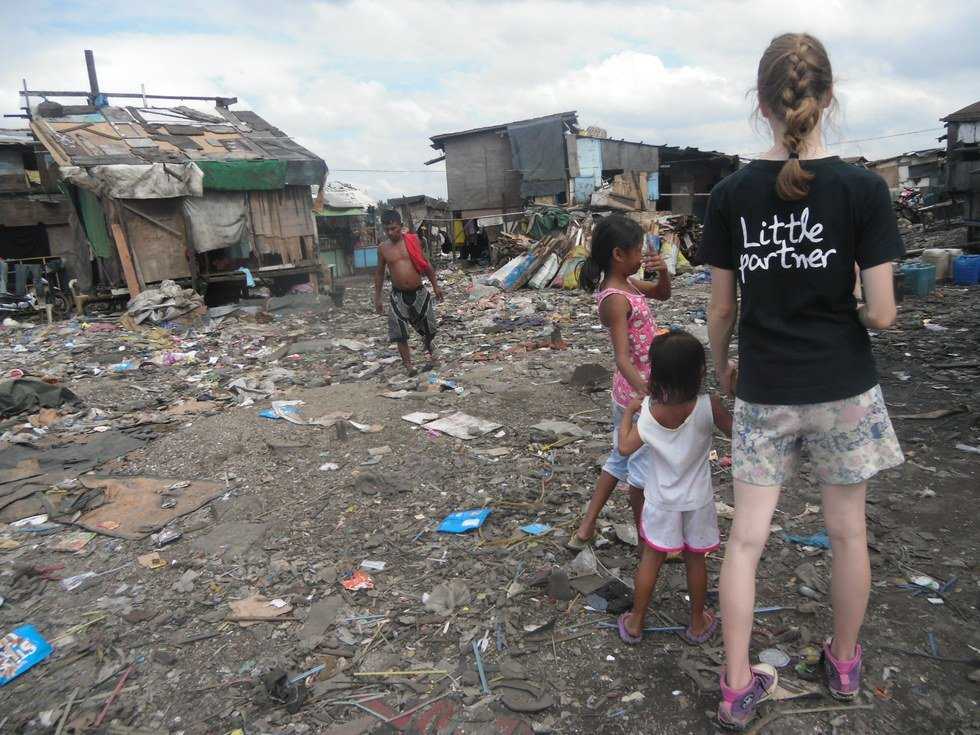
Garbage in the street, garbage in homes. Garbage used for kids' trampolines, fences, walls, and roads when packed with dirt. Garbage everywhere. My heart almost stopped when my sneakers did at the main road entering Smoky Mountain, a squatters' town in a garbage dump in Manila. Horror at the realization that my consumer lifestyle contributed to to such a garbage town sparked a deep fear of waste.
I came home from the Philippines and
told my mom I had never seen so much garbage in my life. This
realization did not wane away in the following months. It gradually
grew as I began to recognize some daily decisions as wasteful and
tried to change them. I started filling one regular line in a
notebook with two lines of notes for class. I ate leftovers for lunch
rather than making something new. But it grew to encompass even more
than just waste in food and paper. I shut off lights in any
unoccupied rooms at school and at home. Any unused electronic devices
were unplugged. Water usage was limited in showers and dish washing.
I took my laptop with me every day to do homework on the go rather
then return to my dorm if I needed it.
The possibility of being too concerned
about waste did not cross my mind. Of course, being careful with the
resources and time you have been given is commendable and could not
go wrong, I thought. Six weeks in a foreign country, living in an
apartment with six other people shed light on just how wrong that
assumption could be.
In a culture where punctuality is
secondary to relationships and it is acceptable to be late if you ran
into your neighbor and asked them about all their extended family, my
concern with time efficiency and productivity stuck out like blond
hair in Japan. When internally stewing over how slow everyone was
walking to our destination, I was struck by how I was devaluing the
process or journey and solely focusing on the end product. How often
have I not stopped to ask someone how they are really doing if I am
busy getting to class on time or properly 3 minutes early?
My hesitancy in spending money on
coffee or other “non-essentials” in my mind not only gave me a
judgmental attitude toward others but also made them feel
uncomfortable as if my choices were condemning their lifestyle even
without words. I missed the whole concept of spending time with other
people and building a friendship through mutual consumption and
enjoyment of simple things.
As I have begun to understand in
multiple areas of life, balance or moderation is so central, it
simply cannot be overlooked. My desire to be efficient or careful
about waste is not bad, in so far as I do not let it consume me and
my life. Being efficient is great until I spend more time planning
how to save time than the amount of time I actually save. Conserving
resources is important but not more important than taking care of my
health and getting sick from eating spoiled leftovers. Refraining
from extravagance is commendable until I unconsciously categorize
spending time with friends over coffee or snacks as extravagant also.
Being aware of waste in consumption of time and resources is
necessary, but not to the extent that it consumes my thoughts.
Thus far is my journey of becoming a
waste freak and now renouncing such a lifestyle. I am definitely
still navigating my way on this journey but the trees are less dense
than they were and sunlight is streaming through. Conserving time,
resources, and energy is still important to me, and in no way do I
promote a wasteful lifestyle—it hurts our planet, people you know,
even people you do not know, and especially yourself. BUT...do not
waste your life by being overly concerned about waste—it is a waste
of the precious gift of life God has given us. So join me in this
journey of finding balance and moderation in this world of skewed
balances and inequalities.