

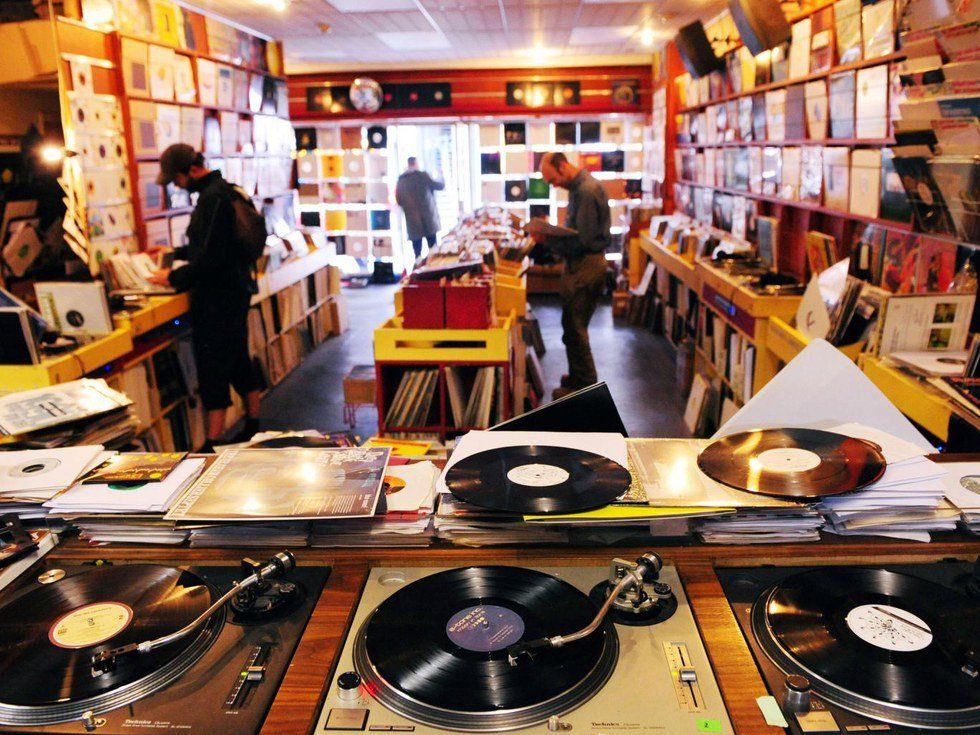
Those who follow music and trends have, no doubt, noticed the revitalization of music in the form of a vinyl record. According to the RIAA (Recording Industry Association of America), in 2015 vinyl album sales were at $416 million. This is the highest number of vinyl sales, up thirty-two percent, since 1988. As of July 11, 2016 officialcharts.com released a list of the best selling vinyl albums of 2016. Topping the chart was David Bowie's "Blackstar", followed by Amy Winehouse's album "Back to Black".
There are many factors as to why vinyl records have made a comeback. The majority of buyers in this industry seem to fall under the category of a young person, rather than an older person who grew up with vinyl. This is interesting because there is a whole subculture of "retromania", or groups of people who have a certain interest in older culture. This is especially true of a newfound love of rock 'n' roll and pre-1990's pop music.
Vinyl records have a certain physical appeal that digital music never will. Being able to hold an album in your hands, and have a visual representation of music is something that is unparalleled in uniqueness. In 2007, an event called Record Store Day was started by a group of people who wanted to help struggling independent record stores grow. It had a much larger impact than anyone could have predicted; Record Store Day is a large reason for the increase in record sales. The appeal of this is in the limited edition, unique pressings that bands and record companies put quite a bit of thought into. One of the most interesting releases would be St. Paul and the Broken Bones' "Live From the Alabama Theatre", a 12 inch record that is shaped like the state of Alabama. Record Store Day enthusiast and musician Jack White said, "Show respect for the tangible music that you've dedicated your careers and lives to, and help it from becoming nothing more than disposable digital data." He said exactly what music lovers have rediscovered: that music on vinyl is special and personal in a way a digital song could not be.
A large appeal, perhaps the largest, is not even the novelty of a vinyl record but the sound. A digital song from a streaming website is compressed and, as a result, loses sound quality as well as subtleties in the music. A vinyl record is not the highest quality sound, especially older albums that are worn, but it has a warmer sound than digital music and many people agree that a record sounds more natural and personable.
There are obstacles that come with this growth, however, and pressing plants are racing to capitalize on the comeback of vinyl. One of the major issues that has surfaced is frustrating, to say the least. There is limited equipment that is needed to create a vinyl record. The equipment that does exist is old and is constantly requiring maintenance, and this is expensive. Many record companies and pressing plants simply cannot afford the upkeep for these machines. Repair costs can reach up to $30,000 for each machine. For the machines that do work and are actively pressing, they are overworked. For many bands and record companies hoping to have releases on vinyl, there is a waiting period that can be as long as a year before they have enough records pressed to actually release them.
Music lovers are very excited about the resurgence of vinyl records; albums that were rare and that only a lucky few owned are now being repressed and are more widely available. New albums by newer musicians and bands are also being released and, perhaps as a result of Record Store Day, enthusiasm for vinyl is at an all time high.