It is not uncommon to hear someone from Venezuela say, "De donde yo vengo la gente no vive. De donde vengo, la gente sobrevive." [Where I am from people don't live, they survive]. Believe me when I say, they are not overstating their current situation's gravity. Yes, "they", in the most overarching and inclusive sense. For it is not a minority but the majority of Venezuelans who struggle to survive on a daily basis.
Just a few facts to put everything into perspective:
*In 2016, inflation in Venezuela rose by about 800%. This year, inflation is expected to be above 700% again.
* Today, 82% of Venezuelans live in poverty.
*Estimates suggest that 85 out of every 100 medicines are not available in pharmacies.
* In 2016, it was estimated that between 50% and 80% of the food products were scarce in the supermarkets.
* The Venezuelan minimum wage is equivalent to roughly 47 US dollars per month after its latest increase of about 60%, the third minimum wage increase of the year.
Data is self-explanatory, and it sheds light on the anatomy of a crisis. This time the world cannot afford looking the other way with the unjustified and cynical excuse that this is just your developing country's "average" economic challenge. Because it is not. The truth is that during the last few years, as the international press has intermittently shown to the rest of the world, Venezuela has found itself in what feels like a never-ending downward spiral in which Democracy and the nation's future are increasingly at stake.
How did all of this happen?
There are many complex reasons behind what we see today in the news. However, most of it comes down to two factors: (1) acute corruption and (2) the historical irresponsible and unsustainable socialist policies driven by an economy that lacked diversification.
Venezuela's economy relies almost exclusively on oil. After winning the elections in 1998, Hugo Chavez leveraged the rising oil prices during the early 2000s to further a highly unsustainable socialist agenda. After almost a decade of rising oil prices, when the oil prices plunged from 155 dollars per barrel to less than 50 dollars per barrel a few years ago, Venezuela began to struggle.
Chavez passed away in 2013. His successor, Nicolás Maduro, won the elections against the opposition's presidential candidate Henrique Capriles amid a lot of controversy and electoral fraud speculations. Maduro's government subsequent failures at handling the economic downturns; its increasingly irresponsible economic policies; and, the endemic corruption worsened the situation. It did not take long before scarcity, inflation, a contracting economy, violence, political persecution, high crime-rates and other issues metastasized and spread all over the country.
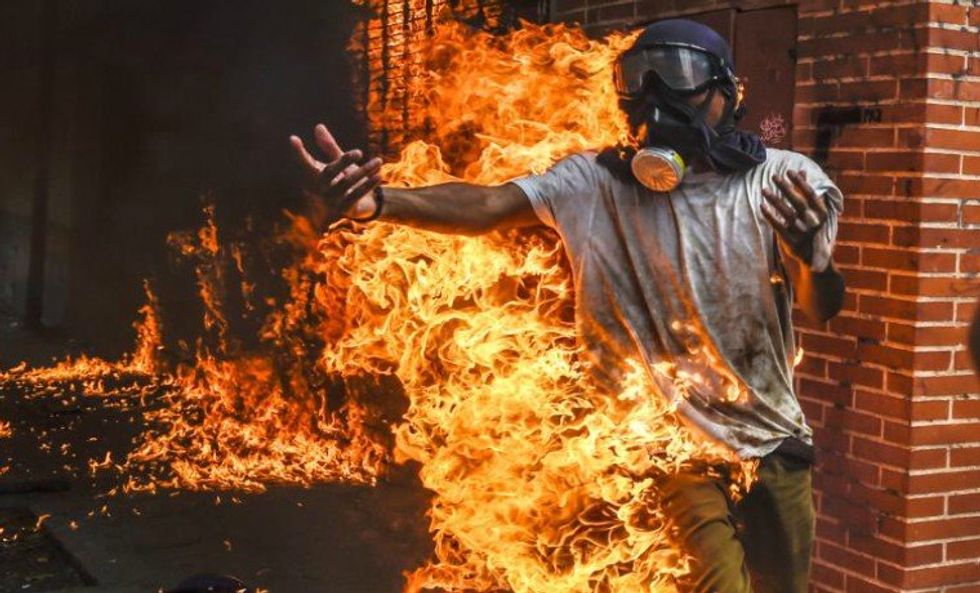
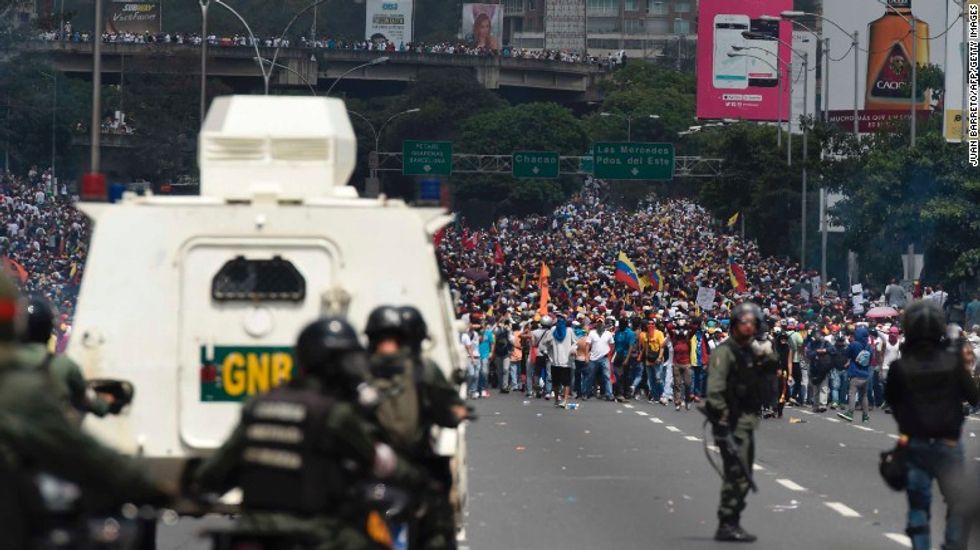
The imminent result to such a dire prospect are the protests of which you've probably seen pictures.
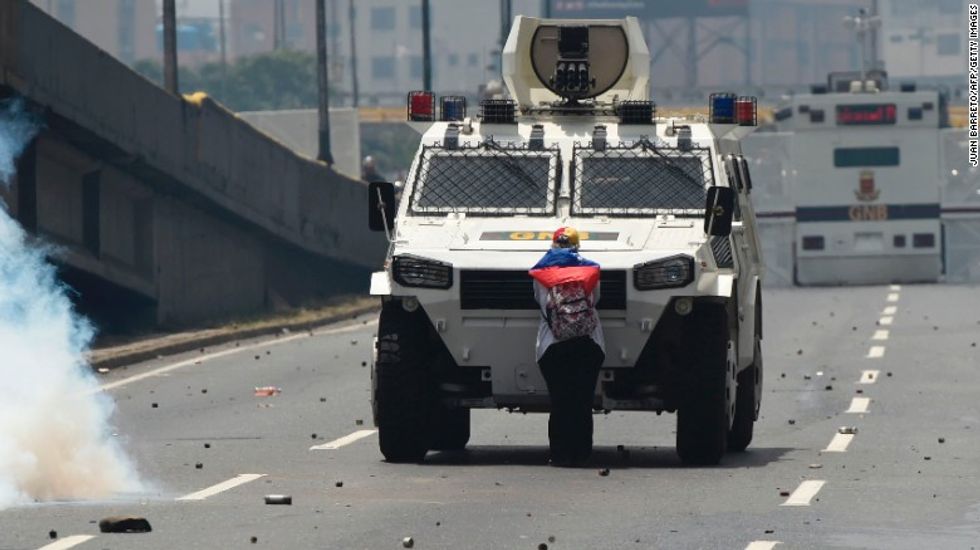
Venezuela: A Resilient Nation Full of Dreams
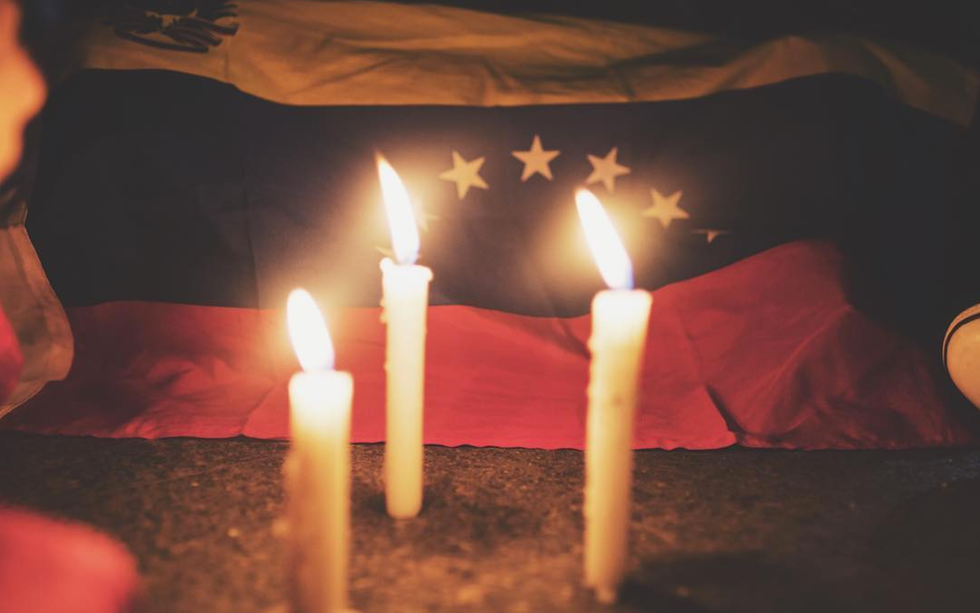
Some verses from the Venezuelan national anthem powerfully read:
"Gritemos con brío [Let's scream out loud]
¡Muera la opresión! [Death to oppression!]
Compatriotas fieles, [Oh, loyal countrymen:]
la fuerza es la unión [Strength is in unity]"
The anthem was written 200 years ago but it still suits the spirit of its people perfectly well. Today, thousands of Venezuelans protest on the streets against Nicolás Maduro's oppressive regime making the essence of their anthem's words resound all across the nation and the globe. They protest and constantly risk their lives so that neither the government's censorship nor its violent repression or made-up statistics hide what their country is currently undergoing.
The main drivers of the protests are university students like you and me. Behind most of the intimidating anti-tear gas masks and Venezuelan flags are the dreams of future doctors, politicians, entrepreneurs, lawyers, engineers, musicians, scientists, and teachers. Young people full of fuerza, motivación y sueños [strength, motivation and dreams] protesting because they long to change el futuro de su tierra's [their land's future].
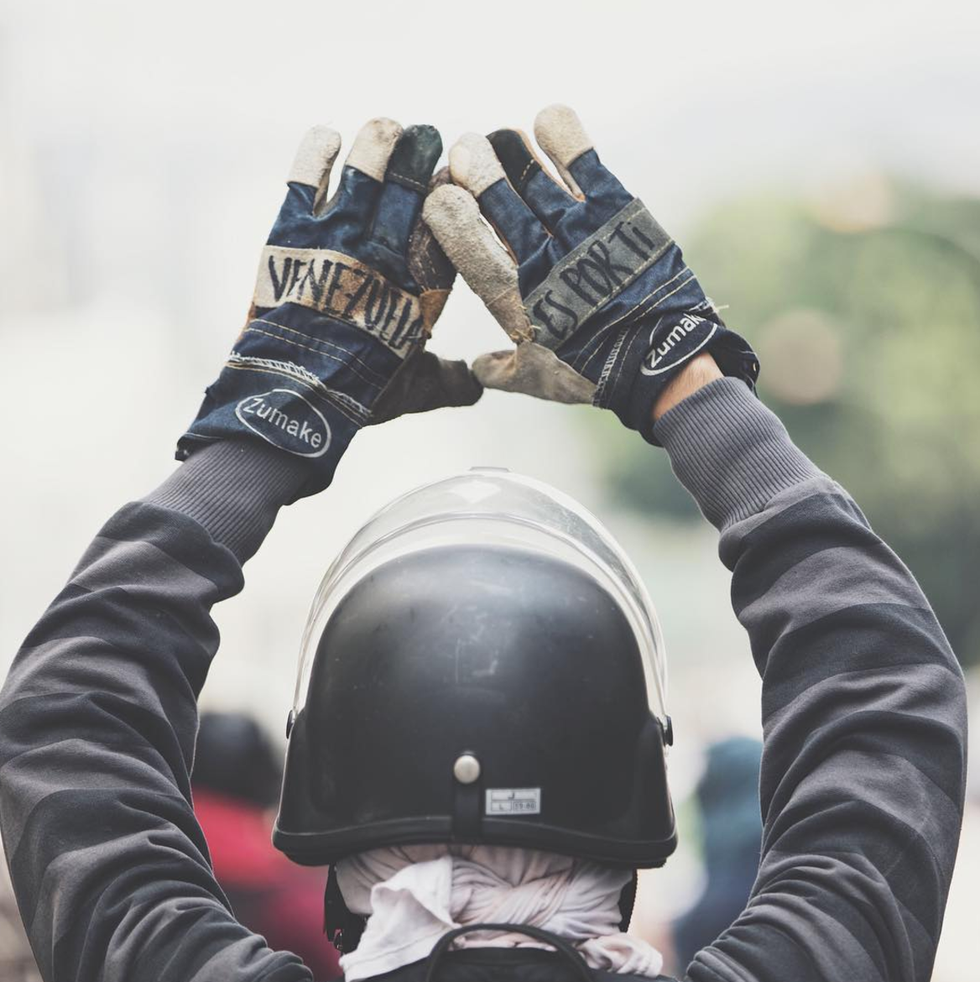
The people's fortitude in every protest echoes Leopoldo Lopez' (an opposition leader currently held as a political prisoner) following words:
"Nos han quitado tanto, que nos quitaron hasta el miedo." [They have taken so much from us, that they have stripped us from all fear].
Keeping the spirit up is definitely not an easy task amid constant violent repression and the adverse economic conditions they have to face on a regular basis. There have been around 40 casualties since the protests intensified two months ago. Nonetheless, it is clear Venezuelans will not back down, at least not in the near future. And, with the iron will and drive that fuels this nation and its people there's no doubt they will rise again.
But until then, Venezuela still has a long way to go. They still have more government oppression and economic hardship to resist and endure. They still have to go out and protest more. They still have more tear-gas grenades to return, and more poopootov cocktails to throw. They still have to spread their message to more people around the world. And what's more, they still need to keep fighting.
How can you help Venezuela?
1. Learn more about the ongoing crisis and its different aspects (political prisoners, the government's efforts to undermine democracy, economic hardship, etc.)
2. Share with others what you know about the what is going on in Venezuela.
3. Did you know there are about 300,000 people with Venezuelan heritage in the US? Chances are there is someone at your school who comes from Venezuela. If you happen to know someone from Venezuela, talk to them. It is very likely they or someone they know is involved in some sort of effort to send aid to Venezuela (food, medicine, etc.)
4. If you're an American citizen, call your Senators and let them know you care about Venezuela! Senators Marco Rubio and Bill Nelson from Florida have lead a bipartisan bill on Congress to support the protests. There is so much more to be done!
5. If you don't know someone from Venezuela, or do not feel like calling your Senator's office on a regular basis, you can still make online donations to foundations like Cuatro Por Venezuela. There are many initiatives out there with distinct objectives but united by the same goal: helping Venezuela.
https://www.cuatroporvenezuela.org/