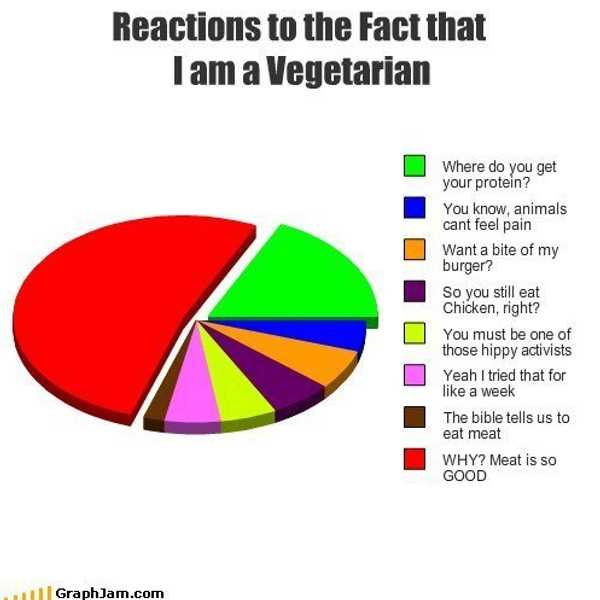
I don’t eat meat. You might eat meat. Why can’t we coexist in harmony? Well, we can, and we do, to an extent. But at the end of the day, if my reasons for not eating meat are morally structured, then we might have a hard time becoming the best of friends. Think about it – if we were talking about human beings instead of other animals here, would you be comfortable being best friends with a cannibal, or someone who supports some form of murder? In a lot of ways, killing animals is considered to be murder to people who value animal lives almost as much as they value human lives. And while we might say you devalue animal lives by continuing to support their consumption, you might say we devalue human life by even comparing animal life to it. But what if I took all the scientific arguments off the table? And what if I took all the religious arguments off the table? And what if I took all the social arguments off the table? What if I took the table itself and threw it out, and now there was no barrier between us – would it be easier for us to see eye to eye? For once, let’s just talk philosophy. No, really, let’s try it.
A lot of my research is on the construction of identity through story telling. If there’s one thing that I know about humans, it’s that they are quite able to communicate and cooperate in large numbers – in fact, they’re able to do this so well, that they love talking about it. Humans mostly communicate through language, and narratives are constructed in everyday conversation. In other words, humans love telling stories, and they tell stories all the time. So, what are morals really? I mean, where did we find them? Do they grow on trees? Do they float on seas? Can you cut a body up and find morals somewhere beneath the organs? Are they not a form of discourse we’ve invented? Are they not just another story we tell? We needed some form of order to function as a society – for which we needed a structured set of rules to abide by – we call these rules "laws." These laws were heavily inspired by our idea of morality, or rather, our collective opinions on the rights and wrongs. I needed to mention all of this for one simple reason – I cannot argue my position effectively because I am not an absolutist. I can merely dance upon the topic at hand, but that is what I aimed to do from the start anyway. So, let’s get to the point.
Even though morals seem to be fictional, we’ve conditioned ourselves to function under the influence of morally binding thoughts and contracts – and for the world that we’ve created to maintain balance and order, we need to think morally. Now, let me tell you why I can be best of friends with someone who eats meat, even though I value animal lives a lot.
1. This is a discourse that is not very popular across the world at this point – there seem to be ‘more important’ matters at hand.
2. I am desensitized to an extent – I cannot empathize with animals as much as I would like to, even though I don’t quite support killing or consuming them.
3. I understand why people don’t want to stop eating meat. I understand what we are conditioned to do, what is expensive and what is cheap, how new this movement is, how it takes a while to consider new ideas, and how hard it is to completely change one’s lifestyle, even for moral purposes.
4. Meat has become an important dish in many cultures and regions, and I don’t have any intention of offending these cultures.
5. Everybody has a right to their opinions.
The last one’s a bit tricky – because, if animals could form solid opinions, and their argument was that they believe they have a right to live – we would be in a bit of a dilemma. But since instincts to live aren’t good enough for us to consider, why would we give intangible thoughts any credit either? All of the reasons above might say two simple things about me – that I am confused, and I am upset that I’m confused. Well, is anyone living without any form of confusion bothered by this at some point? Anyway, quite contrary to what you might think, I’m fine with you having your morals, and I having mine – and us living life differently, but accordingly. What I do want you to think about is this – and by no means am I comparing the weights of the situations, or movements, but all of these examples have something in common, that I believe will be more clear to us in the distant future. A lot of us didn’t have the right to certain things that we clearly should have had the right to once upon a time – well, that’s how the discourse goes right? Weren't there people who laughed and argued against the now popular concept of ‘women’s rights'?Guess what, a couple hundred years ago, women didn’t have many rights compared to men, and up until a couple decades ago, a lot of women didn’t have equal social, political and economic rights either. Some may argue that women still don’t have equal rights in certain societies – actually I’d argue that as well. But now, it’s not a concept a lot of people laugh at, right?
Another example is the argument that psychology isn’t a real science and has no place in this world. I remember when my parents laughed at me when I said I wanted to become a psychologist – they very much support me now. It only took them a couple of years to ‘get with the times.' The point I’m trying to make here is that with time, you realize that there’s always someone being oppressed, something we’re not seeing, some day we’re not speculating. Since we’ve decided to function within a society regulated by morals, I believe it would only make sense to not pick and choose what gets to be considered and debated about largely – but really giving everything that requires thought, the thought that it requires. And so the popular moral discourse goes ‘Every living being has a right to continue living.' Now we come to the trickiest part. Can a world effectively function if we stop relying on living things? I mean, the world probably could by itself – though humans and other animals probably couldn’t. This brings us to the number one argument that is thrown against vegetarians all the time – the ‘but plants can feel too’ argument. Look, I decided to take science off the table, so we’re not going to use science to argue right now. I’m going to say one thing – it’s a very good argument, but against the wrong people. Say we come to a point where the majority of the world is at least vegetarian, if not vegan, and now we’re trying to factor plants into the process – where would we draw the line? Can we really come up with technology that will enable the entire world to effectively function without wood, plant products, fruits and vegetables? I hope so, because I’ll be feeling bad all my life if we don’t. Yes you heard me, I feel bad that I have to hurt plants, that I use things made from wood, that I am desensitized to a lifestyle where we so easily let trees be cut down and used to make products for us. But you need to understand, vegetarians never said they were better than anyone else for not eating meat. It’s just a thing that a lot of us morally believe is the right way to go, and that’s what we personally want to do. This was never an ‘all or nothing’ gig to begin with either. I feel good that I don’t eat animals, but I feel bad that I still eat plants. When it comes down to it, being a ‘good person’ seems to be less about maximizing the amount of good we do than it is about minimizing the amount of harm we do. And as I said, everything takes time; everything’s a learning process – that’s why I personally am not angry or upset with people who eat meat. I do understand their reasons. With time, I hope to minimize the amount of harm I do to plants as well – right now I still feel like a terrible person – but I don’t feel as terrible as I did when I still ate meat. That’s really all there is to it. And I’m working towards being better.
Morality is tricky. Lives matter, so I feel bad for animals who are slaughtered every day for our consumption and use. But, in an "ideal world" where the consumption of meat has ended, I would also feel bad for the family that loses everything because all their money was invested in the meat industry. And if children die because they can’t afford to eat anything anymore after the collapse of this industry – then lives will still matter, and I will still feel bad, if not worse. So what do we do? I guess, since progress is all about step-by-step processes, we can calculate, reform and execute new plans and ideas as a society to slowly acknowledge the importance of all life, find a way to sustain and balance things, and prevent the collapse of certain industries (or rather, a form of revolution itself) from hurting families, and maybe even cultural sentiments. It seems super hard, but I doubt it’s impossible. What I know won’t help is if we keep arguing with each other for the rest of eternity – especially throwing the ‘but plants have feelings’ argument at vegetarians who understand and empathize with that theory. Really, that’s kind of like saying ‘Oh you recycled three bottles, too bad, you still threw three other into the trash – so you’re terrible for the environment.' But I still recycled – what if I couldn’t afford to recycle all the bottles? At least I recycled half, at least I didn’t throw it all in the trash, at least I feel bad about it – but is that all I’m going to get for recycling three bottles, when so many people don’t even recycle one bottle? Well, I guess it’s fine – 'cause recycling’s not a priority to everyone, and neither is the issue entailing the consumption of meat. Just know that I hear your arguments, and they make sense to me, and I appreciate them – they just don’t help me in my struggle to support the cause I chose to support – because I’m not your enemy, I do feel bad that I still eat plants and I can’t draw the line where I want to draw it, and I’m working towards that. But again, how are you helping me?
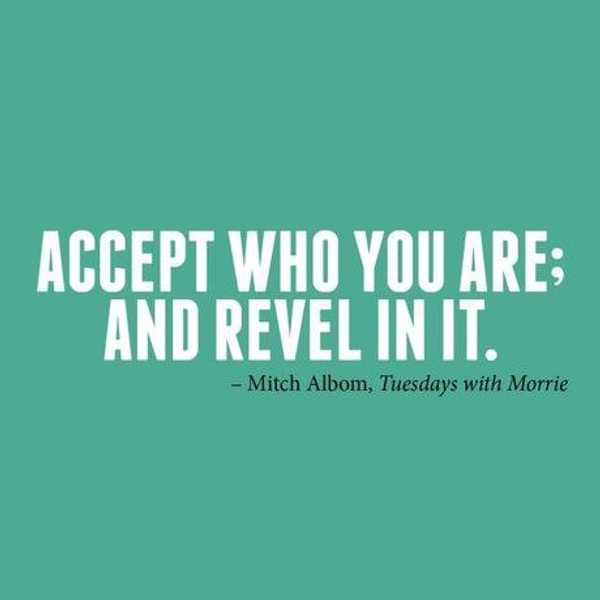
We coexist. But we can coexist more peacefully, and more efficiently, if we come together and try harder at understanding each other’s moral perspectives, subjective opinions, and relative theories on life and the choices we make. And if we admit our faults, slightly let our guards down, slowly develop the will and ability to empathize beyond our imaginations – I believe we can definitely come to a great compromise, if not a perceived conclusion that benefits all. We’re so good at telling stories – I’d really like to tell my grandchildren the story about how we stopped arguing about our moral differences, and learnt to appreciate them, support them, and work on them.