


“Vaping got me off of smoking three to six packs of cigarettes a day. Tell me that doesn’t account for something?”
I recently had the opportunity to speak with one of my best friend’s plumbers about vaping. Yes, I know that sounds a little off the wall, but sometimes the most interesting conversations are the most random ones.
The plumber, who went by Kyle, seemed to be around 50 years old. However, I must add that he did not act his age. Oddly enough, Kyle seemed more like a 20-year-old that was trapped inside a 50-year-old's body. He almost immediately grabbed a spot on the couch, after sending my friend to the hardware store to retrieve essential items needed to fix a broken toilet in the house.
At first, it was just small talk, but after awhile the conversation somehow flipped to vaping (throughout our chat Kyle was casually using his own e-cigarette.) My friend Daniel, who also uses an e-cig, was soon conversing back and forth with Kyle. They would speak about the intricacies of vaping, sometimes sounding like they were speaking in a foreign language. Naturally, I could barely keep up with the two as they exchanged different methods of the e-cigarette practice. After sitting in silence for awhile, I finally asked why did he choose such an expensive hobby. Almost immediately I received what seemed to be an already rehearsed response.
“Because why wouldn’t I?” Kyle answered in an almost annoyed tone. He took another drag from his e-cig before continuing. “I have been smoking since I was 11 years old and didn’t quit until three years ago. Vaping got me off of smoking three to six packs of cigarettes a day. Tell me that doesn’t account for something?”
As I would later find out, it does.
If you look beyond the clouds exhaled by any e-cig user, you find a $3.5 billion American industry (The world’s largest) that’s doubled in size nearly every year for the past five years. There are around 10,000 e-cigarette shops nationwide that serve some 20 million e-cig users. Yes, some of them are the cloud blowing odd birds that we find on social media these days, but for the most part they are just regular people trying to quite smoking.
E-cigarettes were not even invented in the United States, which sounds a bit off, as the culture is seemingly only in America. In fact, Hon Lik, a Chinese pharmacist, invented the apparatus after losing his father to lung cancer. Lik invented a device that vaporized (hence the slang word vaping) pressurized propylene glycol — one of the essential ingredients used in e-liquids today.

Hon Lik was noticed for his work, but it was not until 2007 when British entrepreneurs, Umar and Tariq Sheikh invented the world’s first cartomizer. This device integrated the heating wire (coil) into the e-liquid reservoir found in e-cigarettes. From then on, the business of e-cigarettes grew at astronomical rates, stunning the world of cigarettes smokers, many of whom switched over to the new method.
The use of classic nicotine products is lethal, something everyone should know by now. So lethal, that there are 480,000 tobacco product related deaths in the United States annually. E-cigs only use a handful of ingredients, while a normal cigarette has at least 2,500 different chemicals wrapped up inside them. In past years, e-cigarettes were not been considered on the same plane as other tobacco products. This would soon change, much to the dismay of the cloud chasers.
On May 5, the FDA finally did what e-cig advocates have long been dreading, issuing a list of new regulations that will virtually treat e-cigs the same as the classic tobacco products. While the biggest aftershocks of the new regulations won’t hit until the end of a two-year grace period, the ramifications could be costly to customers.
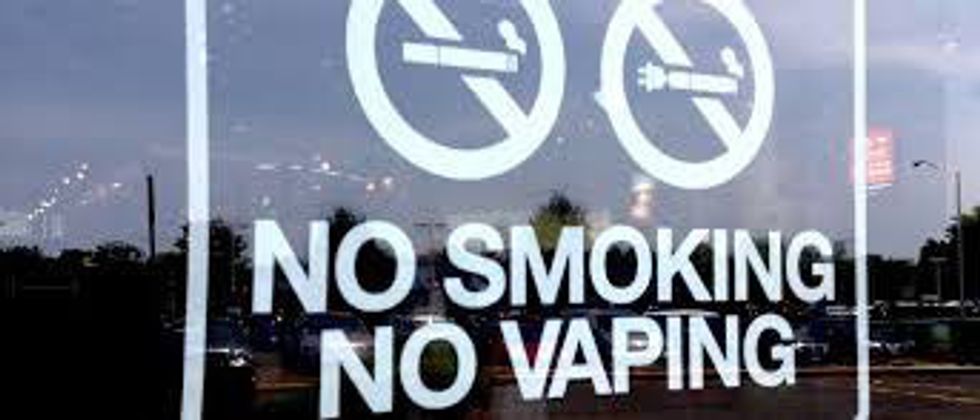
Advocates of e-cigarettes say that new rules will make products too expensive to develop, essentially marching thousands of small companies right into the grasp of classic tobacco companies. Critics counter that a regulation is key to assuring quality products and protection of our nation’s youth, who are vaping at a higher rate than other demographics.
So why does the FDA want to regulate a seemingly harmless device? As it turns out, e-cigarettes are not as safe as we think.
Upon more research, delving deeper into the world of vaping, I discovered that using an e-cig does not help with quitting an addiction. Although vaporizers offer smokers an opportunity to choose a e-liquid that has no nicotine, there are no specifics. Some companies offer e-liquids with nicotine, which makes it difficult for consumers trying to overcome the addiction to nicotine. Such products only replace the cigarette with a vaporizer but retain the amount of nicotine.
There are many reports of battery explosions due to unconfirmed sources of e-cigarettes. One such report was on CBS News where a man was injured when his e-cigarette battery exploded. His tongue, mouth and teeth were severely damaged. A battery can explode at any time, even while using an e-cigarette.

While the negatives of using an e-cigarette have been featured numerous times in major news headlines. we should not forget the many positives that also come with them. The traditional cigarette pollutes the environment and is harmful to both the smokers and nonsmokers around them. Vaping minimizes the harm by reducing our exposure to tobacco and lowering production of smoke to the environment. Vaporizers reduce or even eliminate all the chemicals.
Smoking exposes smokers and people around to the smell of tobacco. The liquid in a vaporizer is scentless. Traditional cigarettes produce a smell that remains on the smoker's clothes and skin for a long time. Hence, smokers have to wash their hands every time they smoke a cigarette and wash their clothes every day to be rid of the smell.
These next two years will be interesting to say the least, but I believe that vaping is essential for those like Kyle and our nation's youth. Yes, nicotine can still be found in most e-liquids, but at much smaller proportions as compared to smoking a cigarette. It is crucial that we remember that the technology is still growing each year, e-cigs only hit the mainstream market in 2007, after all. Maybe, instead of throwing a handful of regulations down onto the bape nation, officials can instead institute an educational method that will better educate those wanting to partake. E-cigarettes have given tobacco products a run for their money, showing the smoking world that there is another option and that has to account for something.