
Vampires are pretty much everywhere now. Ever since Anne Rice's novels came out in the late '70s, the pale, fanged monsters faced a resurgence of popularity. Pretty much every paranormal romance section in bookstores has at least one novel featuring a pretty teenage girl falling in love with an even prettier teenage vampire thanks to the success of Stephanie Meyer's Twilight, and even though their spot on the big and small screens are being taken over by zombies, there is still an abundance of movies being made about vampires.
But, the vampire myth was around long before Bram Stoker wrote about the nefarious Count Dracula.
Pretty much every society has had a creature that resembled a vampire. The Ancient Greeks had Lamia, a beautiful Libyan queen who hooked up with Zeus and subsequently became a demon that murdered infants and small children and drank their blood (the arguable moral of Greek mythology being that Zeus really should've just kept it in his pants), while the Chinese had the jiangshi, a stiff, hopping corpse that killed people by absorbing their life force at night and rested in a coffin during the day.
The closest relatives to the modern perception of the vampire came from Eastern Europe. The Romanians had the strigoi, which possessed the ability to turn into animals and drained their victims of blood, both traits of the vampire today.
Albanians had the shtriga, a vampiric witch of whom drained the blood of infants as they slept and later escaped by turning into an insect such as a moth or a fly.
It was these entities that later caused the spread of the myth into Western Europe in the 18th-century.
According to the Oxford English Dictionary, the first use of the English word "vampire" was around 1734. This rather appropriately coincides with a vampire "epidemic" of sorts that spread throughout Europe in the 1700s.
One of the most famous cases of 18th-century vampirism is that of Arnold Paole, a Serbian man, who at one point claimed to have been plagued by a vampire, but stated to have cured himself by eating soil from the creature's grave and smearing his face with his blood. However, when Paole died of a broken neck in 1725, people began claiming he had become a vampire and attacked them. These people later died.
Paole's case is noteworthy, because the Austrian Empire, of which controlled Serbia at the time, investigated the deaths and concluded that several of the corpses were in "vampiric condition"... Igniting a string of vampire sightings throughout Western Europe.
These "vampires" weren't the pale, debonair creatures we know today— they were plump and ruddy skinned, often exhibiting hair and nail growth post death. Often times, people who had committed suicide or been outcasts in life were presumed to become vampires after death. However, like vampires today, they were still disposed of by a stake to the heart, although some countries favored decapitation.
The vampire epidemic came to an end when Austrian Empress, Maria Theresa sent her personal physician to investigate claims of vampires. He concluded that vampires did not exist and laws were subsequently passed forbidding the digging up and desecration of bodies throughout Western Europe.
Despite the fact vampires were no longer viewed as a legitimate threat, they lived on in stories and urban legends.
And in 1819, they got a makeover.
The earliest incarnation of the pale, aristocratic vampire comes in the form of Lord Ruthven, from "The Vampyre", a Romantic era short story written by John Polidori. Polidori was the personal physician to Romantic poet Lord Byron, and the story was originally incorrectly attributed to Byron. Although Byron did not write "The Vampyre", it is believed that Lord Ruthven was based off him.
"The Vampyre" served as an influence on the most famous vampire work of all time— Bram Stroker's Dracula.
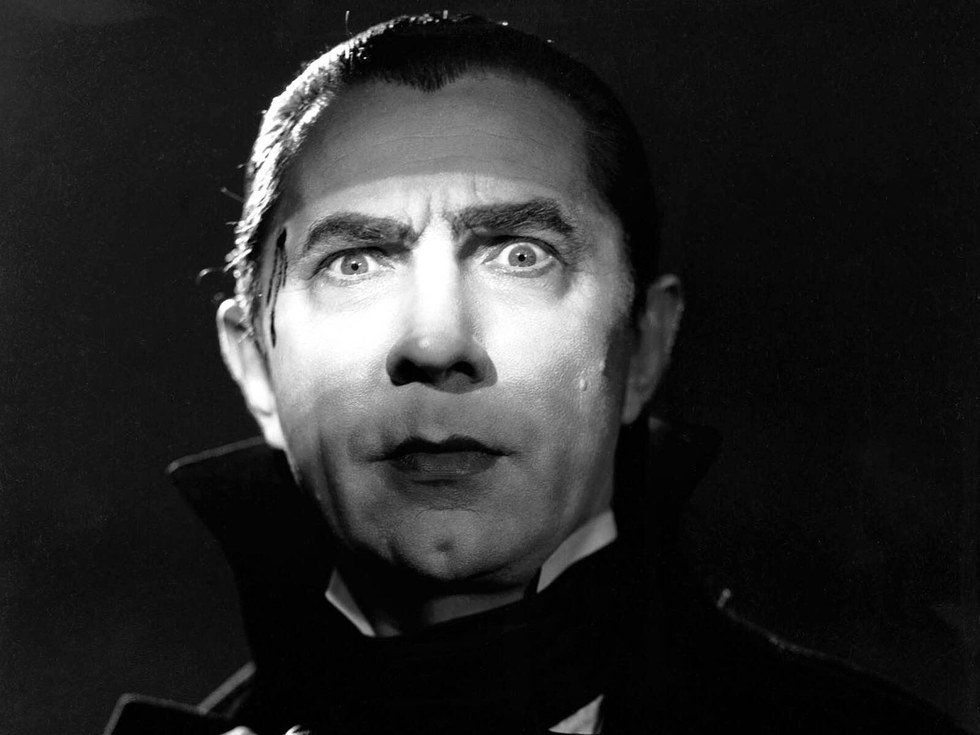
Stroker's novel came out during the notoriously repressive Victorian era, and the titular Count was practically erotic by the standards of his time. The mesmerizing villain popularized the image of the Victorian vampire, which became even more entrenched in pop culture when Bela Lugosi played him in the 1930s film.
From there, the vampire has only continued to evolve.
Anne Rice's novels ushered in another style of vampire-— they had the panache and class of Count Dracula, but with an added sense of angst and sex appeal.
That's probably the image of the modern vampire we're most familiar with— the aristocrat with sex appeal and a sort of existential angst over his condition.
Of course, from Rice on, we get the 21st-century vampires, presented in True Blood, The Vampire Diaries, and Twilight. The vampires in all of these series pick and choose which mythology they incorporate into their characters, but the overreaching trait is their sex appeal. Vampires have gone from bloated, monstrous corpses to love interests, usually for dull white girls in poorly written YA novels. Sometimes, unfortunately, they even sparkle.
But, despite the fact vampires have only become sex symbols as of the 20th and 21st centuries, the subtext of sexual behavior against the norm has always been a part of the legend— it's present through the extension of the vampires' fangs and the fluid exchange between vamp and victim. It is also present in the close cousin of the vampire, the succubus, a being who drains men of their life force through sex.
This is part of what makes the vampire so dangerous. It's a creature who is keenly aware of what our vices and vulnerabilities are, and exactly when to strike. It's the most human of mythological beasts, and because of it's humanness, it is the biggest threat.
But, that humanness is also part of what makes the vampire such an icon.
It's clear that no matter how much more or less the vampire will evolve, it will always be a favorite of the dark corners of our minds.