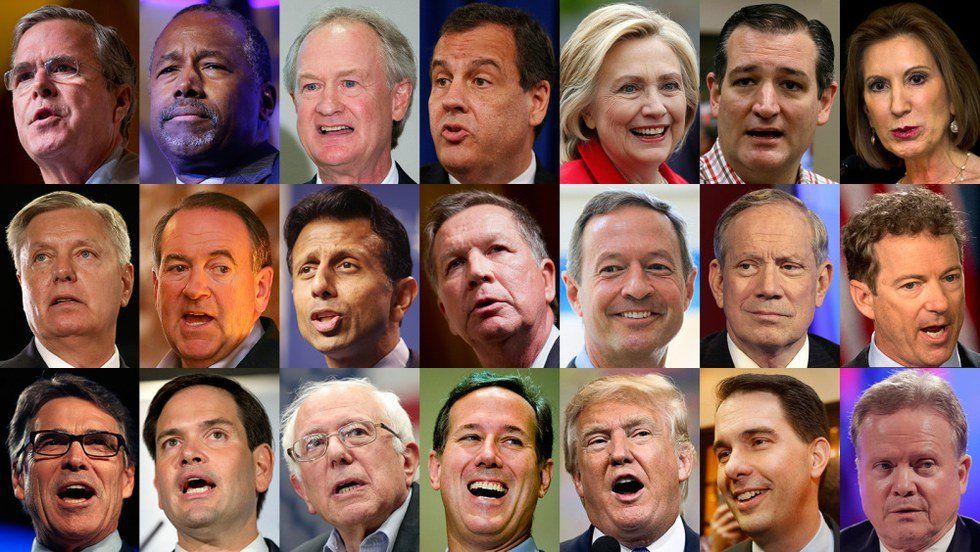
On October 13th, 2015, the first Democratic Party presidential debate for the 2016 election cycle aired. In an attempt to be a responsible and well-informed voter, I dutifully watched the candidates fight for the coveted spot of Democratic nominee. To be completely honest, I don’t remember much from the debate. I can’t recall any particular policies or specific sound bites. I can’t bring to mind any single moment that stood out to me. I’d be hard-pressed to even recognize the names of the three candidates who weren’t the frontrunners. What I can remember is how utterly bored I was for the majority of the debate’s duration. And this is exactly what’s wrong with the current state of politics.
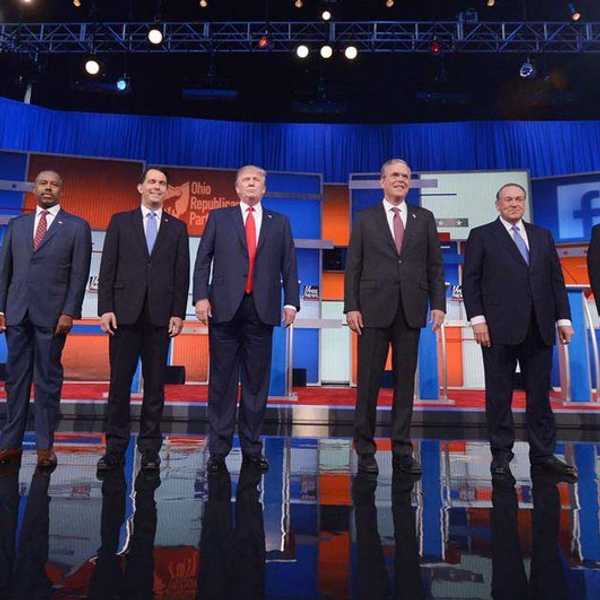
Looking back now, I am simultaneously embarrassed with and angry at myself for being so uninterested. I know precisely why I was so inattentive – there was no drama, in stark contrast with the first Republican Party presidential debates. There was no name-calling, no accusations, no arguments, and no conflicts with the moderators. In fact, the second Republican debate fell on my 20th birthday. So what did I do? I ordered a pizza and, alongside my best friend, proceeded to laugh at Donald Trump. And I viewed this as entertainment. But this is the 2016 presidential election cycle, in which we are going to choose the next leader of the United States. This is the future of our nation – and we are treating it like a late night reality TV show.
Maybe this isn’t entirely our fault – after all, it’s hard to take politics seriously when there’s candidates such as “Deez Nuts” (real name Brady C. Olson), Waka Flocka Flame, and Kanye West. It’s worth noting that these supposed presidential hopefuls have no premise, seeing as neither Brady Olson nor Waka Flocka Flame meet the minimum age of 35 to qualify for candidacy. And even if you were to ignore this fact, one quick glance at their “platforms” would be enough to render them nonsensical and satirical. Obviously, these campaigns were, fortunately, short-lived. But they still managed to gain major attention from the media and become viral sensations, due in no small part to our generation’s discussion and mocking support of them via social media. It’s safe to say that, for the most part, no one had any true intentions to back these candidates beyond jokingly giving them their vote on Facebook or Twitter. And I’ll be the first to admit that I thought the whole prospect was hilarious. But again, this is the election of the future president of the United States. As much as I support and follow social trends, I do not want to live in a country where running for president is merely a trend.
Sure, you could argue that none of this matters, seeing as the president is just a figurehead of their political party, and that the real change lies within Congress and whatever agenda they may or may not be pushing. This is a valid point. But it shouldn’t take away from the importance of being well-informed about the (actually legitimate) presidential candidates. And the media has made this difficult by turning politics into a circus, with little emphasis on substance and far too much on style and other things of little to no consequence. Any time one of these candidates opens his or her mouth to speak, news stations and their reporters anxiously await a mildly inappropriate comment, a supposedly inflammatory statement, anything that they can use to blow out of proportion and create drama with. And as funny as Jeb Bush’s comments about smoking marijuana 40 years ago may have been, they should not have been such a topic of interest (beyond his stance on its medicinal and recreational uses).
So I urge you all to look through the smoke screen that the media has created and find the real substantive issues that we should be knowledgeable about. This can be difficult when the news sources themselves are often biased – take, for instance, the MSNBC-Fox News dichotomy. But we must try to go directly to the sources of information themselves, and watch the debates instead of the highlight reels, and research the candidates’ platforms on their own websites instead of finding a summary on social media. With a world of information at our fingertips, we have no right to be uninformed.