


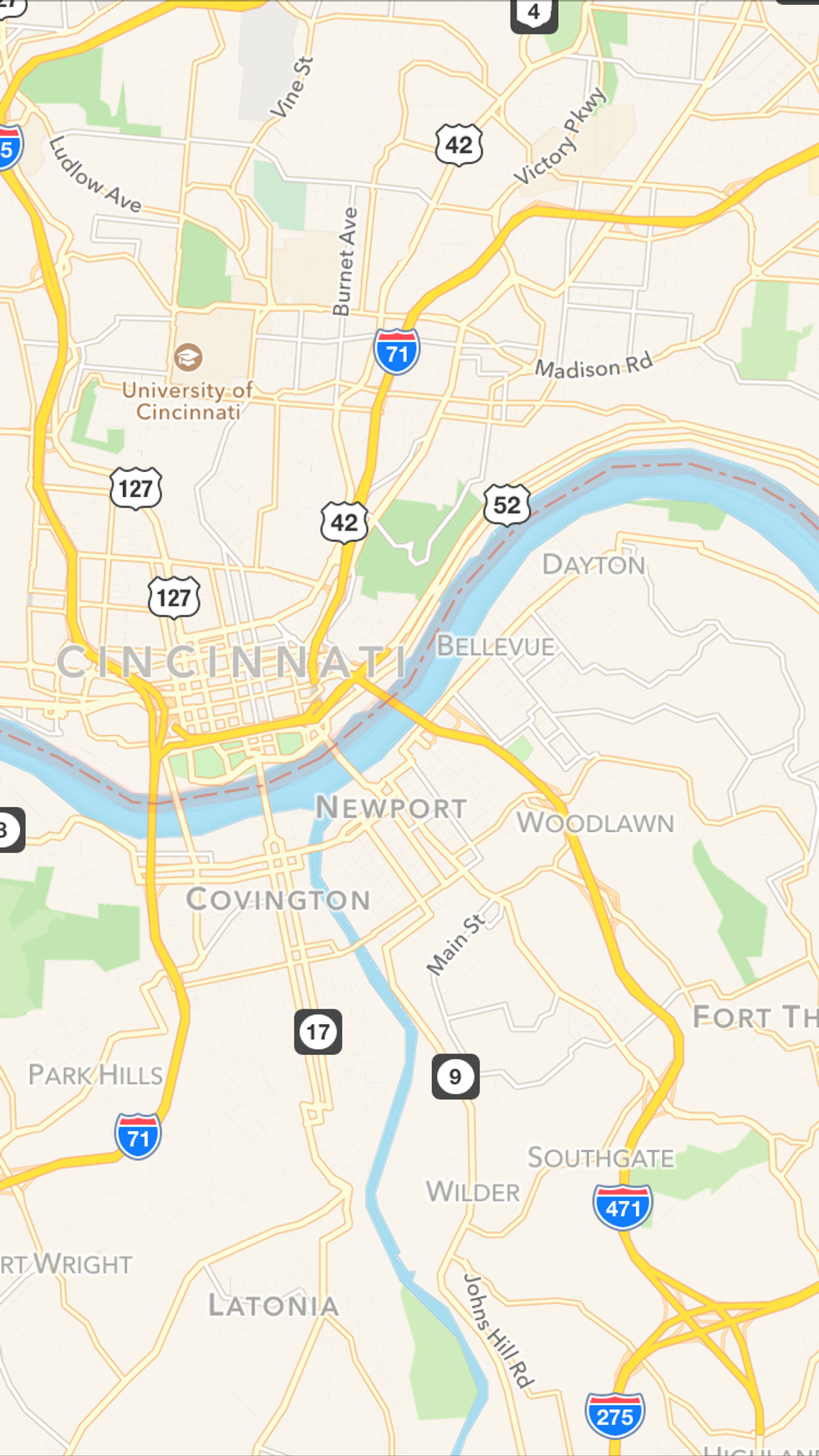
Poverty is something that most Americans are aware of, but for many it’s just something that is experienced by other people. For the people of Northern Kentucky’s Census Tract 505, however, poverty is all too real. With 100 percent of children under the age of 5 and 74 percent of children under the age of 18 living in poverty, Census Tract 505—the West side of Newport—is the most disadvantaged area in Northern Kentucky. Enter Project Hope.
Project Hope is a psychological study, focusing specifically on positive psychology and aiming to understand the effects of poverty on a person’s hope for the future. Positive psychology is a fairly new branch of Psychology that focuses on the study of human flourishing and what it takes to achieve the optimal state as indicated by Maslow’s hierarchy of needs.
The study, run by Dr. Rachel Clark of Northern Kentucky University, took 194 residents—aged at least 18 years—from 505 and the immediately surrounding areas and used both quantitative and qualitative forms of measurement to develop an understanding of the way the people viewed their futures. Because the area has an average reading level of a fourth grader, Clark and her team were forced to rewrite the questionnaire that they were using. According to Clark, it was no easy task. She says “we were only able to get it down to fifth grade, and that was hard.”
Overall, the residents of Census Track 505 reported higher levels of hope, a higher presence of meaning in life, and a higher level of contentment than the students in the control group. When asked if she believed the results were indicative of the entire area, Dr. Clark said “I think about [the results] a lot. I think that perhaps in this instance it may just have been the sample that we took. Results are always specific to the sample, so we can’t generalize.”
For the sake of comparison and reliability, the team used a group of 363 college students as a control. The average age of the sample group was 44 and a majority of the participants were white and female. The average age of the control group was 20. Though not all of the data has been fully analyzed, the preliminary results are in, and they aren’t quite what Clark and her team were expecting.
When asked about her motives for pursuing the project, Dr. Clark said that she thought of it as “giving a voice to the voiceless” and expressed that she truly felt like the best way to bring change for the people of 505 was to bring attention to the problems we don’t see.
For Dr. Clark and her team, the next step is to complete the data analysis and share it with the people of 505, as a sort of thank you for their cooperation and allowing their team to come into their community and poke around. Dr. Clark expressed that originally they planned on going a step further and implementing programs in the area to improve the state of thinking, and though an Honors course at Northern Kentucky University beat them to it, she says that they still may pursue implementing programs within the schools if possible.

















