
In the wake of the tragedy that took place in late August involving the shooting of JMU Alumni Alison Parker and Adam Ward, local conversations continue to arise. With the initial sting of shock starting to mitigate, attention is being turned to causation and, subsequently, prevention. In recognizing the terrible adversity of this event, it is also important to delve further into the incident and examine the underlying factor that nobody wants to discuss: gun control.
At this point, I imagine that some individuals will be inclined to stop reading. Justifiably, many will be uncomfortable with using an emotional tragedy as a vehicle to understand an implicit underlying issue. Some might be turned off and suggest that using this deplorable shooting incident to make a logical appeal is merely politicizing the tragedy. To those individuals, I will say this. First, I want to reiterate that the intention of this article is examination in its most logical form. This essay is neither for gun-control, nor against it. It purely explores different perspectives for the sake of providing and spreading knowledge. In her application to the School of Media Arts and Design, Alison Parker wrote, “I believe in a well-informed society.” The greatest defense we have against repetition is awareness.
Still, there are people who will resist being informed about both sides of gun-control, because “guns don’t kill people, people kill people.” Of course, the ground on which this argument stands is clear and reasonable. Pulling a trigger is a human choice, and trying to understand motive is diving into an intangible world of psychological enigmas. However, the nature of this commonly-used statement is one that searches for blame. Its implication is: do not blame the weapon; blame the face behind it. As Millennials especially, we constantly seek to project problems onto anything and everything. According to the Washington Post, the United States has the highest per capita rate of firearm-related murders of all developed countries. Whose fault is this? The perpetrators? The government? The bullet manufacturers? We all are compelled to condemn and programmed to point fingers. However, I believe there is profound importance in a deeper understanding before jumping to blame. Open-mindedness is becoming a lost art among Millennials. Again, I emphasize, this article is not searching to find fault, but seeking to investigate what other peers are thinking. Exploration over incrimination.
Over the past week, I have talked to a handful of JMU students and collected a variety of different standpoints regarding gun-control perspectives. I will integrate their feedback in the following discussions.
ON THE RIGHT TO BEAR ARMS
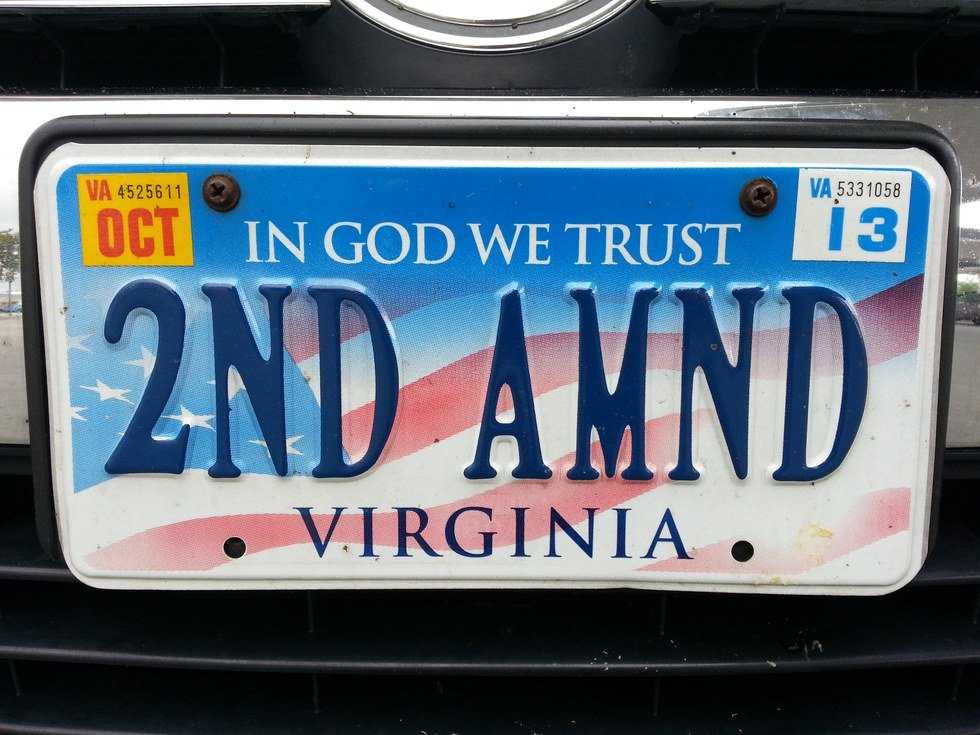
First and foremost, when discussing gun-control policies, it is necessary to address the second amendment:
A well-regulated militia being necessary to the security of a free state, the right of the people to keep and bear arms shall not be infringed.
The routes of all argument can essentially be traced back to how people interpret this amendment. Are guns for the purpose of self-protection a vital right to us granted by the constitution? Or is the restriction/banishment of guns a necessary implementation due to the high number of innocent deaths each year? Here is what some students thought:
“The Second Amendment right that allows every man the right to bear arms was written during a time when the weapons available were vastly less destructive than those that are available now (such as semiautomatics, assault rifles, etc.). Furthermore, the U.S. didn’t have a standing military; therefore it was necessary for states, towns, etc. to have a militia of local men to fight in potential wars”. – Katie McGee, Integrated Advertising and Corporate Communication Major
“I believe we have the right to bear arms, but to a point. There is no reason to own 50 assault rifles and thousands of rounds of ammo because you feel like it. – Andrew Tillotson, Pre-Law Business Major
James Norstrand, a third year member of ROTC, does not view the right to bare arms as something the government gives to us, but rather something for us to use against the government. His viewpoint:
“I never will understand why concealed carry exists. The whole purpose of ‘the right to bear arms’ is so we have the ability to defend ourselves against the government. So I guess that's why; the government knowing who has weapons would give them an advantage over the people. However, the Taliban knows that U.S. Marines and Soldiers have weapons, and they don’t have an advantage because of it!”
Later, Norstrand elaborates on this point, turning the emphasis to those who hold, and possibly abuse this constitutional right.
“We live in a country where Police Officers are held to no standard and where adolescents feel sorry for themselves and blame everyone for their problems. It's a nasty mix when one of those groups has lethal power. All other "Adam Lanza"-like cases are just outliers.”
ON THE ROLE OF TECHNOLOGY:
I was curious to gauge how students felt about technology’s role in gun violence. I was informed about the tragic events that ensued on WDBJ within an hour of the event via Twitter. Is the digital buzz that is being generated a good thing for spreading awareness? Or are we unintentionally glorifying the perpetrators by telling their story to a national audience? Is attention ultimately what they seek?
Some believe that portrayal via social media is mainly negative.
“Our media, television, and movies, all without a doubt contribute to the increase in gun violence across our nation. We are more likely to hear about a shooting on the news rather than a positive event. That is sad… I unfortunately saw the videos [of the shootings] and I have never been more affected by something in my entire life.” – Alexa Puglisi, Special Education Major
“I think that social media and technology act as fuel to the fire. Although it can spread awareness, I feel as though social media is at the heart of most of the conflict.” – Emily Bell, Public Relations Major
Others still feel that there is a power behind creating an online awareness.
“I like to believe that social media does more good than bad. Social media can help spread stories of hope and happiness. Through social media, the country and the world can learn more about who the victim(s) were while they were alive and help to humanize violent stories. Social media is pertinent in sparking the debate about gun control in our government.” – Katie McGee
ON IDEAS FOR IMPROVEMENT
To some extent, everyone with whom I spoke agreed on two things: background checks are necessary when purchasing a gun, and lethal weapons should not be readily available for purchase. Quoting from Sean Hartanto, a third-year business student:
“I don't want to completely take [the right to bare arms] away from the American people, as that freedom is very clearly spelled out in our rights, and in some instances it is necessary.”
Most agreed that Americans should continue to carry the right to bare arms, to a certain degree. This “certain degree” is where the lines become less concrete.
“I think there needs to be more surveillance of who is buying what in the weapons market; however, with the least amount of strain on the people and least amount of obstacles for the people.” – Christine Barbieri, Dietetics Major
ON AWARENESS AND ACTION
McGee does not blame the government, nor the guns. She finds fault within us as a people.
“We, the people, are the only ones to blame if we don’t pressure our governmental bodies to change gun control policies to help change the current landscape of gun violence.”
Similarly, Bell sums up her thoughts with the following statement by emphasizing the importance of our role as US citizens:
“In my opinion one of the biggest problems with gun control is that people remain uninformed and feel as though they are not affected by this problem. If this were to change there would only be positive results."
Letting yourself remain uninformed is naïve. Gun violence, while widely debated, is very real. Jonathon Houser, a junior studying Business at James Madison University, had a personal experience right here in Harrisonburg a few weeks ago. His testimonial:
“A few weeks ago when I was running downtown at night, I was down a block or two past Kline’s, by that sketchy 7/11. While running I had to dodge to avoid these two dudes who were in the street and didn’t see me, as they stepped in my way. I gently brushed past one of them and as I turned to say sorry, after hearing his multiple shouts and profanities towards me, one of the men lifted his shirt to show me the grip of a pistol tucked in his waistline. After that moment, I turned and sprinted as fast as I could to campus where I knew I would be safe. Nothing followed that brief interaction, but just the feeling of being threatened with a firearm was enough to terrify me.”
It could happen to anyone. Seeing what we have seen and knowing what we know, it is smart to stay aware and continue to educate ourselves.
Guns: Self-protective tool or killing machine? America: home of the free or home of the paranoid? The important thing to keep in mind is that ultimately, we all share the same vision – a nation with maximized safety and maximized freedom. I think sometimes we forget that underneath the complexities of it all, we are on the same team. Consequently, the issue of gun-control is a complicated one. As Millennials, the best we can do is stay as informed as possible. Understanding both sides of the argument and staying informed is one step in the right direction for our nation.