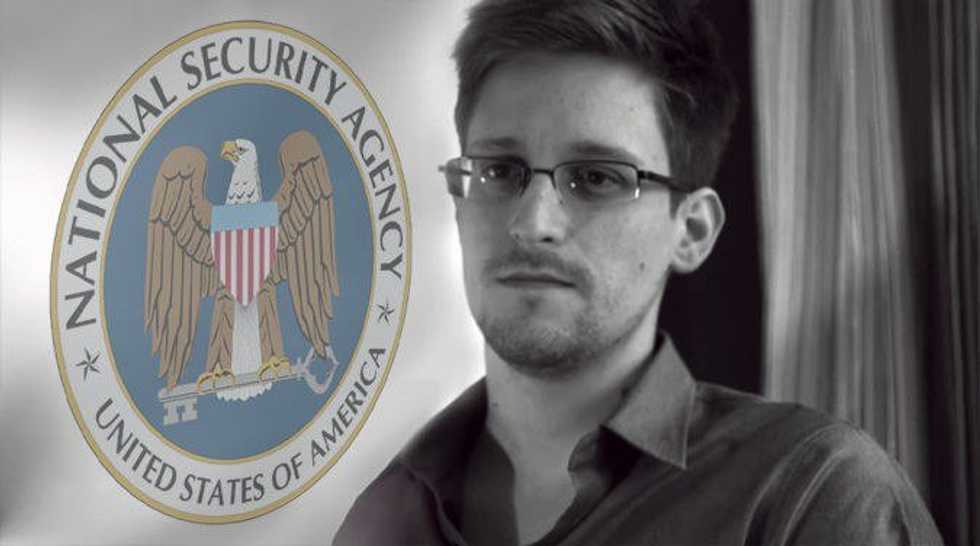
It is June 2013. Within a Hong Kong hotel room, documentary filmmaker Laura Poitras sets up her camera to film. Glenn Greenwald and fellow Guardian journalist Ewen MacAskill ready their notepads and laptops, eager to dictate the upcoming words that will stir within the room's confines. As the National Security Agency listens and collects the metadata of millions of Americans, precautions are taken to insure that no one is listening in on these reporters. The man that wafted the scent of a groundbreaking story to Poitras, detailing the treacheries the American government has done to breach the public's confidence of privacy, is also in the room. Codename "Ctiizen Four" finds comfort on his bed before releasing Pandora's box to his confidants, recorded by the camera. "My name is Edward Snowden."
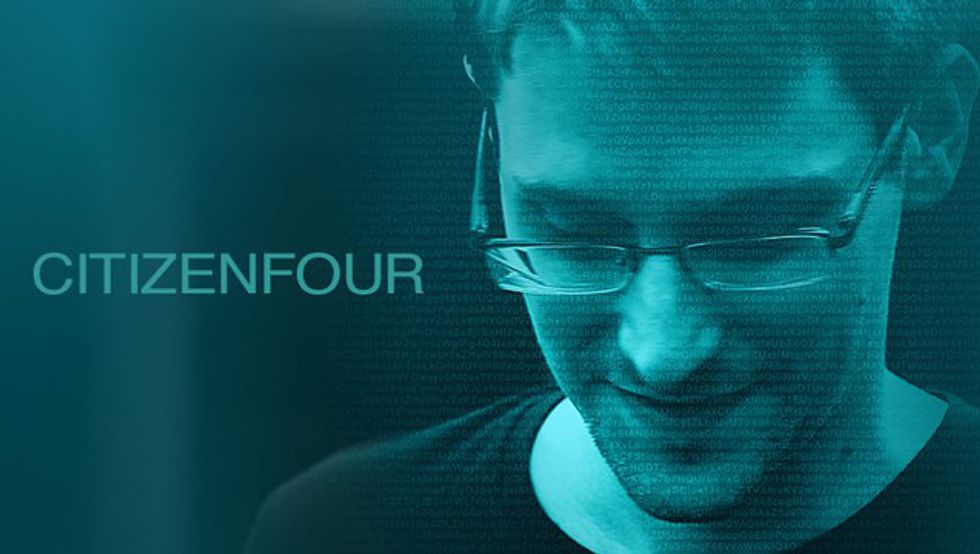
First, the misconceptions. Edward Snowden has gone by many labels depending on political allegiances: a hero, revolutionary, whistleblower, spy, traitor. The severity of the opposition escalating as the list goes on. Some hear "spy" and the listener imagines the theatrical representation of James Bond's 007 persona. "Revolutionary" and "traitor" bring up historical contexts, such as, the Founding Fathers, George Washington, Benjamin Franklin, John and Sam Adams, or the backstabbing defector, General Benedict Arnold. "Whistleblower" is nearly the moral center to the opposing arguments.
Whistleblowers are the people who make the crimes and illegalities going on behind organization's closed doors well known to the public. Former NSA Senior Executive Thomas Drake, like Snowden, was unsuccessfully tried under the Espionage Act. In his account to CBS' Frontline, Drake reported the inefficiency of the NSA's Trailblazer program, which consumed billions of dollars in funding, in comparison to ThinThread, a scrapped data collection program he favored that non-invasively sorted through American's private data while still showing successful results for the low cost of a few million. Trailblazer had become so huge, wasteful, and harmful to the American people, Drake felt compelled to contact a Baltimore Sun reporter to expose the spy network through encrypted emails, like how Snowden contacted Poitras.
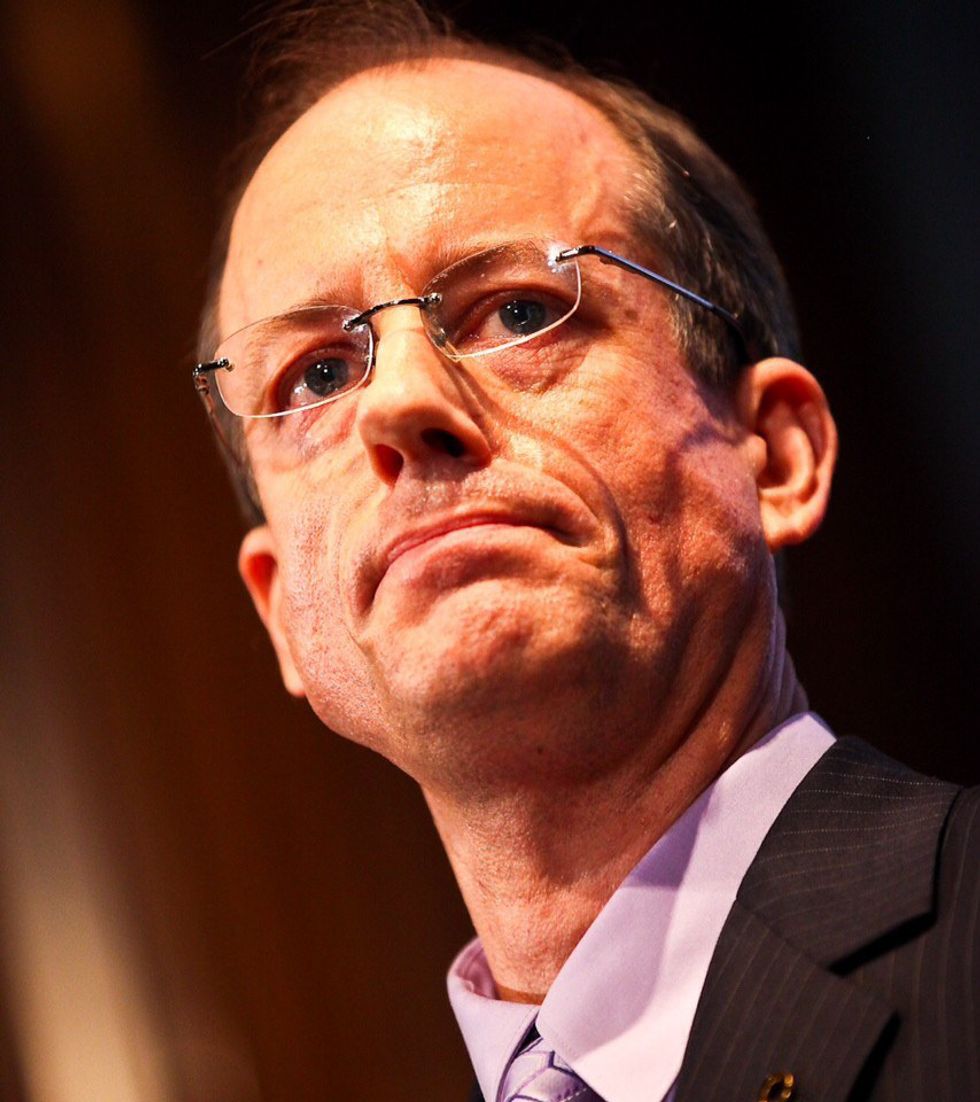
The Daily Show's Jason Jones was even dismayed at how Drake's spy tale was as lethargic as working in an office building. The aftermath had Drake stamped as a spy, tailed by government operatives, his home raided, questioned on his actions, all while narrowly avoiding a harsh jail time. Both Drake and Snowden never sold private government documents to our enemies, acts of definite malicious treason. "Mishandling government documents", when it comes to matters of a government spying on its own people, is an easy rephrasing of "telling the truth" when bringing such shadowy movements into the light.
To the NSA, Snowden is considered a measly speedbump. Another CBS Frontline report contrasts how the NSA operated before Snowden's leaks and their actions now. Now, there are restrictions on how long profiles on the records of private American citizens and noncitizens, alike, can be kept. Specifically, up to 5 years. That is, unless the FBI "decides to keep them". Any avid Homeland enthusiast knows that the FBI "conducts the majority of searches for information on Americans" as the federal bureau mostly investigates within the United States, a process strictly regulated on CIA operatives. "Gag orders", subpoenas commanding the turning over of private information with the condition of not making a mention of it, is now limited for only 3 years. Except for when there is applied FBI intervention asking for further use of said information and extension of said gag order. Data security activist Mark Rumold told CBS:
"The constitutional problem is that there’s a gag order when [a letter] is issued, without any judicial involvement or showing that there needs to be a gag. What they’ve done is shorten the indefinite unconstitutional gag to a three-year unconstitutional gag.”
So, it is just a few government agencies conducting simple background checks on its innocent citizens, making sure the worker bees buzz along the righteous path, right? Where does all of the information that the NSA has on us go? There cannot possibly be a filing cabinet big enough to fit all the information of 321 million, and growing, Americans into (according to the U.S. Census)? There is, but not physically. Glenn Greenwald's alma mater, The Guardian, found that the NSA's gigantic data storage facility in Utah, "could store data at the rate of 20 terabytes – the equivalent of the Library of Congress – per minute". One terabyte is over a thousand gigabytes, almost two average laptops. Do the math, and the NSA is recording, cataloging, and storing over 30 Toshiba's, every minute. Acquiring that data mass, in turn attempting to filter through it, is plainly grabbing at straws in the hopes of finding evidence of illegal activity that endangers national security. The harrowing outline of what the NSA has attained should only come after their means of initially coming into possession of the data.
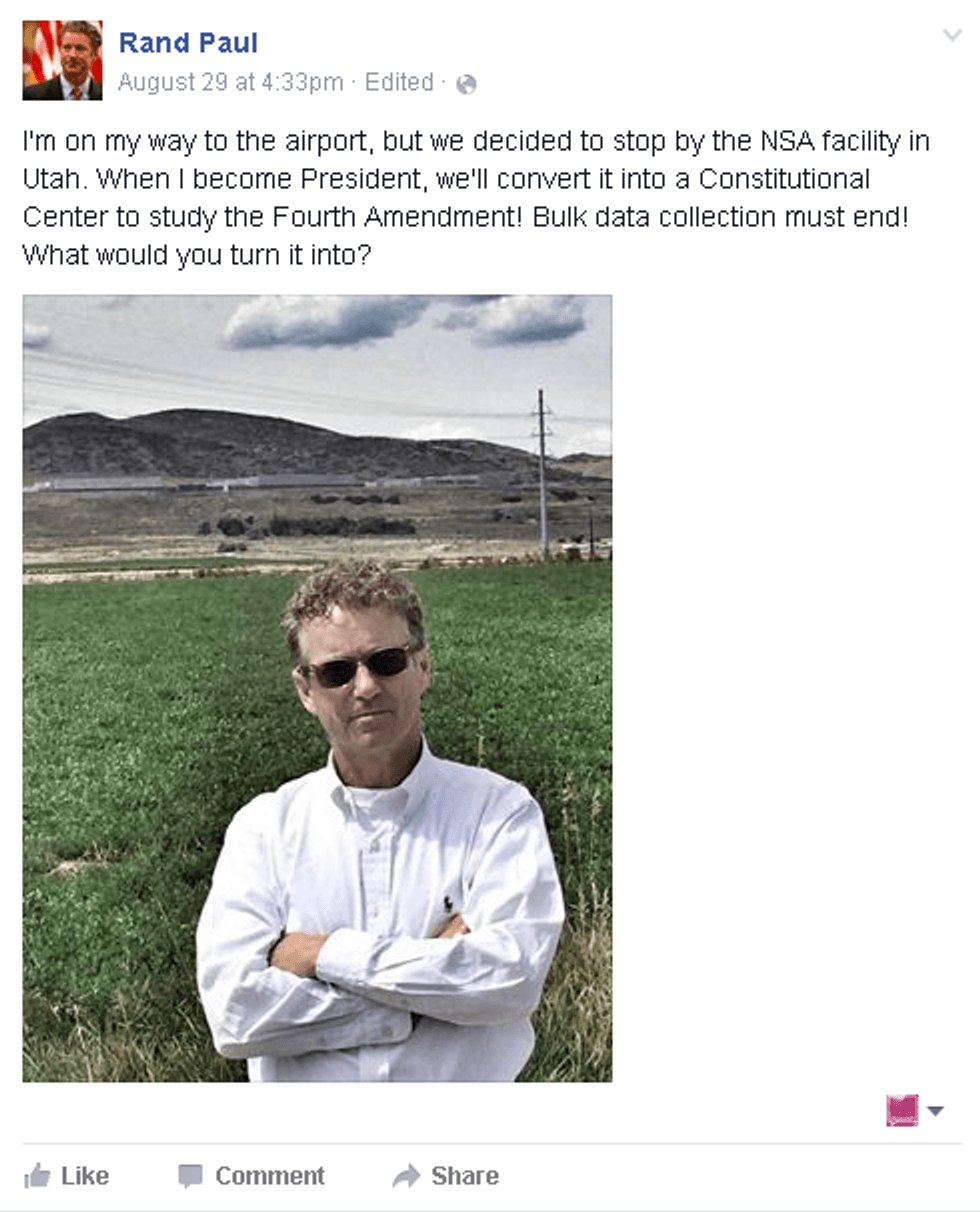
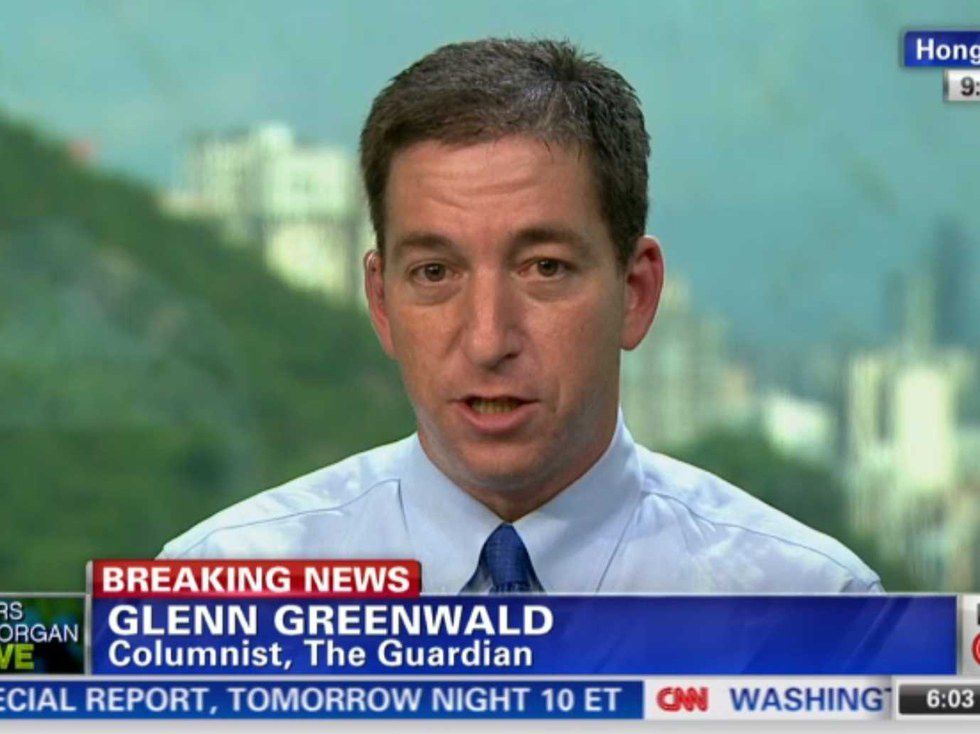
In his electoral campaign and during the Republican candidate debates, Kentucky Senator Rand Paul has advocated the security the Fourth Amendment provides, or should provide. Paul's cause got especially heated when he and New Jersey Governor Chris Christie butted heads during the party's second primetime debate, with Paul highlighting the NSA's intelligence gathering as "searches without warrants..." Again, Glenn Greenwald, the man standing atop the tip of the Snowden iceberg, published the NSA's misuse of the PRISM surveillance program, "allow[ing] officials to collect material including search history, the content of emails, file transfers and live chats". Email and search engines- AOL, Yahoo, Google- to the techno giants- Apple, Microsoft- and social media providers- YouTube, Facebook, Skype- the confidentiality of their users had been kicked down. More astounding is that it was done without their knowledge. Furthermore, the major phone companies, one time or another, had been issued gag orders for personal phone records, Greenwald specifying Verizon in this case.
In short, nothing has changed, radically. Menial changes at best but even those cannot be considered "a start". The ideology behind the basis of why we would ever need these programs has firmly stood its ground. When confronted by Paul, Christie toted the necessity of the Patriot Act during a period of insurmountable distress. The metadata of the American people, attributed to combating terrorism, is the web that can be spun off of our whereabouts at certain times and who we associate to, all by analyzing digital transactions through our credit card or phone calls. The web that spans the American population is set up in the hopes of trapping potential predators. The hysteria over the likelihood of another attack only legitimizes the precautions taken to prevent one, a self fulfilling prophecy unto itself. Just like the unsupported justifications Drake described, VICE's Motherboard channel reported:
"one conviction came out of the government's extra-controversial practice of spying on its own citizens...San Diego cab driver Basaaly Moalin, was for sending money to a terrorist group in Somalia. There was no threat of an actual attack."
Poitras' "Citizenfour" won the Academy Award for Best Documentary at the most recent Oscars ceremony (2015). No strangers to attracting controversy, Poitras and Greenwald are documented as holing up with Snowden in the same hotel, as he gives them premiere access to the documents he leaked to them. The world moving around the hotel lobby and past the room's view is warped from the bombshells they drop. Greenwald, whose published works from then leading to his leaving The Guardian focused on NSA spying, tipped the dominos into effect, as Americans and allied world leaders discovered the horrifying truth that is contemporary American intelligence gathering.
Political satirist, and host of HBO's Last Week Tonight, John Oliver even went to Russia, where Snowden's lease of asylum following his rendezvous from China is still in effect. From viral footage shot by HBO of interviews on the street, Oliver displayed his frustrations that few Americans know who Edward Snowden is and what he has done for the American public. To make sense of such ill informed results, and the confusion that Snowden created WikiLeaks, Oliver and Snowden analogized the government's internal spying on us to them peeping at the revealing photographs some Americans keep of themselves. The only explanation that drew legitimate emotional outrage from interview participants.
CBS' 60 Minutes program drew fire in December 2013 for "fluffing up" NSA's data collection headlines. Online news programs The Young Turks and TheLipTV joined in picking apart the notable news source's inability to ask the hard questions when given the opportunity. Actor Joseph Gordon-Levitt is set to portray Snowden in an upcoming feature film, overdramatizing the young computer strategist's history working for the government, basically reenacting the reality of "Citizenfour". If one of television's most esteemed news networking program cannot do Snowden's actions against major injustices justice, it is frustrating to know that the pretty boy that screwed up Robin's origin story from "The Dark Knight Rises" is the last remaining hope in drawing attention to Snowden's cause.
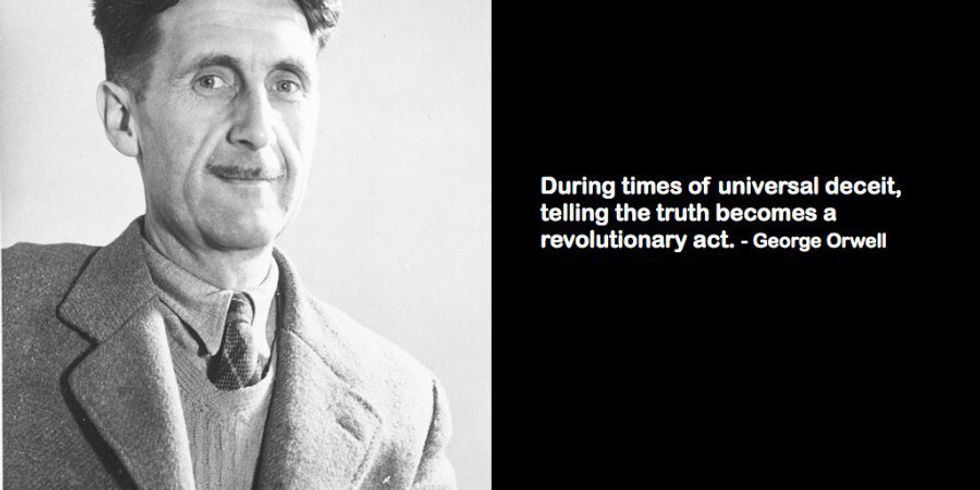
The NSA has seemingly re-written the Constitution in their favor. Many government officials will continue to try to win this fight, against the NSA. Monitoring, collecting, listening in on the daily life of its citizens is a common characteristic of a forming dictatorship. The United States, with all its flaws and freedoms, is the farthest thing from a tyranny. No nation of free men should ever have its values of freedom compromised by inspection, leaving all of our liberties up to contradiction. George Orwell's Big Brother of "1984" shall remain a dooming satire, a foil to what we all hold dear in a democracy, not a truth under scrutiny.