Kids don’t watch TV anymore, a fact that will eventually kill the dated industry.
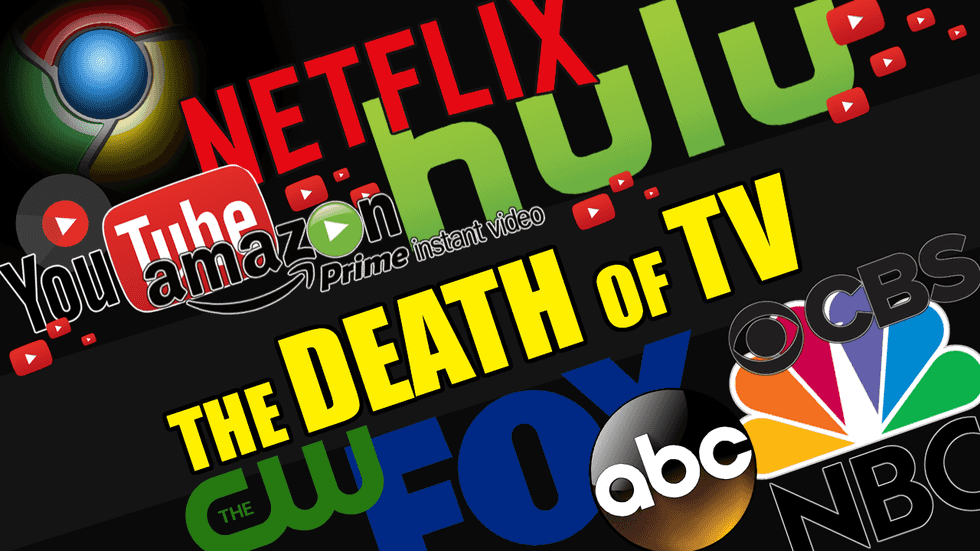
Kids spend their time instead on that Internet Machine. YouTube, Netflix, Hulu, Amazon Prime and now YouTube Red have allowed what was previously, at best, second-rate entertainment to gain equal footing with TV. The bloated and ancient networks that keep cranking out cop shows, doctor shows and the dreaded scourge of stale reality TV are finding it hard to keep up.
Before the pro-TV camp calls foul and points out that some of these online streaming services’ most popular content comes straight from HBO and Showtime, let me point out that those are not network TV. Services like HBO are subscription-based and were the precursors to what we see on the internet today. These services have even jumped on the bandwagon with their own mobile streaming versions at an affordable price.
Said pro-TV camp might then point out the new life that shows like Friends and Seinfeld have found on Netflix and Hulu. Exactly, new life. Networks are quick to forget and abandon successful shows, damning them to a life spent in a couple of late-night rerun slots for the rest of eternity. People don’t want that. They want to watch an episode—or a hundred—whenever they want. TV as our parents knew it just doesn’t scratch that itch.
TV’s fatal flaw is its inability to conform to an individual’s interests and, more importantly, their schedule. It’s never really had a chance to get away from that way of thinking. For over half a century TV networks dictated what the world watched and when they watched it. Throwing a wrench into this system were younger generations, namely millennials, who are very particular about how they waste their free time. While the internet offered more flexible ways to consume entertainment, TV remained a monotonous drone of networks throwing out similar show after show hoping that something would stick.
It’s a disconnect that no amount of simultaneous recordings with a DVR while still watching a live show could fix. Viewers frustrated with the boring old standard migrated to the internet, where they found content creators desperate to entertain them as an individual. The web is more immediate, trends rise and fall by the hour. TV takes months or even years to adapt to spot a cultural change and move in a different direction.
TV even failed to capitalize on the rising video game culture. NBC and Dish Network tried when G4 TV launched in 2002, way ahead of the curve but failed to gain the attention of the masses and follow through. A little over a decade later and YouTube is absolutely inundated with gaming related content, billions of views and dollars proving that it was a little more than a trend.
So, to get TV’s story straight: they want $100 a month on average, we get hundreds of channels when we only watch like five and you can record stuff—but not too much stuff—while you’re watching stuff. On the other hand, $100 a month would easily get you every big streaming service available with money to spare. On top of everything worth watching on TV at your fingertips, these streaming services have been making more original content. They’re not just means to binge on your favorite old shows anymore.
TV’s blatant disregard for human life will be its undoing. Time is precious and TV wastes it like no other. Left standing in its place will be the big networks of the future with their subscriptions and more reasonable ad revenue systems. Sites like YouTube where creators with little or no budget are generating content to satisfy every demographic were just the tip of the entertainment iceberg. Now that Amazon, Netflix, Hulu and YouTube Red have firmly cemented themselves into the role as the networks of tomorrow, it’s time for TV as we know it to sing its swan song and go the way of the Betamax.