
Guess what? This year has been terrible for politics.
You probably haven’t heard.
The Democratic nominee for president spent most of the primary under FBI investigation. More than half the country views her unfavorably. She has been criticized for taking money from Wall Street, for flip-flopping on issues depending on public opinion and of helping the DNC rig the primary in her favor.
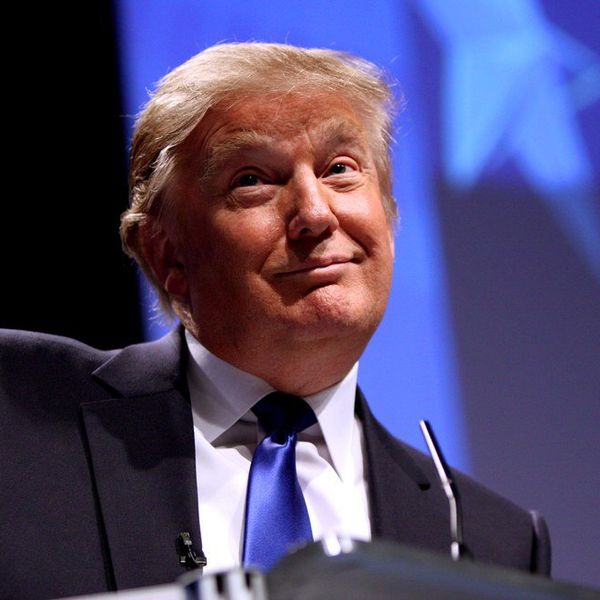
Then there’s the Republican side. If Hillary Clinton controlled the DNC to clinch her nomination, then Donald Trump smashed the Republican establishment to obtain his. Powerful Republicans clearly did not want to endorse Trump and have consistently stated that his more outlandish policies do not reflect what they believe. This is probably because 70 percent of what he says is untrue. He has been criticized for lying, racism, sexism and inciting violence.
If someone built a time machine and came back to tell you that one of the major parties nominated someone largely because they did not take money from Wall Street, would you have guessed they were talking about the Republican nominee?
Me neither, and that is one of many reasons I contend that the Republicans, while they will definitely lose this election, actually won the larger political battle in 2016. While both parties put up an anti-establishment “protest candidate” (Sanders, Trump), the fact that only Trump clinched the nomination and demonstrably hurt the GOP establishment means the Republican Party will be forced to re-examine its weaknesses. And the Democrats will not.
To start, Trump demonstrated how Republicans could evolve on social issues. While most Republican candidates stood in strong opposition to gay marriage, Planned Parenthood and trans rights, Trump did the opposite. In the past, Republicans like Rick Santorum could ride antiquated social views to huge polling numbers in the GOP primary, and holding “traditional” views on social issues was seen as a prerequisite to getting the nomination.
However, Trump proved that assumption wrong. At the height of the Planned Parenthood scandal (before it was proven to be a hoax), Trump stated that PP “does great work on women’s health.” He admitted that gay marriage is now a reality after the Supreme Court ruling, contrasted with Ted Cruz calling it one of the darkest days in American history. Donald Trump broke with GOP establishment to criticize North Carolina’s anti-transgender law and invited the first openly gay speaker to the Republican National Convention.
The fact that Trump broke conventional wisdom on social issues and the Republican primary is important in every aspect; over 60 percent of Americans support Planned Parenthood and gay marriage. Marriage equality serves an even more important purpose as a gateway issue. It is a simple test to check if a candidate is in touch with the times and voters' general views. It is true that support for gay marriage itself has been growing in the Republican Party, but Trump proved that we may have reached a tipping point where the GOP can come out in support of gay marriage and actually grow the party. The majority of almost every demographic, from the country as a whole to new voters to actual Republican voters, supports gay marriage. Now that Trump has shown that to be an acceptable view for the Republicans, they may be able to recapture some momentum going forward.
Trump also showed the Republican establishment that GOP voters are not quite as supportive of corporate interests as previously believed. As I stated before, conventional wisdom would suggest that Bernie Sanders' rejection of Wall Street donors would earn him more credit with Democrats than Trump’s would with Republicans. But Trump ended up being the candidate who rode his “self-financing” mantra to the nomination.
There have been enough pieces about how Trump did not actually self-finance his campaign, so I won’t get into that. He created the perception that he did, and that’s all that matters in politics.
The fact that Trump and Sanders did not take money from big interest groups or major corporations helped them garner appeal with their base voters. While Hillary Clinton, Ted Cruz and the rest of the field were all beholden to billionaires and corporate interest, Sanders and Trump were only beholden to the people.
Especially after the DNC leaks exposed widespread corruption in the Democratic Party, people will have a hard time trusting the Democrats for years to come. However, since that will not impact this election cycle, given Trump’s unfavorability is at 70 percent, the Democrats will make no changes until their mistakes hurt them on election day.
“Trump, in his wholesale rejection of Republican policies that primarily benefit the rich — free-trade agreements and ideological conservatism — has exposed establishment Republicans for the lying liars that they are. Republican policies don’t help poor white people. When Sanders supporters whine that people 'just aren’t voting in their own interest,' look instead at the wholesale migration to Trump. Southerners aren’t as stupid as the rest of the country would like to believe. After decades of poverty and failed policies from both the left and the right, most people are just looking to work for a decent wage.”
Here, somehow it’s the Huffington Post that comes dangerously close to accuracy. Trump rejecting big corporate donors created the perception that he’ll fight for the working class in a way no previous president has. I have to admit, even I find that appealing. The fact that Trump gained appeal by demonstrating his willingness to reject corporate interests signals that the GOP establishment must regain the trust of voters by putting them before the almighty dollar.
Again, this is a lesson establishment Democrats did not learn. Clinton is wrapped in Wall Street money and is protected by a moat of fluid policy positions. The fact that she will succeed in the general election, despite all that and more, means the Democrats have no reason to change. Much like a business will only respond when money is lost, political parties will only shift their views if voters tell them to at the ballot box.
Finally, Trump’s rise will force the Republican establishment to confront the racist faction of their party. From calling Mexicans rapists and murderers, to promising to ban all Muslims from entering the country, to garnering an endorsement from the KKK, Trump has taken full advantage of the darkest side of the Republican voting base. Of course, Trump is also polling 8 percent behind the Republican average when it comes to black voters and has alienated what will soon be the largest ethnic group in the country. His racist remarks are a large reason why he is so far back in the polls.
Since Trump won the nomination and begrudging support of GOP elites, those comments are now tied to Republicans in general. In the future, Republicans will be forced to move further away from the racist faction of their party in order to have a prayer come general election time. Because of how much more damage Trump has done to the relationship the GOP has with minority groups, Republicans will have to take drastic steps. In the end, after what will have to be a long healing process, Republicans could find themselves in a better position with minority voters than ever before.
In the end, an election between Bernie Sanders and Donald Trump would have been an unmitigated disaster. As it stands, one between Trump and Clinton makes the "House of Cards" universe seem appealing. And while Clinton should crush Trump in November, his half progressive/half 1800s racist approach to this election has shown the Republican establishment exactly what they need to fix. Unfortunately, the Democrats will remain unsure.