

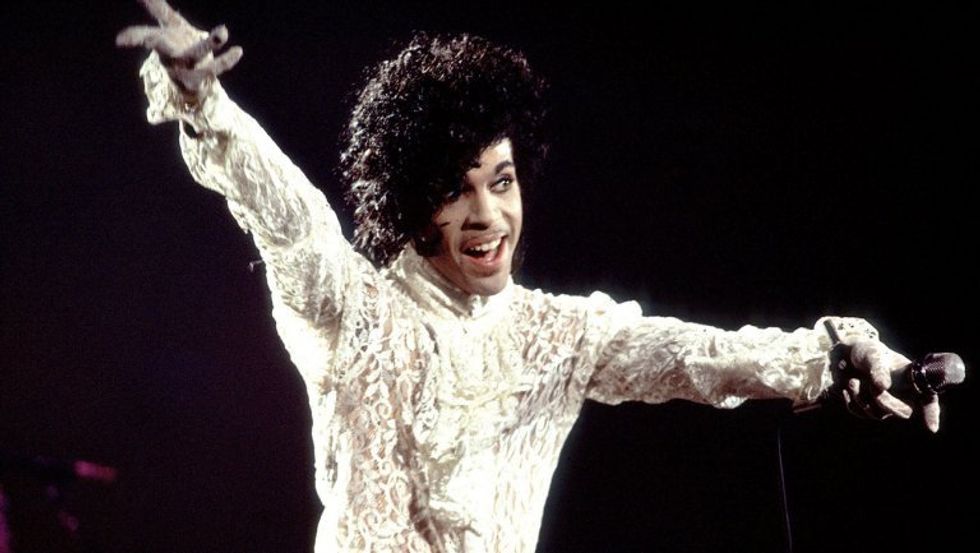
A little over a week ago, we lost one of the most influential artists of our generation: His Royal Badness, The Prince of Funk, none other than Prince Rogers Nelson. You may know him from his 1984 album, Purple Rain (which sold around 13 million copies in the United States alone, making it the third-best selling soundtrack ever), from his film by the same name or the numerous awards and nominations attributed to his talent over the past four decades. Since 1975, his music and image have held a special place in our hearts, from his capability to seamlessly meld funk, R&B, rock and punk with the element of spirituality to his classic curls and brilliant attire. His charisma and unique sound characterized the vibe of 80's and set the stage for rock and roll in the years to come. His legacy has the power to transcend the boundaries of time and carry with it the culture of an era. So, instead of dwelling on the present, let's take a trip down memory lane to revisit some of the moments that truly established him as royalty.
1. He's a recipient of several Grammy awards, a Golden Globe and an Academy Award.
He's won a multitude of Grammy's on account of his albums and singles throughout the years, including When Doves Cry and Call My Name, an Oscar for best original song score in his debut film, Purple Rain and a Golden Globe for best original song, The Song of the Heart, in the motion picture, Happy Feet.
2. Prince was actually a philanthropist.
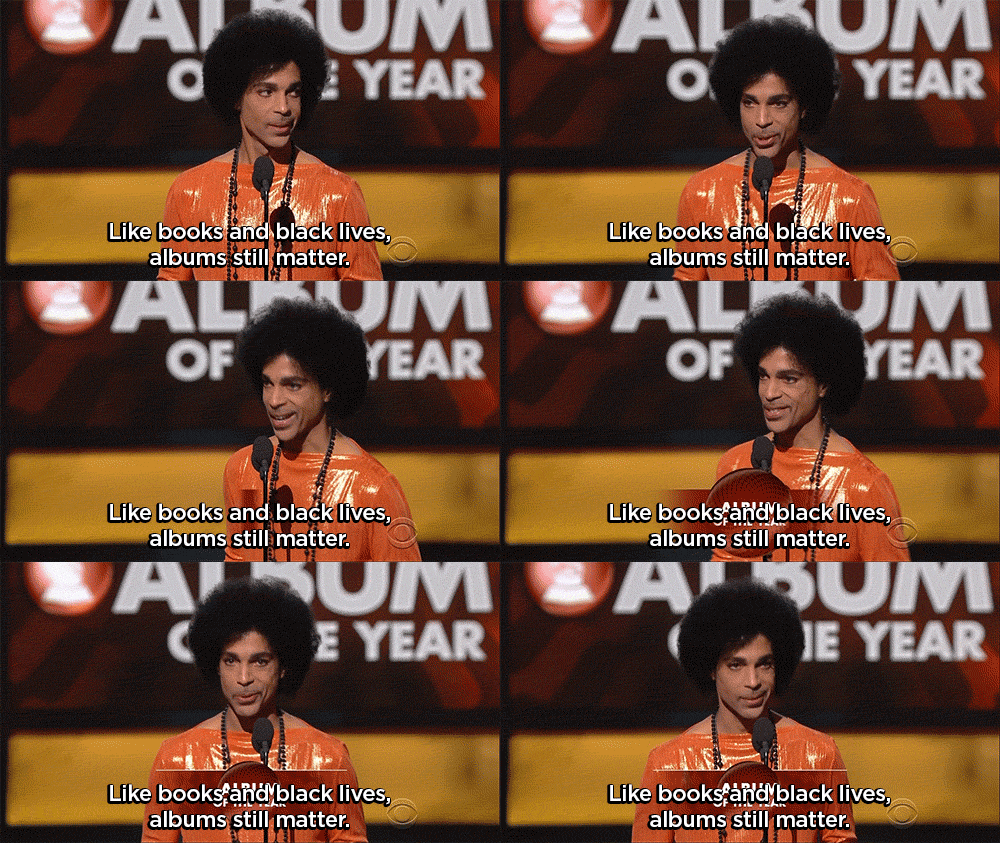
His ex-wife, Manuela Testolini, explains that he was a "fierce philanthropist" and donated to several foundations supporting environmental conservation and educating youth about technology. He worked to support social issues such as Black Lives Matter and was a firm believer in empowering disadvantaged communities. When asked to explain his stance on politics, he described that he wasn't Liberal or Democrat, red or blue, he was simply "purple".
3. He wrote songs for multiple other artists as well as his own.
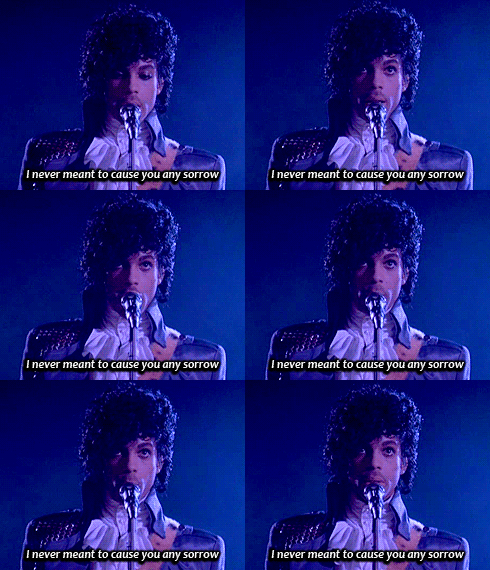
Along with producing his own albums, Prince wrote Manic Monday for The Bangles, co-wrote Stand Back with Stevie Nicks, I Feel For You for Chaka Khan, Round and Round for Tevin Campbell, Sugar Walls for Sheena Easton, When You Were Mine for Cyndi Lauper and Nothing Compares 2 U for The Family which would be ultimately released by Sinead O'Connor instead.
4. Prince is among two artists ever to have a number 1 album, movie, and single at the same time in the United States (the other being the Beatles).
At one point in 1984, When Doves Cry and both Purple Rain album and film led the Billboard charts. The Purple Rain soundtrack would ultimately remain Number 1 on the Billboard charts for 24 weeks in a row.
5. He's a self-taught musician and wrote his first song, Funk Machine, at the age of 7.
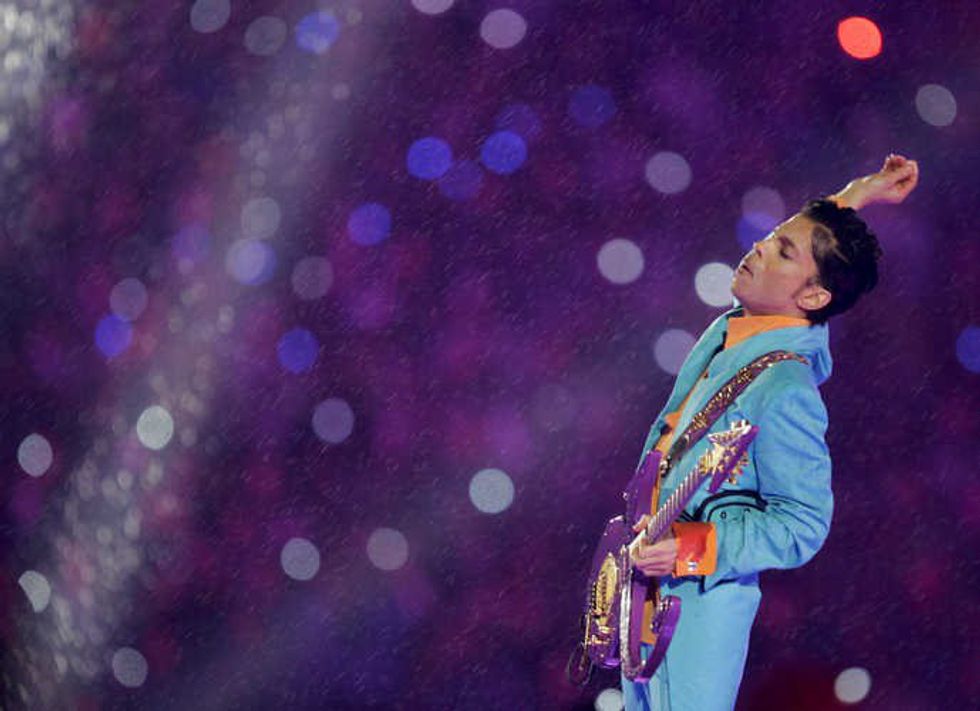
His father John Nelson had his own band, the Prince Rogers Jazz Trio, and would serve as Prince's inspiration as a child. He'd never let Prince play the piano very often as he thought that he wasn't capable of doing so. Whenever Prince received an opportunity to play, he'd practice to develop his skill and prove himself to his father. He also formed his first band at the age of only 13, naming it Grand Central first but then changing it to Champagne.
6. He's written more songs than the Beatles as well, with a repertoire of over 600 tracks.
His back catalog consists of hundreds of songs, not inclusive of those that he wrote but eventually didn't produce. He scrapped his "Black Album" in 1987 claiming that it was too dark and immoral and also has several unreleased songs stored in what he called "The Vault".
7. His distaste for excessive publicity (and the media in general) and integrity helped shape his journey in finding himself, and helping us find ourselves, in his music.
Prince refrains from allowing interviewers to record his voice or take notes while he's speaking to them as he feels that it takes away from the nature of conversation. At 19, he refused to sign a contract with CBS and signed on with Warner Brothers instead as they'd let him produce his own style, texture, and genre of music. He would later have a fallout with his record company as they refused to provide him with ownership over his content and insight or control over how the label chose to profit off of his music. He wished to "emancipate [himself] from the chains that [bound him] to Warner Bros" and fought to warn younger artists of the dangers of losing artistic integrity.

Throughout the years, his idealistic yet angsty and passionate outlook added value to his music and appealed to audiences worldwide. As a musician, he not only fought for self-expression but for social harmony and injustice in society. We were able to experience life and view the world through his lyrics and the enigma that defined his performance and art. So as we sit here and listen to Purple Rain one last time, let us remember the magic that Prince introduced to the stage and the "Red Corvette" mid-west boy that we once fell in love with.