
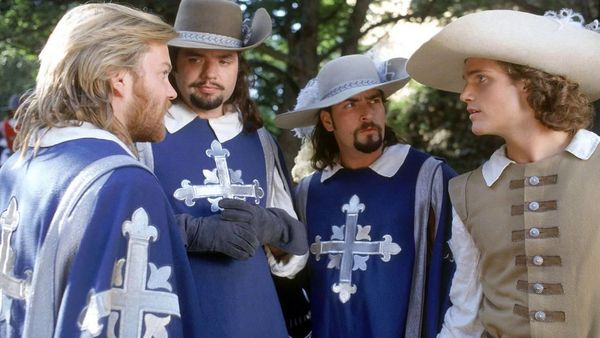

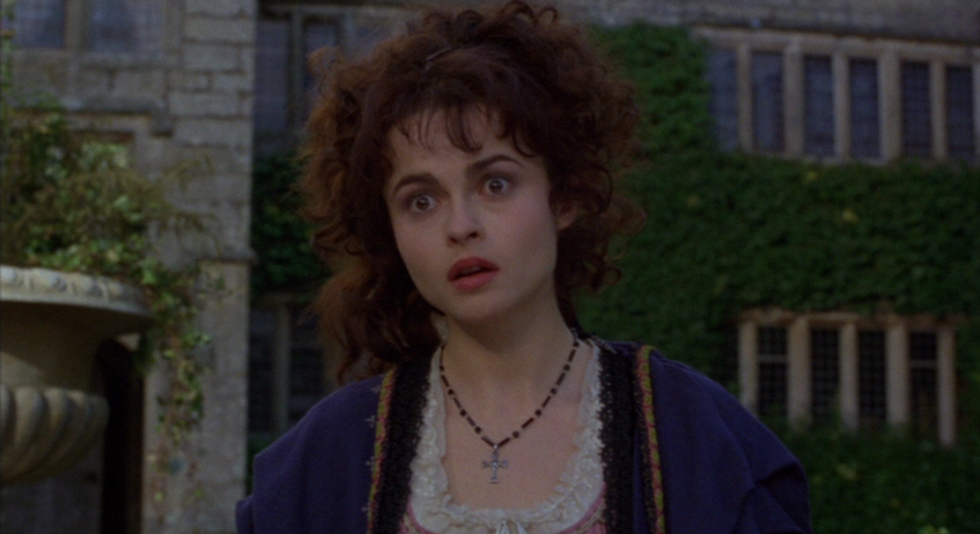
William Shakespeare’s "Twelfth Night" is a masterful meditation on the comic and tragic effects of fluid emotions such as infatuation, ecstasy, and intoxication Trevor Nunn’s "Twelfth Night," on the other hand, is a confused mess that so utterly misses the intent and tone of the original work, I struggle to conceive of a worse adaption. The film’s three failings oddly enough metadramatically resemble the vices associated debauched festival: disorientation, excess, and misidentification. While there are good aspects in the adaption, the drowned in the overall confusion that pervades this adaptation like flotsam in a shipwreck.
Let’s start with the smallest structural flaw: the disorienting cuts between plot lines. There are three concurrent plots in Twelfth Night: The goings on in Orsino’s court, Sebastian’s quest to find Viola and the plot against Malvalio. The movie wants to have all of them at the same time. It achieves the be jump cutting between each plot. For example, Sebastian’s dreamy reflection that he must be mad to fell such bliss leads directly to Malvolio’s impassioned plea that he is not mad to Feste. This gives the audience tonal whiplash and takes the viewer out of the film’s narrative.
Even in the best cases were the shifts motivated by a similar word usage or similar theme between the plot lines the viewer still has to go through a mental shift to focus on each new development in the competing plots. The only time the manage to use this technique to their advantage is when the cut between the song “O Mistress Mine” with Orsino’s speech to Viola about how a man should marry a younger wife. It works because both scenes are about youth’s effervescence, both share the same background score and both possess and earnest sincerity missing from the rest of the film, as both Orsino and Feste seem to want what’s best for the people they’re speaking.
The larger structural problem is the excess of time wasting spectacles that the film indulges in at the expense of plot. Right off the bat the viewer is introduced to this motif when the film announces through a clunky couplet that the war briefly mentioned in the original play’s prologue is has been changed to a war that’s currently being fought. This immediately raises the question of why Orsinio is so obsessed with love and music when he is not only the leader of a war torn country but also recently loss a nephew in said war, or more importantly why Viola and Sebastian thought it was prudent to take a pleasure cruise right near the coast of the country they are at war with.
Never mind that! This gives this film makers the excuse to turn every minor skirmish in the play into a full on battle, complete with mounted soldiers, regardless if it fits the pacing of the scene or seems utterly ridiculous. The upshot of this time wasting is several important lines get cut. Most notably Antonio’s famous “Danger shall seem sport line” by cutting that line we just end on the note that he has many enemies in Orsino’s court, we have no idea why he’s willing to go in so danger.
However, those faults could be over come if the characterization wasn’t so bizarrely off. Characters seem to have their traits swapped with one another. The rational and pragmatic Viola is portrayed as blithe and jokey until the script calls for her to be randomly serious or upset. The jovial and adaptable Feste now wears a permanent frown and seems constantly surprised by every twist in the story, a trait the undermines the character who’s supposed to be adroit in dealing with human interaction and discerning someone’s personality.
The film also fails the more nuanced characters. By making Sir Toby more cruel than funny, it becomes hard to view Malvolio and Sir Andrew as anything but purely sympathetic. The lack of viewer sympathy for the comic relief characters bifurcates the movie, giving the viewer a relatively poorly done love story on the one hand and heartless sadism done by unlikable characters to pathetic ones on the other. The movie also has the characters shift emotions rapidly. In one scene Toby sympathetically offers Andrew a drink on hearing he’s no longer adored, in the next, he’s taunting him for being such an easy mark.
There’s one well done scene that deserves mention, the “Come away death “ scene. Viola and Orsino go to Feste’s house to hear an old love song and while carried away by the passion of the song, almost kiss. Feste ,displaying his usual amount of tact , taunts the duke for his apparent display of homo-eroticism. Embarrassed and terrified about what his feelings may mean, he runs out doubling down on proclaiming his love for Olivia, something that rightly upsets Viola. This scene works for three reasons. It justifies the what would normally be a flaw( the characters sudden erratic changes in mood) by giving a rationale for them( the tension in Orsino and Viola’s relationship). It uses its other flaws (Feste’s emotional tone deafness) to further character development (making Orsino realize his feelings for Viola). Lastly, it improves on a flaw in the original play by showing the development of Viola and Orsino’s relationship. Unfortunately, like much in the film, this development goes untouched after this scene.
Due to its jumbled fusing of plot lines, time wasting fight scenes, and bizarre characterization, Trevor Nunn’s Twelfth Night fails utterly as an adaptation of the source material.

















