

“What do you picture when you imagine animal rights’ activists?”
This question was asked of us in a class recently, and most of us, admittedly, regurgitated the stereotype: animal rights' activists are touchy-feely, idealistic hippies without anything better to worry about.
There seems to be this idea that animal rights’ activists fight for a cause less serious than other activists, that we are super-granola hippies who feel a deep connection with cows and chickens — just look up "animal rights' activist" on Urban Dictionary to see the lovely reputation they have.
As a vegetarian, I’m thus perceived as someone whose fragile disposition has forced me to feel empathy and pain for the poor, suffering animals. And sure, that might be true, but the root of my vegetarianism lies within the atrocious, despicable state of the meat industry in America, something that, unfortunately, is underreported and underemphasized.
Yes, there’s a perception of vegetarians as emotionally fragile people who can’t bear to accept that we live in a society with a food chain where death happens. And sure, I would consider this partially correct insofar as we indignantly oppose how the meat industry oppresses and exploits animals to improve their profit margins. Yes, I care about the animals, and it pains me to consider their inevitable deaths and miserable lives. However, we are cognizant of something much more sinister than merely raising animals to slaughter: The abuses the meat industry perpetrates reflect a disgusting apathy toward life in general.
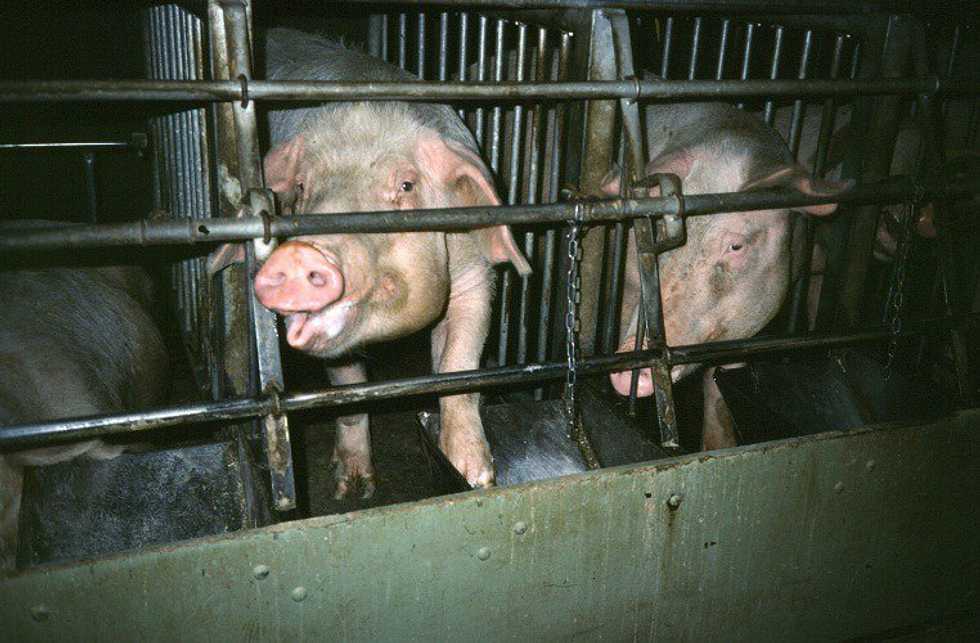
Before the animals are even introduced to the assembly-line style death they will inevitably meet, the factory farms force them into disgusting and inhumane conditions, where they will spend their disease-ridden and unhappy lives.
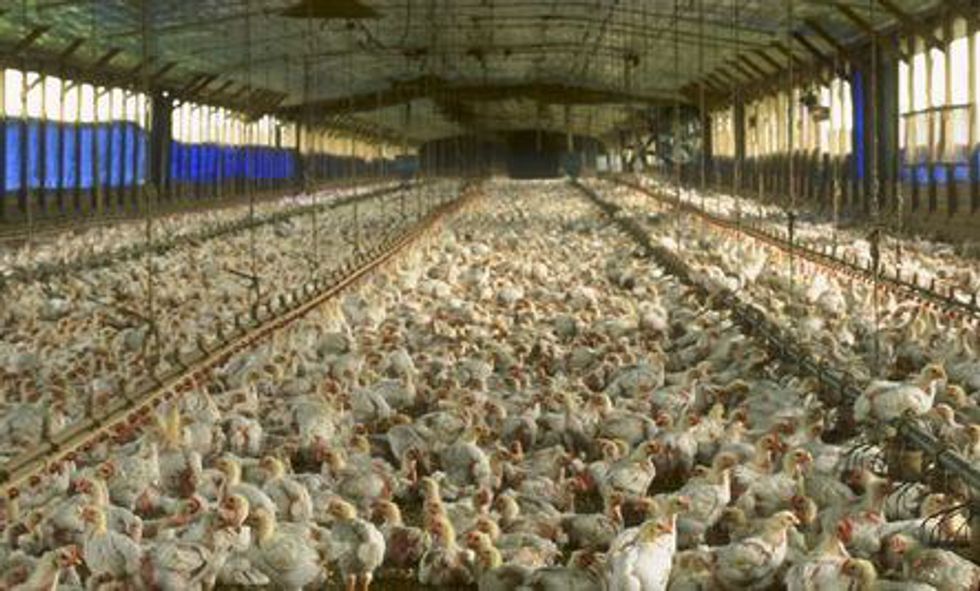
Often, when we discuss the meat industry, the conversation revolves around whether it is morally right to sacrifice animals for our own consumption. I don’t intend to involve myself in any of those debates. The primary reason for my vegetarianism doesn’t concern their inevitable death (though that is a factor); rather, I oppose the conditions animals are forced into. Animals raised to be consumed — pigs and chickens especially — are ensconced in claustrophobic spaces, with little to no room to roam, access the outdoors, or even turn around. They are arranged with no designated space to relieve themselves, thus creating an environment where urine and fecal material permeate their living space, rendering it an inherent aspect of their “home.” The effects of this are devastating.
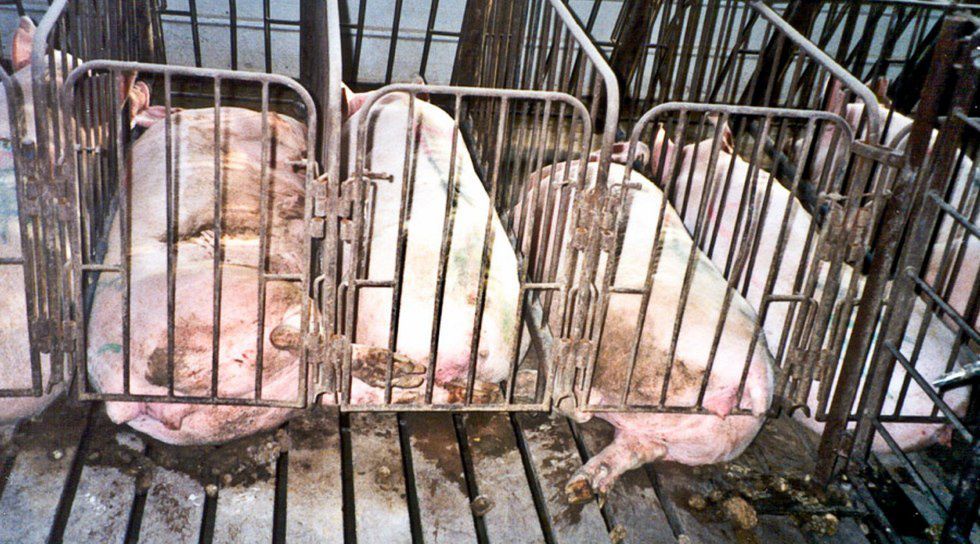
Many of these animals die as a result of their conditions, resulting in an abundance of rotting, dead chickens left in the cages of those that produce eggs for consumption.
Those “lucky” enough to escape death before their slaughter, unfortunately, do not have it better off. Many suffer from disease created by their abhorrent living conditions, and a large population is afflicted by mental illness due to their diminished autonomy and inability to enjoy their natural environment. Packed tightly among others, chickens experiencing symptoms like swollen eyes and feather loss don’t have access to veterinary care, and will spend their days in suffering.
Of course, there are measures we can take to ameliorate this suffering without resorting to vegetarianism, right? We can eat eggs from free-range chickens — and the chickens themselves — meaning that at least they lived a good life.
Unfortunately, this is not the case. Even when eggs and meat are marketed as coming from free-range chickens, their lifestyle is a far cry from ideal. Even without a cage to physically confine them, these chickens are still packed together, enduring disease and unable to do anything except await their death.
In the meat industry, animal cruelty is rampant and indiscriminate; they operate with a clear and manifest disregard for basic welfare. And all this happens before the animals are killed.
Once it is decided that it’s time to kill the animals to prepare them for consumption (because who doesn’t want to eat a chicken that has spent its entire life crammed in with fecal material, riddled with disease) they experience only further torture.
Chickens have their skulls crushed; cows, are stunned with a metal rod so as to render them brain dead.
Then all the fun preparation to eat happens, and they get shipped off to various meat distribution centers, and finally end up on someone’s table — just not mine.
Do you think the meat industry’s treatment of animals is atrocious and want to do something about it? Well, good luck.
In a session of Congress attended by less than 1 percent of the legislators, a piece of legislation called AETA was passed, in order to broaden the scope of an already too broad law.
This particularly nasty piece of legislation stipulates that any “damage or interference” to a food or agricultural corporation, including nonviolent measures such as protests or sit-ins, that results in the corporation incurring a loss of profits will be labeled as terrorism.
You read that right. The FBI has labeled “eco-terrorists” and other members of the animal rights movement as one of the largest domestic terrorist threats the country faces.
Likewise, many states have passed ag-gag laws, which prohibit everyday citizens from filming what goes on inside slaughterhouses.
Not only do these laws represent an unsettling imposition on people’s right to protest and vocalize their discontent, they also indicate the extent to which the meat industry deviates from a general standard of decorum and humanity.
If they weren’t so certain that their actions were so abhorrent, they would not feel the need to criminalize opposition with the voracity that they currently do. When we as a society acerbically mock animal rights activists, we should instead be channeling our energy into considering why we have characterized this niche group as so discordant with the principles of our society.
So yes, I am a vegetarian, and I care about the animals (I totally think cows are cute). But I also care about our society, freedom of demonstration, and the general idea that all members of this Earth are entitled to agency and humane treatment.
As Paul McCartney poignantly put it, “If slaughterhouses had glass walls, everyone would be vegetarian.” I’m not trying to convert anyone to vegetarianism; rather, I seek to elucidate my choice to the people who question me for it.
As a cohabitant of the Earth, I oppose the exploitation and inhumane treatment of animals for personal gain. I believe that — and my love for veggie burgers — is a sufficient explanation for why I’m vegetarian.