
I like school. I do. I've always liked school. I enjoy learning and being "cognitively healthy" as my philosophy professor would say. But even though I take pride in learning and always have, there has been a road block in the classroom. As a student, I am expected to walk in, sit down, stare at my phone for 5-10 minutes before class starts. Then, as class proceeds, I take some notes, presumably stay off my phone for the next hour, answer a few question if I am feeling extra ambitious, and then leave.
Is that all class can be?
For me, the classes that I have enjoyed most, even if it was not my favorite subject, has always been due to the teacher or professor. And not only did the individual teaching make or break the class for me, but also the participation and the content we covered.
A teacher's job is not easy. No teacher is perfect. But from my experience, the most intriguing and impressive classes I have taken are accredited to the person who is gifted at teaching.
That's a bit of my testimony from an average college kid's view, but here is a TED talk as well as a testimony in which, I believe, revolutionizes the way all persons can evaluate and approach education today.
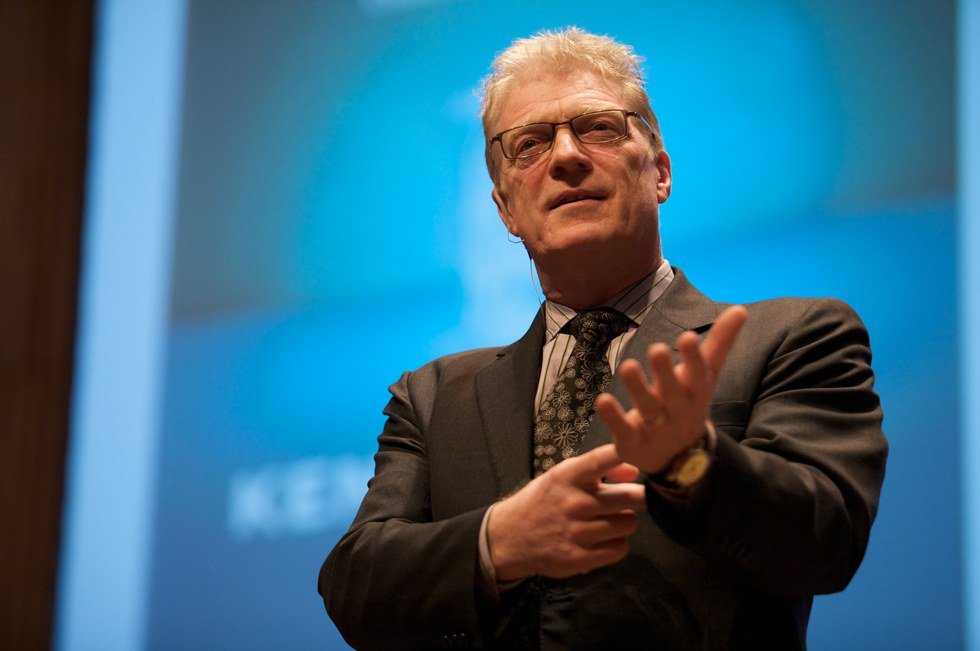
In Ken Robinson's TED talk, Do schools kill creativity? He talks about the dynamics of intelligence and creativity. "Creativity now, is as important in education as literacy, and we should treat it with the same status."
We know 3 things about intelligence, according to Robinson:
1. its diverse
2. it's dynamic
3. it's distinct.
Gillian Lynne, one of the best known, multi millionaire choreographers in history, missed her opportunity of success by a hair. Imagine you are a kid around 8 years old who is reported to your parents for underperforming at school and not being able to sit still. These days, most would assume ADHD, put you on some medication and tell you to calm down. Meanwhile, Lynne's problem wasn't her inability to sit still, it was the fact that people were pushing her to be a sit-still-student in school. Gillian Lynne is a dancer, not a school student. Her ability to think comes with movement and creativity, not sitting in a classroom.
This is monumental in my eyes. Education seems to be dumbing down the side of creativity and suppressing students to sit, take notes, be polite, and pass classes. While education's hierarchy of math, science, and reading are necessary and crucial to society, we can see plainly that those subjects are not the only ones that will help our society thrive, and moreover, not allow for creativity in education.
The way in which Robinson puts it is genius. "I believe our only hope for the future, is to adopt a new conception of human ecology. One is which, we start to reconstitute our conception of the richness of human capacity. Our education system has mined our minds in the way that we strip mined the earth for particular commodity; and for the future it won't service. we have to rethink the fundamental principles on which we are educating our children."
Perhaps we're not supposed to be drone students who do all the right work and get the passing grade. Let's find the step beyond simply learning the necessary subjects and seek out more of what we're made for.