If you’re like me, you like hearing about not only the movies themselves, but also how they’re made. You like to know about what actor was first offered your favorite roles, or who almost directed a movie that could have been improved, or how the filming process of a movie may not have gone as smoothly as it was expected to be. Behind every movie, good or bad, there is a story in itself of how it came to be, and sometimes this story can be more interesting than the movie. In some cases, the story of the filmmaking process is the only evidence of a project, and listed below are six examples of such.
“Napoleon”: Directed by Stanley Kubrick

What Is It? Kubrick’s "Napoleon" was to be both a character study and a sweeping, gigantic epic about the French monarch. Kubrick has been reported as having ambitious ideas which included, but is not limited to, hiring 30,000+ men as extras for the extensive war sequences.
Other Names Involved: Ian Holm, Alec Guiness, Laurence Olivier, and Audrey Hepburn.
Problems: As he frequently did, Kubrick went on an obsessive journey in an attempt to find every detail possible about Napoleon Bonaparte, he got stuck in too many of the minute specifics. When he was finally finished in his quest, any studios who had expressed interest backed out as they thought historical epics were out of style at that point. Kubrick proposed the film as a $5 million project, which is equal to above $100 million in modern money, and the studio that had been involved denied such a hefty budget. Not long after, "Waterloo," which flopped, was released and essentially sucked any possible interest out of the stories of Napoleon.
What Now? The film will never be made, or at least not nearly as close to what Kubrick would have accomplished. There is, however, a documentary in the making about Kubrick’s unmade Napoleon film and what it would have brought to the screen.
“Heart of Darkness”: Directed and Written by Orson Welles
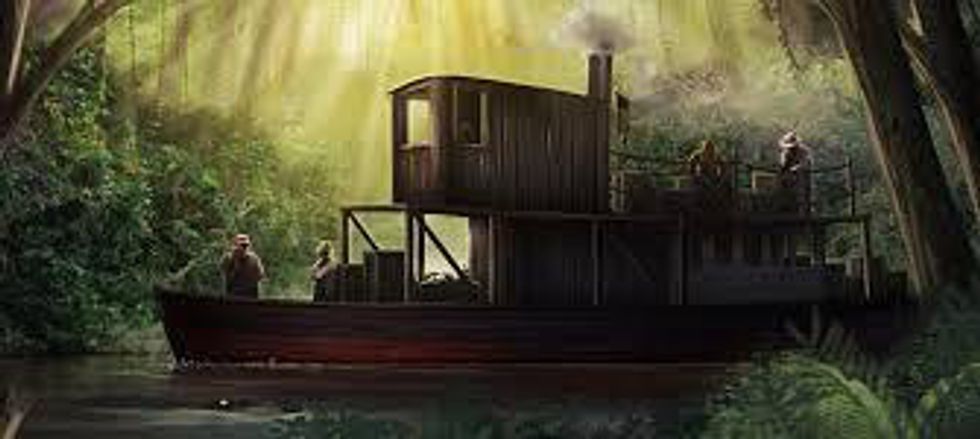
What Is It? An adaptation of author Joseph Conrad‘s gloomy psychological horror tour de force which was later adapted by Francis Ford Coppola in "Apocalypse Now."
Details: When a 25-year old Welles came to Hollywood in 1940, this was the first project he began to develop, his second being the unprecedented "Citizen Kane." Welles supposedly planning to film the movie using 160+ extended panning shots, which would show the protagonist’s point of view as he began his long, slow-death journey, and Welles would also play the lead as well.
Problems: Welles was committed to shooting the film the way he had visualized it, but such an idea was technically too tough for the time in movie history, and the studio feared a massive budget.
What Now? If you have read anything about the making of Coppola’s "Apocalypse Now" then you’ll realize that Coppola had the same problems that Welles’ producers foresaw, but Coppola got the green light. The filming of the movie and the dead-weight editing process almost killed Coppola (literally), so maybe it was a good thing that this film didn’t get made. However, it most likely would have been a gem of a film had it been produced.
“Alexander the Great”: Directed by Martin Scorsese and Starring Leonardo DiCaprio

What Is It? An intriguing look at the inner motivations of one of the most successful conquers in Ancient history.
Details: After 2000’s "Gladiator," there were many people trying to develop a movie about Alexander. These people had the script, and Leonardo DiCaprio himself had read the manuscript and developed a heavy interest in playing the part. With a name like DiCaprio in the conversation, the funding was within reach, and DiCaprio had a man that he knew he could call: legendary director Martin Scorsese. This was directly following their work on 2002’s "Gangs of New York," and the duo saw an opportunity to work together once more.
Problems: Unfortunately for the screenwriter Christopher McQuarrie, timing was the enemy in this case. DiCaprio was filming Steven Spielberg’s "Catch Me if You Can" and pre-production for "The Aviator" (Scorsese and Leo’s second shared project) was already in motion, and so the project about Alexander was put on hold. Seizing this opening, director Oliver Stone emerged on top and released 2004’s "Alexander" to an “iffy” response from just about everyone.
What Now? It’s a shame, honestly. Could Scorsese have pulled it off in the end? I think so, but who knows. The pairing of DiCaprio and Scorsese had produced some of the best movies of the 21st century, and I would have loved to have seen what they could have done with the story. Maybe this could have put Leo in a more dramatic light and nabbed him that once-elusive Oscar win that he waited until this past year to finally receive.
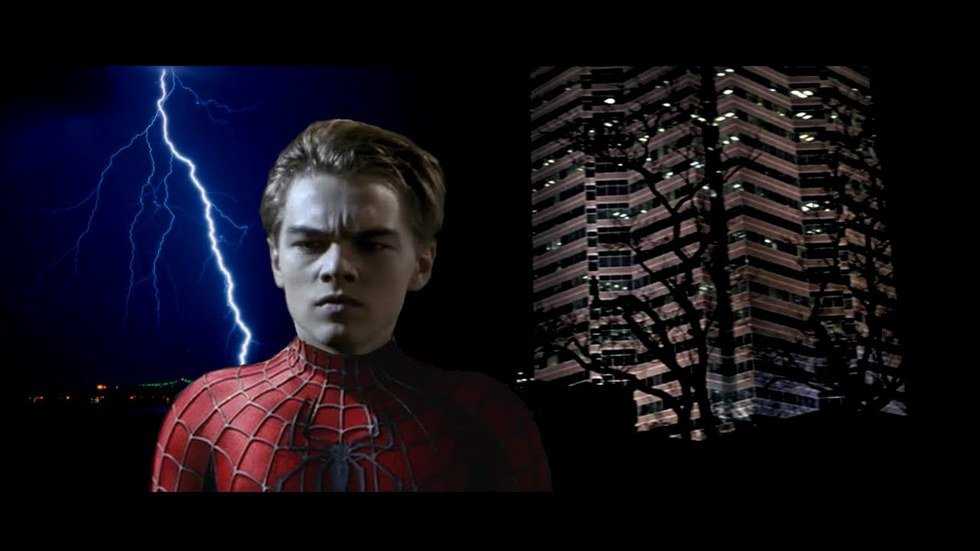
“Spiderman”: Directed and Written by James Cameron
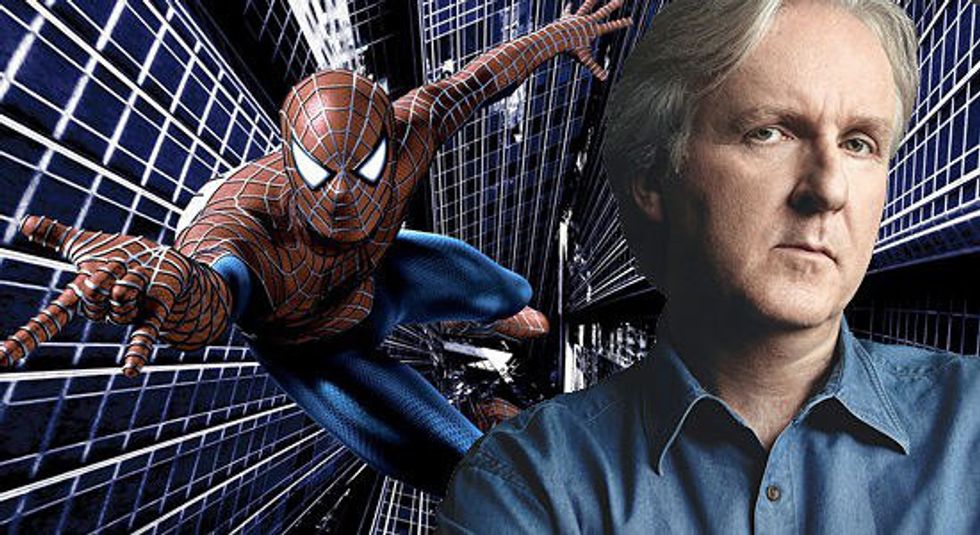
What Was It? This brought a darker side of and would have been Spidey’s first standalone film.
Details: The script, written by James Cameron in the early-mid 90s, was supposedly the truest interpretation of what the web-slinger was in the comics. Stan Lee, who created the character (and many others), reportedly loved the script.
Other Names Involved: Edward Furlong (who played John Connor in "Terminator 2") would play Spidey, Leonardo DiCaprio as Harry Osbourne, Drew Barrymore as Gwen Stacy, and R. Lee Ermey (everyone’s favorite foul-mouthed drill instructor in "Full Metal Jacket") as J. Jonah Jamison.
Problems: Like I said, this would be darker and much more mature than anything we’ve seen so far in a Spiderman appearance. Vulgar language, grittier violence, and even a risqué lovemaking scene atop the Brooklyn Bridge. Maybe those things fly in today’s superhero movie climate (see The "Dark Knight" Trilogy, "Deadpool," "Suicide Squad," etc.), but not in 1990s. The budget was reportedly much smaller than Cameron was used to, which is a big budget by the way.
What Now? While the movie was scrapped, some of Cameron’s ideas made it into Sam Raimi’s version in 2002 (organic web-shooters and the Uncle Ben carjacking plot device). James Cameron went on to make "Titanic" with DiCaprio and continued onto other great projects, so he’s not looking back too much, but it would have been an intriguing film to see.
"Superman Lives": Directed by Tim Burton and Starring Nicholas Cage
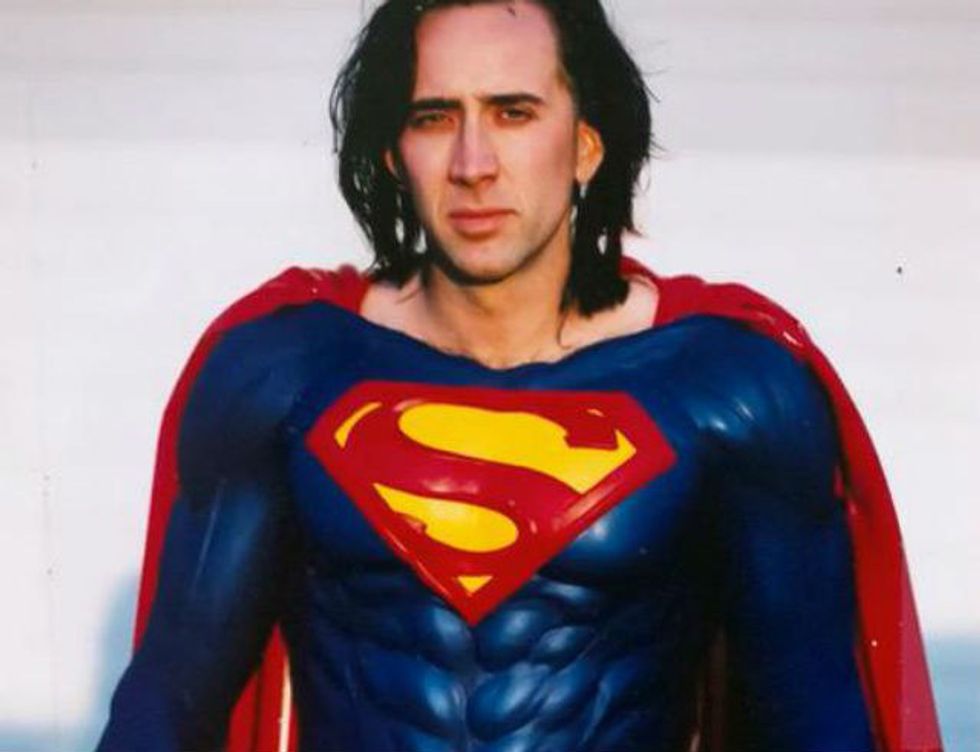
What Is It? A film inspired partially by Superman’s revitalized interest after the "Death of Superman" comic book series.
Details: Kevin Smith, who is arguably the most famous comic book nerd, was hired to pen the screenplay, and according to people behind the scenes, he created a poignant and well-liked script. The studio soon hired Tim Burton as the director, who Smith suggested himself. The studio and fans alike were intrigued by the ideas of what Burton would bring to Kal-El after what the eccentric director successfully did with his Batman films. Nicolas Cage, who is also an avid fan of comic book superheroes, signed on to play Superman himself and did a few (now infamous) costume tests.
Problems: Wesley Strick, who helped Burton with "Batman Returns," was brought in to do some work on Smith’s script, but the script never came fully together. Strick’s draft was reportedly nonsensical and overtly violent, and the revisions apparently killed Burton’s interest not long before the movie was slated to hit theaters. If it had been made, this film would have been released on Superman’s 60th anniversary.
What now? DC Comics has begun its own ventures in the storylines of Superman, and there are some similarities in plot between "Batman v. Superman: Dawn of Justice" and what this film would have been.
“Nostromo”: Directed by David Lean and Produced by Steven Spielberg

What Is It? An adaptation of Joseph Conrad’s “Nostromo, A Tale of the Seaboard”. Spielberg often wanted to work with his idols and David Lean ("Lawrence of Arabia," "Bridge on the River Kwai," and "Doctor Zhivago") was one of his particular icons, so he injected some dynamism into the project by coming on board as a producer around 1987, which would put it just after Spielberg’s "Empire of the Sun." Above is the two are pictured in 1985.
Plot: Centering on an integrity-filled sailor who became involved in a plot to smuggle silver out of a South American mining town.
Other Names Involved: Marlon Brando, Alan Rickman, Paul Scofield, Peter O’Toole, Isabella Rossellini, Christopher Lambert, and Dennis Quaid
Problems: The book was written in 1904 but had to be modernized, and this gave Lean and the writers he was working with a lot of difficulties, and the fact that Lean was also in his 70s and it was 15 years since his last film didn’t help either. After delayed schedules, “creative differences” between the two famous filmmakers, and Lean’s decline in health, the film was scratched from the calendar.
What now? The screenplay is still online for the public to read, but no hints at anything further have come.
Maybe they could have been masterpieces, or maybe they could have been a rare miss for these usually consistent filmmakers, but we’ll never really get to know for certain. The names on this list have been in the credits of some of the finest films in cinematic history and some of my all-time favorites, and had these films be made, we may see these men in a different light. James Cameron’s "Spiderman" and Tim Burton’s "Superman Lives" may have altered the Superhero genre almost 15 years before it blew up with the MCU, Kubrick could have made a war epic that rivals anything we’ve seen before or since, "Nostromo" would have united two of the best directors of all time, and "Alexander the Great" might have gotten both Scorsese and DiCaprio their Oscars far sooner than before. With potential wasted and movie history unchanged, these possible movies can only leave us with too many “what-if” questions.