It's 5:30 AM. I'm sitting in the hard seat of a plastic folding chair, silent as gentle chatter surrounds me, looking up at you. Your arms are folded across your chest, your gaze somewhere off to your right. Maybe you're looking at the other Marines and their families, setting their bags on the concrete floor beside yours. Maybe you're not really looking at them at all, caught in a thought of the future that's waiting for you to meet it.
You're being activated today, and in thirty minutes, I won't see you again until winter, spring, and summer pass us by in a flurry of death and rebirth. Nine months until you come back to us.
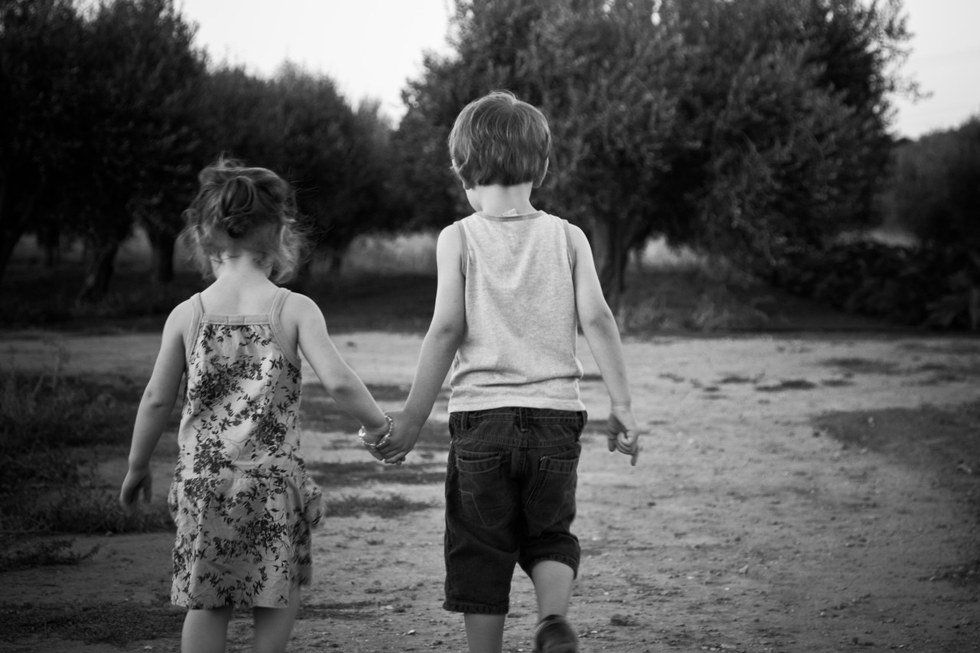
I don't know how to feel. Or, rather, my mind protects me from feeling anything at all when it comes to you. Our relationship has always been complicated; we hated each other growing up, to the point that I was the only one in the house with a real lock on my bedroom door to keep you out because you kept picking the last one. Fighting was a regular thing; I was always on the defensive, ready to strike back with words or, if I needed to, my fists. You never physically hit me, but your words did a lot of damage.
Years have passed and the wounds from our childhood have scarred over. They're still a part of me, regardless of the endless march of time, and I find myself hesitant to react to your leaving. What do I feel? And then the larger question: what will I allow myself to feel?
I recognize now that the length and severity of our rocky relationship as kids has embedded a deep trauma inside me, one that I don't think about except for when you have to ask me for a hug, or when you tell me that you love me and my thoughts shut down. There's always hesitation. Part of me recognizes that it's pointless, that I should just automatically accept a hug and be willing to give one in return after so many years of the healing I was supposed to be doing. The other part remains guarded, as though you could, at any moment, turn back into the child that terrorized my every waking moment.
85% of siblings "engage in verbal aggression [...] on a daily basis." But that kind of behavior is called emotional and verbal abuse and has the power to be psychologically traumatizing. It took me many years to understand that the trouble I've been having with my emotional responses comes from this place of trauma. I know you didn't understand the severity of what you were doing. I know you're a better person now and you treat me with respect. I don't harbor any anger towards you, I promise, but I can't pretend like what happened between us as kids doesn't affect me today.
The Marine Corps just had its 241st birthday. You'll spend yours overseas, far away from the island we call home. I can see that you've changed. I see it in your smile, your words, your kindness and consideration. I see it when you invite me out to lunch and treat me every time. I can see all of this because of the new clarity of our relationship as adults. I'll be thinking of you, big brother. When you step through the front door, when your deployment is over and you're home for good, for once, I won't hesitate to give you the biggest hug of my life.





 man running in forestPhoto by