


Dear Trump Supporter,
I am hesitant to write this simply because there is more than enough criticism about Donald Trump, but as his rallies become more violent and the clips clogging my newsfeed become more disturbing, I feel inclined to say something.
A few weeks ago while on spring break, I was talking to someone I know and they said “I think I’m going to end up voting for Donald Trump” then laughed and continued as if what they said wasn’t the most absurd thing to ever come out of their mouth. I responded, “That’s a shame.” And told them how, as a woman who respects myself there is no possible situation where I would ever vote for Donald Trump. The person continued, “I guess I like him for the "shock factor” and I thought to myself, why the f*** are you choosing your presidential candidate based on “shock factor”?
The “shock factor”
So first off, let's talk about that “shock factor” and presidential candidates. So, I know, everyone enjoys these vapid “reality” television shows, but there’s a notable difference between your trashy television and your presidential candidates. And although, Trump may seem like a character out of some reality TV show, that does not qualify him as a presidential candidate.
A reality TV star is getting millions of dollars for throwing dignity and self-respect out the window. A presidential candidate is competing for the esteemed position of leading the country, interacting with powerful world leaders, and working for the good of the people. (However, I will grant you that based on the televised debates there isn’t much difference between trashy television stars and presidential candidates.) Your presidential candidates should not be entertaining, they should be intelligent. They should not be vulgar, they should be tactful. And they should not aggravate political divisions, they should work for unity. Donald Trump lacks all these characteristics, and he demonstrates that every time he’s on TV.
So how can you decide which politician to choose as an ideal candidate for president? I don’t have the perfect answer, but if you think a candidate is impressive because they are shocking, they probably are not the person you should vote for. From there, educate yourself a little about domestic and foreign policy, and go to candidates’ website and look at their stances. Do your own digging: Don’t let any media network, neighbor or friend do it for you.
If you are letting someone else tell you about every candidate and you are not taking the time to figure out who they are and what they stand for, you lose the privilege of complaining when things don’t work out how you envisioned it.
The executive branch
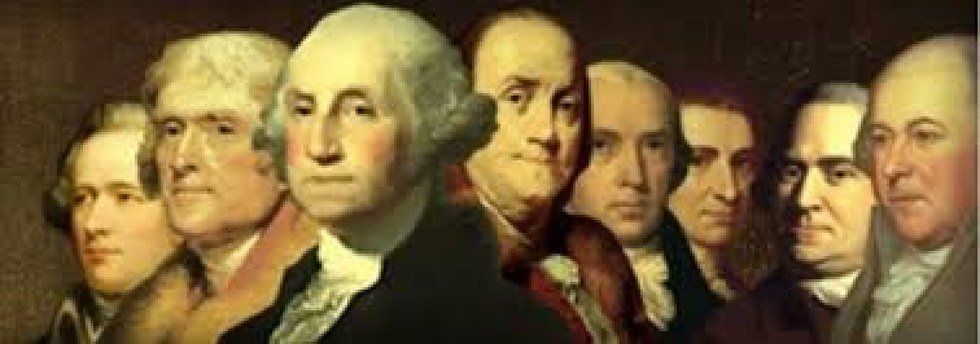
So now let's talk about the executive branch of government. Thanks to the constitutional convention and the federalist papers the founders spent a lot of time discussing the executive branch. Alexander Hamilton wrote extensively about “energy in the executive.” What is that? It’s the idea that you have an active and empowered executive branch. Why? Because it is the executive’s job to make sure the laws of the land are enforced.
Let’s process that, for the executive branch to be successful all three branches of government (the executive, the legislative, and the judiciary) must all work for the same goal — the benefit of the nation.
So then the million-dollar question becomes what will benefit the nation? That is a question too big for just me to answer, but alienating entire groups within the nation is not the answer. Minority groups, principally Hispanics, are one of the two most rapidly growing demographics right now in the United States, so alienating, berating, or discriminating against them (or any other group of people) is completely unacceptable regardless of race, religion or any other characteristic that could possibly used as grounds for discrimination.
Now let's go back, for a second. For the executive to be “energetic,” the president must have the means to enforce laws. This isn’t a joking matter. This means that the president can use the army, or any other means, to enforce the law of the land. This isn’t just some theoretic concept either. It was put into action numerous times, but notably during the Eisenhower administration when Eisenhower sent the National Guard to execute the law established after the Supreme Court ruled in favor of Brown in Brown v. Board of Education.
That is an example of the executive using its power for a good cause, and illustrates the necessity of an energetic executive, but it also illustrates the actual power the executive has. This power is very real so if you could see the candidate you are planning on voting for doing something rash, remember that candidate could be given access to nuclear weapons.
Political parties
Next, let's talk about political parties. So it is well-known that George Washington warned against political parties in his farewell address, but what everyone fails to remember is that although Washington and Publius (Hamilton, Jay and Madison) were concerned about factions (political parties) they recognized their inevitability. One of my biggest pet peeves is listening to someone talk about how “the founders didn’t want a party system and that’s why the political system doesn’t work”, because yes, although that statement isn’t completely false, it essentially eliminates the truth.
During the constitutional convention, there were already factions. There was a clear split between those who supported the Articles of the Confederation and those who supported the creation of the Constitution. Then following this there was a division between the federalists and the anti-federalists, and this trend of two competing factions continued until we have what we have today: Republicans and Democrats.
Now getting back to the whole “the system doesn’t work, because there are political parties” nonsense. So yes, the political system has been pretty ineffective, but that isn’t because of parties, it’s because of lawmakers. Historically there have been incredible leaders who compromised, and as a result did excellent things for the country.
A few early examples of these are The Compromise of 1790 and the Missouri Compromise. So what was so special about these? Well in the Compromise of 1790, proud Mr. Alexander Hamilton (then Secretary of the Treasury) and James Madison (Member of the House) went to Thomas Jefferson (then Secretary of State, and their bitter rival) they sat down, swallowed their pride, and established a financial system for the newly created United States of America that saved the new nation from bankruptcy and complete shut down. So from all of us, thank you Mr. Madison for working something out, and writing a bill that debatably prevented a governmental collapse. The Missouri Compromise was created by handy work of Henry Clay. He single-handedly postponed the Civil War by admitting states so the balance of slave to free states was upheld and everyone, at least for a moment, had an equal playing field, and no reason to go to war with each other.
Why is this important? Well, it proves it is possible for people to compromise during times of intense partisan division. And it pretty much shows the parties aren’t the issue, the people are.
This problem of ineffective elected officials is prevalent in every branch of government. For example, do you remember the disastrous inconvenience that was the government shutdown? Well guess what? You can fix that! Don’t vote for your congressperson!
According to Gallup, as of May 2013, only 16 percent of Americans approve of congress. If that many people are upset, why doesn’t Congress change? Well, that’s simple. People don’t approve of Congress as a whole, but they approve of their Congressperson. As of May 2013, 46 percent of Americans approved of their representative. So it’s through that disconnect between the concept of Congress and congressional representatives that voters are in effect inhibiting themselves from allowing change.
I think this derives directly from an “us versus them” mentality. By that I mean, voters think, “we are not the problem they are”, and that “they” could be the other party, or an unfavorable president, or senator, or representative. That “they” can be any scapegoat that suits the needs of the person creating this fallacy, but here’s the problem, there isn’t a “they”. The immigrant population isn’t the issue, as Trump’s fiery rhetoric would suggest. The Democratic Party isn’t the issue, and the Republican party isn’t the issue. The issue is the inability to compromise and the refusal to promote the common good. Yes, there is a problem in our political system and we are all equal contributors in creating it, so we hold equal responsibility in fixing it.
So when considering who you will choose for president, or as a senator, or as a congressperson or as any elected position, if you foresee them causing a major division, through policy, or through their decision to alienate entire groups of people (whether that alienation is based on race, religion, gender, ethnicity or any other variant) reconsider your vote. It is this division that makes government ineffective and leads us to government shutdowns and senators refusing to do their job and fill the Supreme Court vacancy.
Finally, my dear voting friend, go out there and learn everything you can about your candidates. Choose your candidate based on their alignment with your interests, and stop being a sheep. Your vote counts, so make it count.
Sincerely,
A Concerned Millennial

















