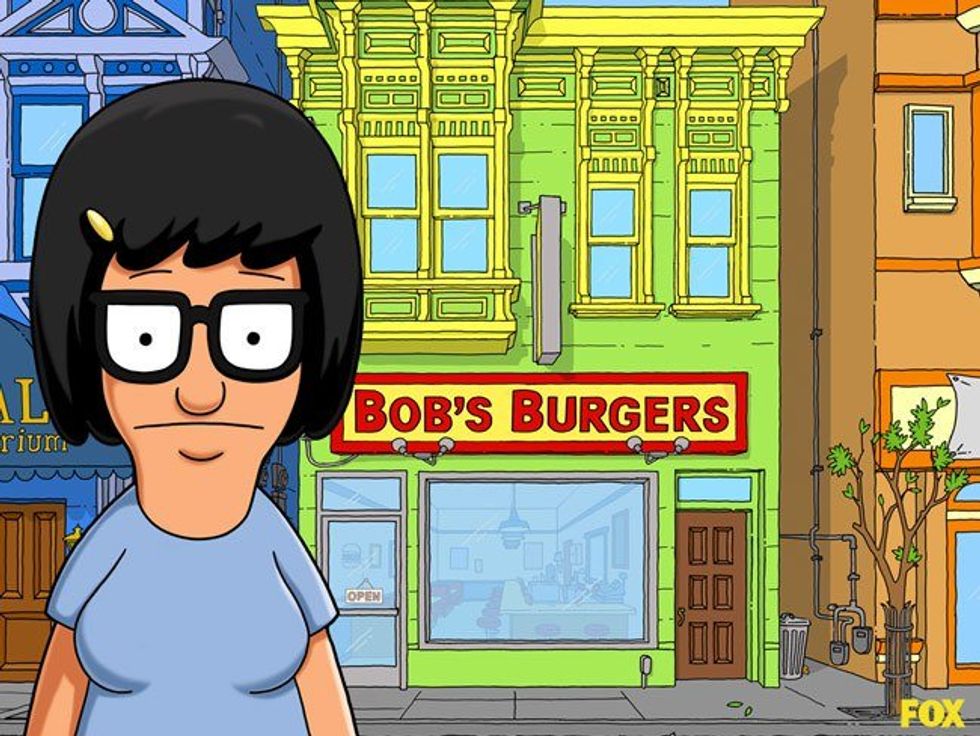
If you have seen Bob’s Burgers, then you know Tina, Bob’s thirteen-year-old daughter, whose favorite things include horses, zombies, and boys’ butts. And if you haven’t seen the show, let me tell you, Tina is living our personal hell—perpetual puberty—in style. Watching her inch closer and closer to womanhood is not only incredibly funny but also pretty inspiring.
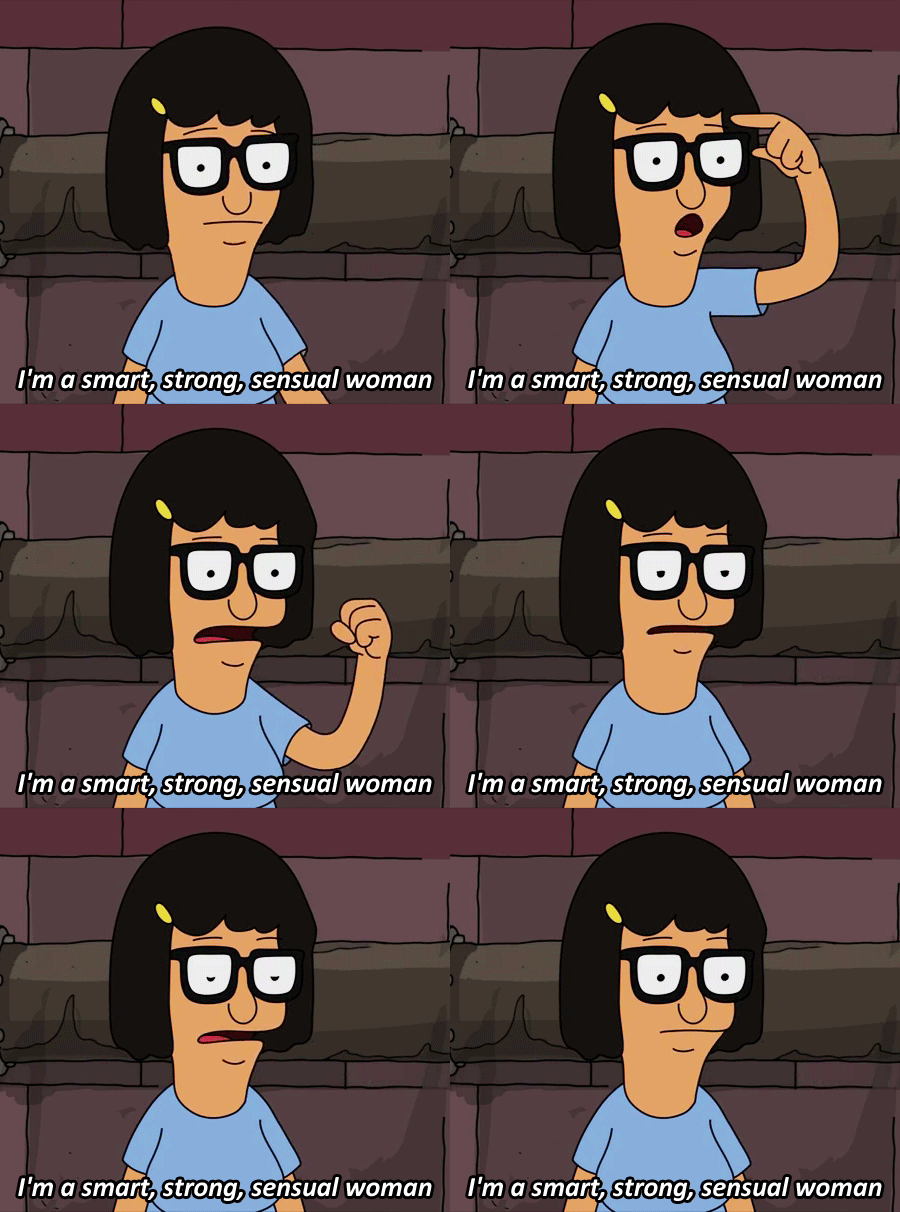
Part of Tina’s humor comes from her mannerisms—Tina groans uncontrollably when she is nervous, and when she’s freaking out, she repeatedly barks “Ha! Ha!” She is often painfully awkward and seems not to comprehend her allotted place at the bottom of the social totem pole. However, despite the external forces instructing her on what it means to be a teenage girl—including her peers, her parents, and the pop culture she consumes—Tina constructs her own identity.
Tina is unabashedly sexual. She stares at boys constantly (especially their butts) and fantasizes about kissing and riding glittery horses into the sky side-by-side. Tina also takes an active role in her sexual awakening, instead of hiding her sexuality from her parents or from the objects of her affection. Tina has a crush on a boy named Jimmy Junior, and in multiple episodes, she brazenly asks him on dates despite his callous rejections. When I was her age, flirting consisted of either (a) punching/pinching/ignoring my crush, or (b) helping said crush with his girl problems while secretly pining for him.
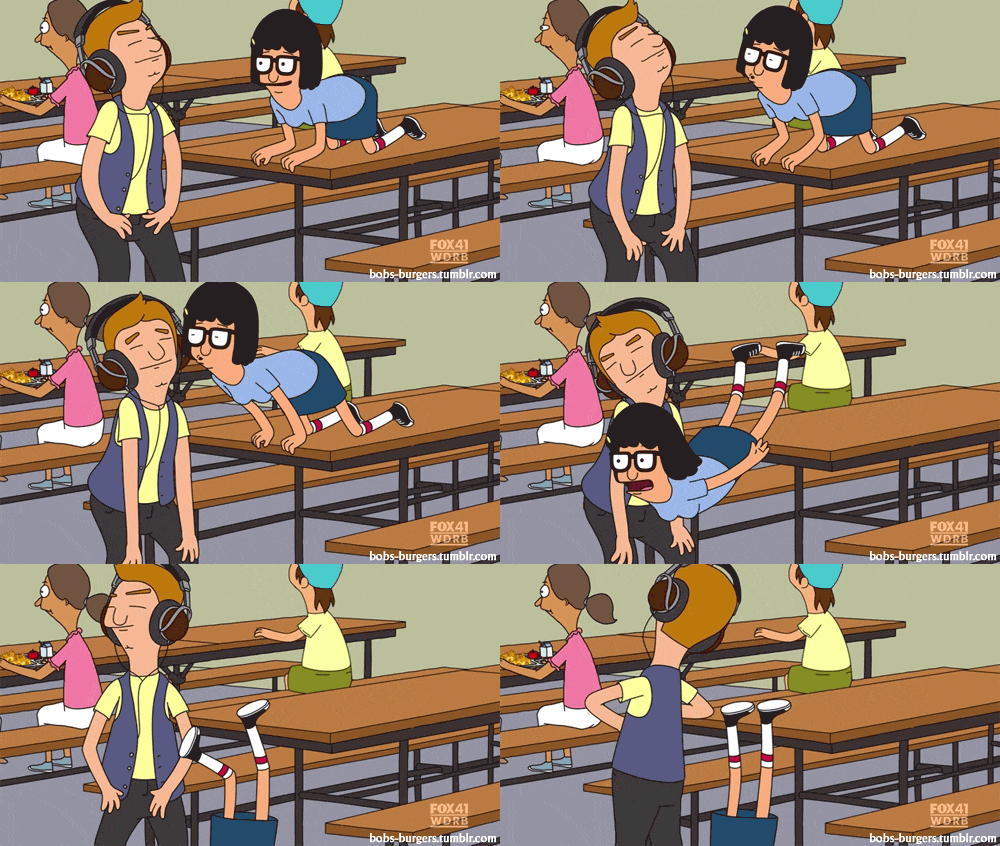
Tina also resists normative expectations of femininity. In my favorite episode, Tina’s new friend Tammy tries to make Tina into a bad girl (hence the episode title “Bad Tina”) by encouraging her to change her appearance with makeup and revealing clothing. Tammy later discovers Tina’s hobby of writing “erotic friend fiction” about their classmates and threatens to embarrass her in front of the whole school. But Tina takes matters into her own hands and reads the friend fiction (in which Tina brings the joy of butt-touching to all her classmates and one zombie) aloud during lunchtime. To her dismay, everyone laughs at her. It is amazing—in the implausible sense—when Tina says optimistically at the end of the episode, “It turned out okay, I think.” But it’s also amazing in the sense that I know I would never have her bravery or her confidence. I’m impressed.
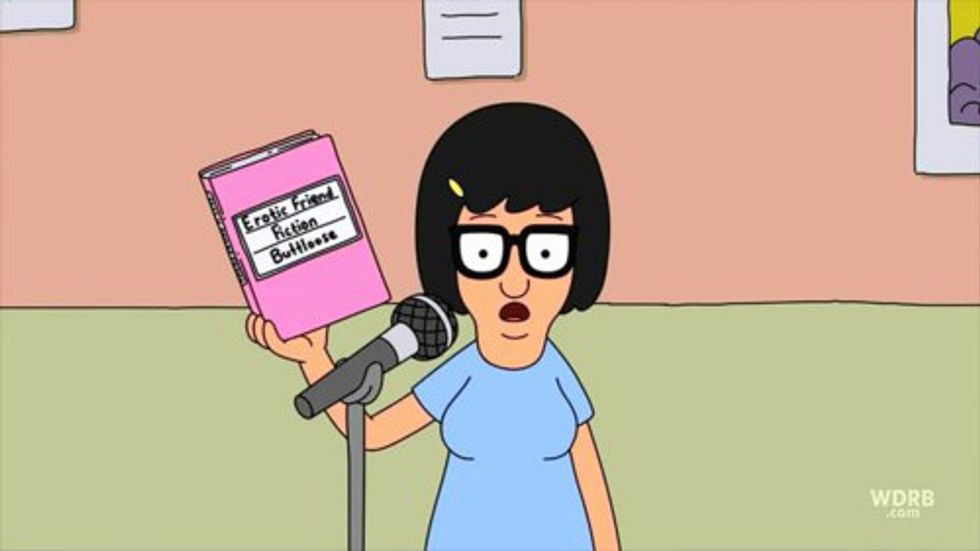
As we watch Tina flail about in the real world, we don’t want her to conform to its narrow expectations of femininity. We don’t want her to stop fantasizing about boys’ butts. We don’t want her to give up writing erotic friend fiction because a bully tells her it’s weird and all her classmates laugh. The qualities that society tries to tell Tina are embarrassing or objectionable—having a sex drive, taking initiative, and refusing to conform to others’ ideals of beauty or style—should be celebrated in young adults of all genders, races, and sexual orientations.
Tina has a lot of other wonderful qualities besides her frank sexuality and self-acceptance. She is fiercely loyal to her family and is usually the only kid who volunteers to help her parents with the restaurant. She is ambitious and works hard to become Wagstaff’s school reporter with a hard-hitting story about a serial pooper on the loose in the school. She is sincere and honest, so much so that she starts to groan when forced to tell a lie. And that’s part of the beauty of her character—while the boy stuff might offer a wealth of humorous plot points, Tina is a fully formed person, and her interest in boys is just one of the traits we know and love about her.