Sitting in American universities around the country, we get the beauty of a diversity of voices and opinions. The broad spectrum of differing views provides a platform for critical thinking and, at the very least, a desire to understand the ones opposing your position. However, when it comes to human rights, is there the ability to differ?
No, this is not a philosophy paper. The idea of these rights has been theorized and documented for thousands of years. But, the right of each person to shelter, food, freely move and live free from persecution and war, is not debatable. With human rights come obligations, so why then to people on the other side of the world do we respond "It is not our problem, we have our own"?
Those who make this statement are usually the privileged of society of whom the problems of our "own" in America rarely affect. They are not the ones being marginalized, stopped at airports for a beard or head covering, at a grocery or clothing store for making the owner uncomfortable, they are the ones privileged enough to say "that politics, we want out of it."
But is "we" the American government? And why then is there a selective attitude when it comes to "not our problem." The "not an American" problem.
Are the lives of family members of Syrian Americans, of whom can be a number of different nationalities including Palestinian and Iraqi due to the number of refugees who fled their homes for a warm welcome in Syria at times their own lands were ravaged of war not as valuable? Iraq, still is. It is "not our problem" but the U.S dropped humanitarian aid in Libya in 2011. "Not our problem" but Doctors without Borders acts outside of politics to provide adequate medical care and deserves protection. "Not our problem" but the U.S government dropped aid in the Eastern block. "Not our problem" but humanitarian aid was sent to Bosnian and Croatians in the 1992-1995. The "not our problem" is only valid if it was consistent,(maybe) but this is our problem. According to the United Nations, this is the "biggest humanitarian crisis since World War II." If we value one life, we have to value all of them. Nobody is expecting university students to solve the politics and figure out how to nation build for a new Syria. Nobody is asking for more military intervention in a country's war where there are very little clear players. Assad's regime was strategic knowing the outcome would be war, his response to protests in 2011; violence and crackdowns. That does not mean from the outside "it is not our problem" "its the Middle East, its always been at war." Unfortunately these are common perceptions and responses but they are void of context or historical analysis.
Inside Syria, the images of war and blood are not only what is going on, it is not a completely failed state. However, it is our problem. The last qualified pediatrician was killed in Aleppo and since last week, about 300 people have been killed. In the last year over 60 hospitals have been bombed and it was not Assad's airstrikes or ISIS alone. How does it escape us that we cheer on heroes in dystopian narratives where they stand against rubble proclaiming they will not fall, yet turn our heads to a reality?
So what if it is our problem? And human rights means working towards it for everybody? How can one help?
For starters, one can donate to trusted organizations such as Doctors Without Borders, and Karam Foundation (headquarters based in the US), both of which are on the ground giving aid, and are tax deductible. They will send you emails updating you on how your money is being used and the difference it is making.
Also, other than monetary means, email and contact your state public official to advocate in Washington for the admittance of more than 10,000 Syrian refugees. They are not a burden on this country, we all come from somewhere. Mobilize and educate because learning from news headlines and reading for historical context are different.
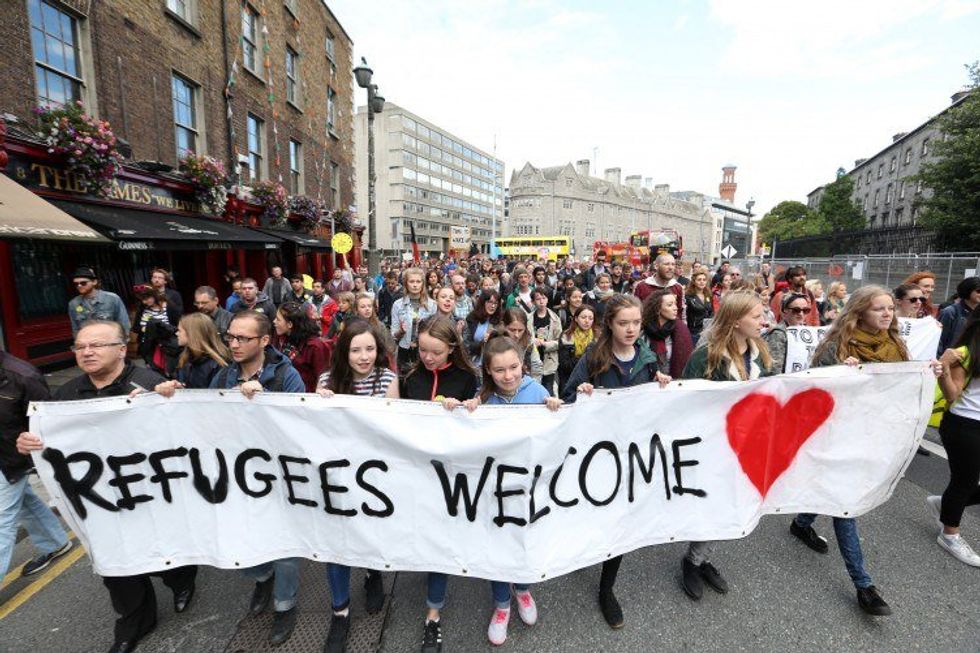
I do not know about you, but I want to live in a society where we can say, tweet, Facebook, "Black Lives Matter" "Our Three Winners" "Refugees Welcome", advocate for a fair economy and justice for all.
Solidarity does not come with a price.

Syrians in Kafranbel showing solidarity to the Black Lives Matter referring to Eric Garner's last words "I can't breathe" repeated in his memory in demonstrations and rallies.
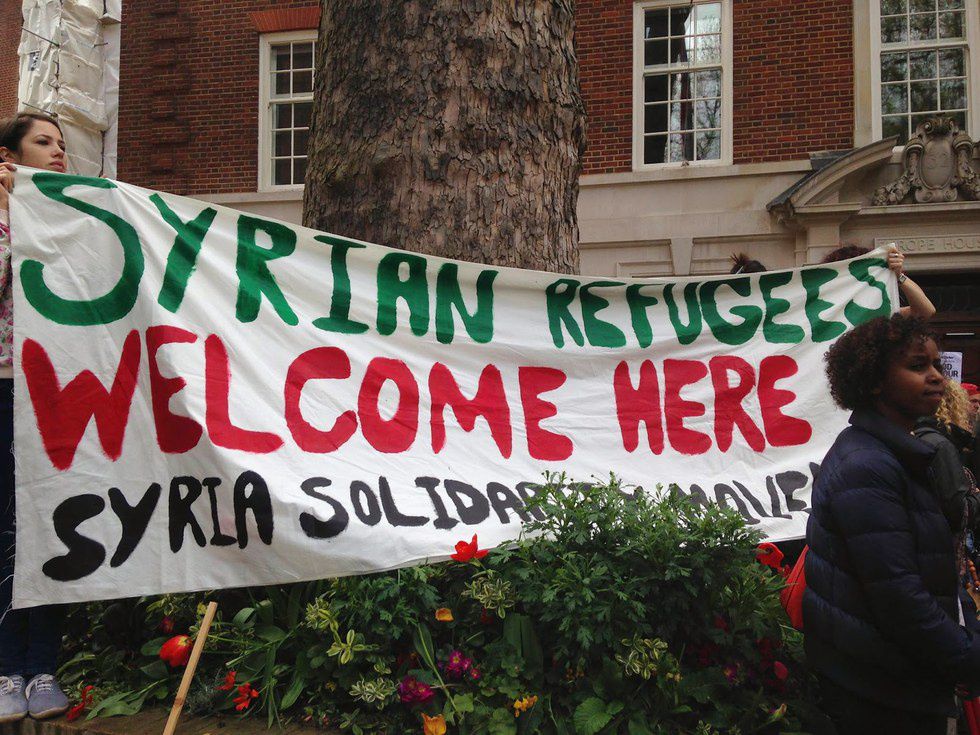
A show of mass support for Syrian refugees and a warm welcome from the Syria Solidarity Movement in the United Kingdom composed of people from a diverse range of backgrounds,
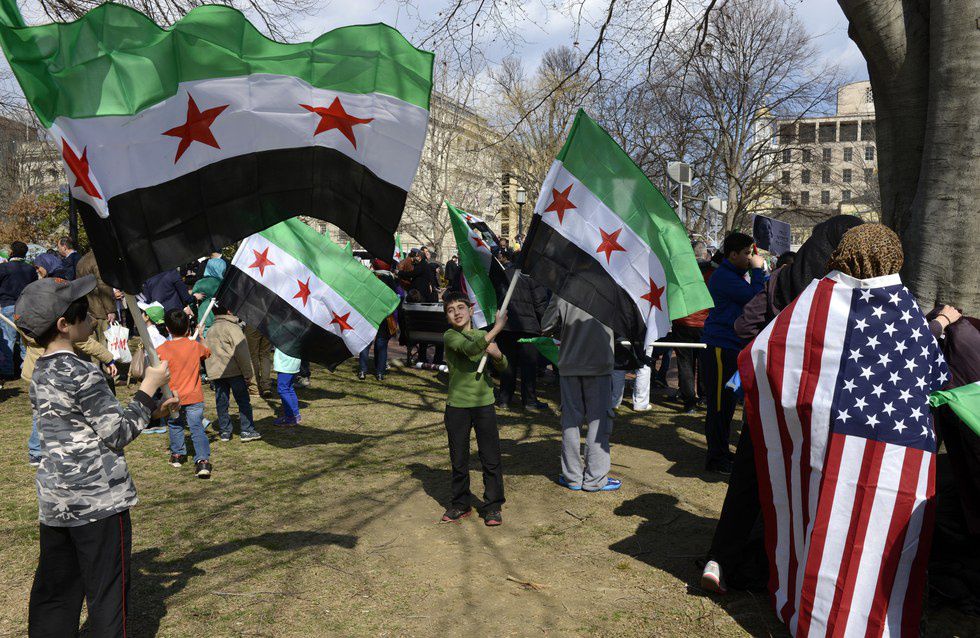
Protest in Washington D.C in support of freedom for Syria, welcoming of Syrian refugees and unity among Syrians and Americans.