


High school books can certainly bring back memories. Some of us remember reading the end of "The Great Gatsby" with tears in our eyes. Others Sparknoted their way through every class. While I could do with never reading "Wuthering Heights" ever again, I will always fondly remember learning about American Romanticism and Transcendentalism in my AP English class. The ideals of being independent, not conforming to society, and finding comfort in nature appealed strongly to me.
Although these movements were most active in the 19th century, their ideas are still relevant today. Going through college, I have realized more and more how they apply to our everyday lives. As young adults, we are constantly trying to fit into social groups or attempting to juggle busy schedules, where we end up having no time for ourselves.
Yet nearly two centuries ago, Thoreau was addressing problems that we all face today. Hopefully, most of us are some what critical of consumerism. But well before today’s age of iPhones, made of harmful rare earth metals, Thoreau was quite aware of consumerism’s effects. In "Walden," he criticizes how “men think that it is essential that the Nation have commerce, and export ice, and talk through a telegraph, and ride thirty miles an hour.”
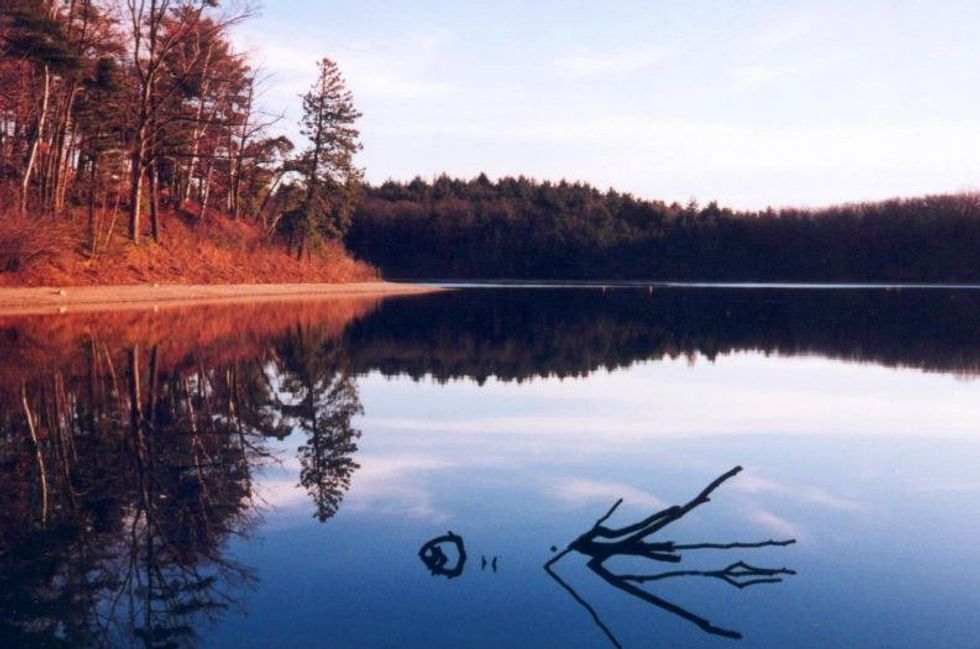
We're so caught up with buying and selling and then buying even more shiny new things that consumerism has become inescapable. In contrast, Thoreau proposed a life of simplicity, where only the basics of life were needed. He took his own words seriously by living in a small (we’re talking 150 square footage) cabin in the woods, resulting in his most popular novel, "Walden." By living on so little, he proves that life doesn't need twenty different leather purses or multiple luxury cars.
Why we feel the need to buy "stuff" is a complex social issue. Owning things is a sign of security; owning expensive things is a sign of, well, wealth. And because society has convinced us that the American dream is to be successful, have a family, and own a house with a white picket fence, our whole lives are spent working towards these artificially created goals.
It makes sense, then, that Thoreau’s contempt for society results in advocacy for self-reliance. Indeed, Thoreau receives much of his influence from his buddy, Emerson ("Self-Reliance" is the title of one of Emerson’s essays). Both writers discourage conforming to society’s standards. The pressure to be successful and earn money forces us to spend all of our time working and going to school and little time to pursue our own interests. When was the last time you heard of college students spending time making art or reading a book for pleasure?
Maybe we can all learn a lesson from Thoreau and learn to ignore what society is saying. It doesn't mean we all have to live in a cabin in the woods. But maybe you can take a break from all of the stress of work and school and make time for yourself.
















