
With the presidential election dominating the news cycle, plenty of controversial issues on the table and political sentiments running high, it’s high time to focus on something everyone can agree on: Outer space exploration is cool. But new discoveries, speculations and mission reports are published every day, and sometimes the sheer volume of material can be a little intimidating to plunge into. So here’s a run-down of some of the most important space news to come out of the last few weeks.
1. Scott Kelly Returns To Earth
NASA astronaut Scott Kelly wrapped up his mission to the International Space Station, touching down near a remote village in Kazakhstan at the beginning of the month. Last October, Kelly surpassed the previous American record for most consecutive days spent in space, clocking a historic 340 days aboard the craft (though these numbers still pale beside the international record of 437 days, set by Soviet astronaut Valery Polyakov in 1995). During his time on the ISS, Kelly and his Russian counterpart Mikhail Kornienko conducted hundreds of experiments to study the effects of long-duration space flight on the human body.
During his minute among the stars, Kelly gained a gigantic following for the photos he posted to social media. A quick romp through his Twitter account reveals a gallery of breathtaking snapshots. Viewed from far above, sunsets and sunrises, blizzards and hurricanes, and the sparkling green glow of the Northern Lights look more like abstract art than weather phenomena.
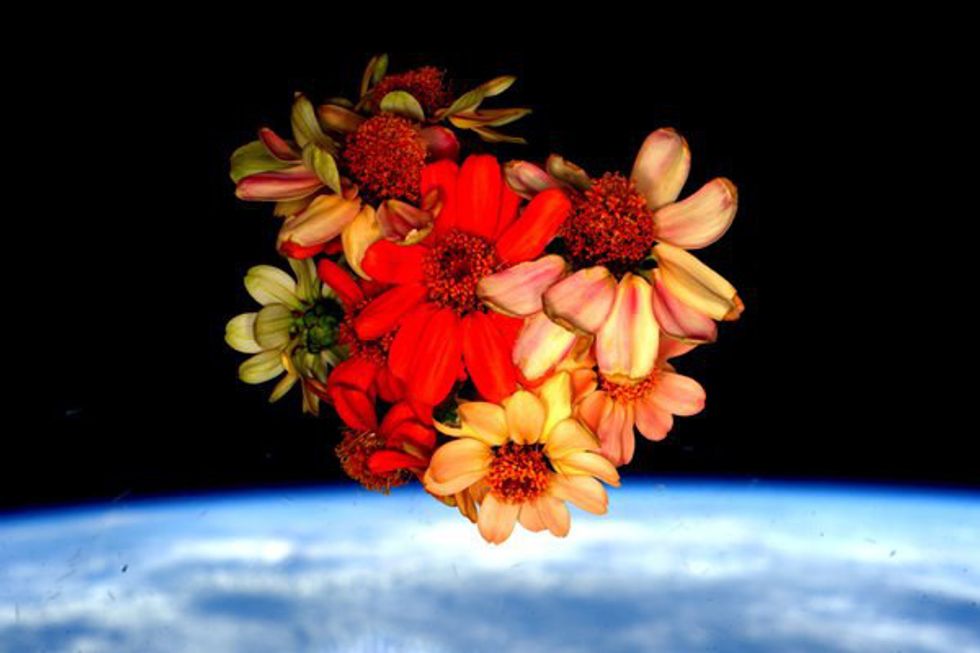
To commemorate Valentine’s Day, Kelly captured a fiery orange bundle of zinnias grown in the Space Station’s vegetation chambers (shown above). For more photos, check out Kelly’s Twitter at @StationCDRKelly.
2. Hubble Researchers Spot Farthest Galaxy Ever
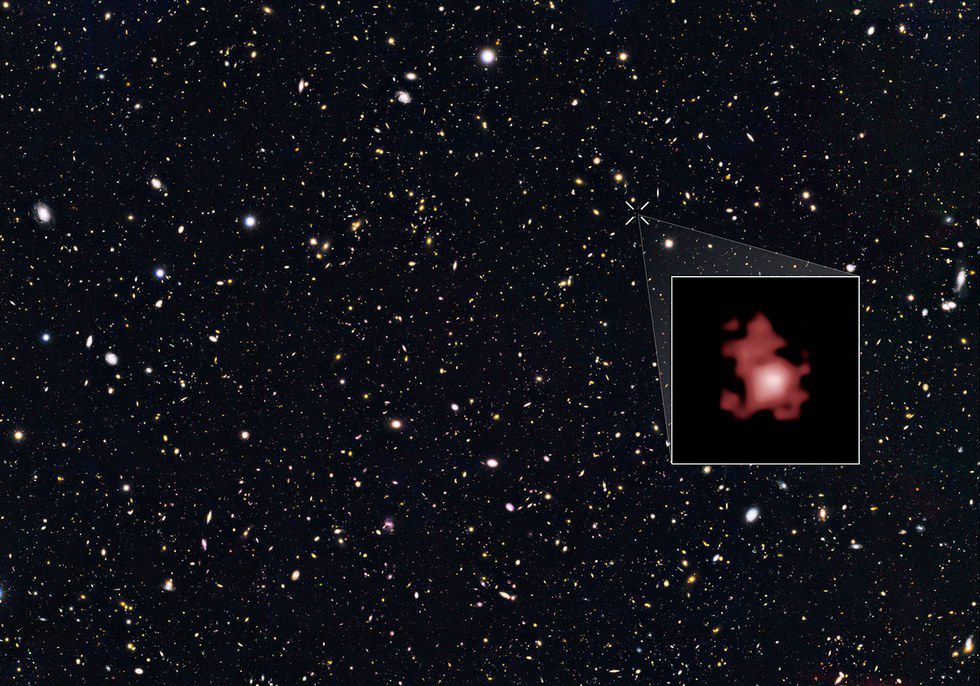
Early in March, astronomers operating the Hubble Space Telescope spied a new, incredibly distant star system. At 13.4 billion light years away from Earth, galaxy GN-z11 is the most distant galaxy.
GN-z11 is an overachiever in many ways, at least as far as galaxies are concerned. It’s birthing new stars at an astonishing rate, nearly 20 times more quickly than the Milky Way. And by analyzing the red-shift of the infrared light emanating from the galaxy, researchers were able to determine that it formed only 400 million years after the Big Bang. That makes little GN-z11, at about 13.4 billion years old, one of the universe’s oldest inhabiters.
Though GN-z11 is small—only a hundredth the size of the Milky Way in terms of star mass—its size is still impressive, considering the early date of its formation. This new discovery shows that massive galaxies formed much sooner after the Big Bang than astronomers previously believed.
It’s likely that we’ll discover more remote galaxies after the launch of the more sensitive James Webb Telescope in 2018, but for now, GN-z11 will remain our most distant and most ancient galactic companion.
3. ESA Launches New Mars Mission
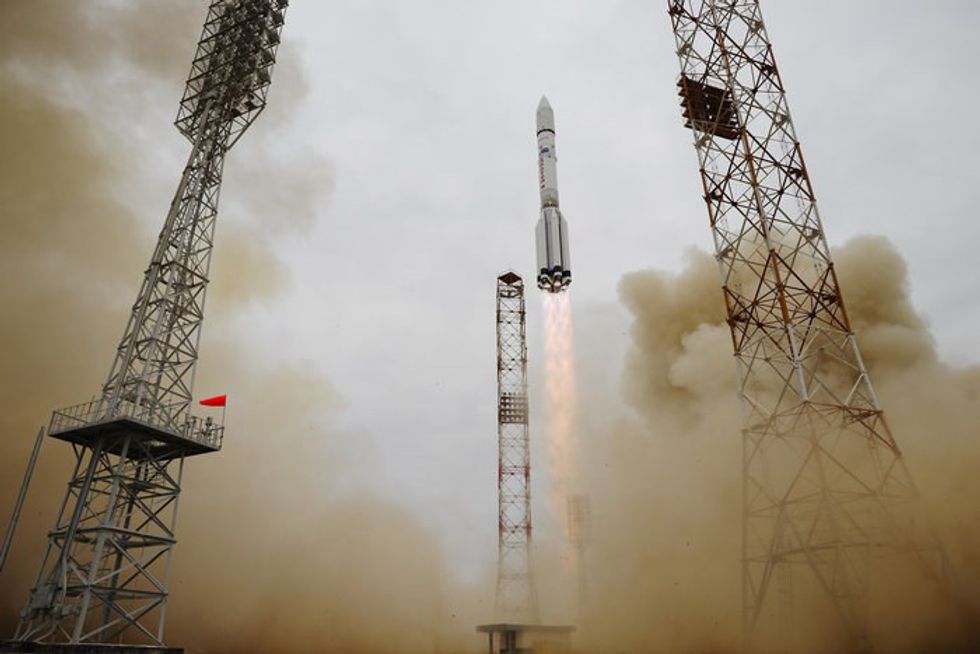
On March 14, the European Space Agency launched the first part of the two-phase ExoMars project. The two crafts—the pragmatically-named Trace Gas Orbiter and the significantly more romantic Schiaparelli—set off together from a launch site in Kazakhstan, en route to the Red Planet.
Upon its arrival in late October, the Trace Gas Orbiter will enter Martian orbit and begin scanning for methane in the atmosphere, photographing the surface and scoping out possible landing locations for the rover that the ESA plans to plant on Mars in 2018. Schiaparelli’s mission is also related to future mission prep: Equipped with the same entry and descent technology with which the ESA plans to outfit with the rover, Schiaparelli’s landing will serve as an invaluable “dry run.”
This mission represents the ESA’s second foray into Mars exploration, as well as its first successful landing on another planet (the 2003 Mars Express craft is currently in orbit around the red planet, but failed to successfully touch down on the surface). Until now, NASA has dominated planetary exploration. Hopefully this mission will set the stage for more European and Russian involvement in planetary research and exploration.
4. Dawn Spacecraft Finds Mysterious Pyramid
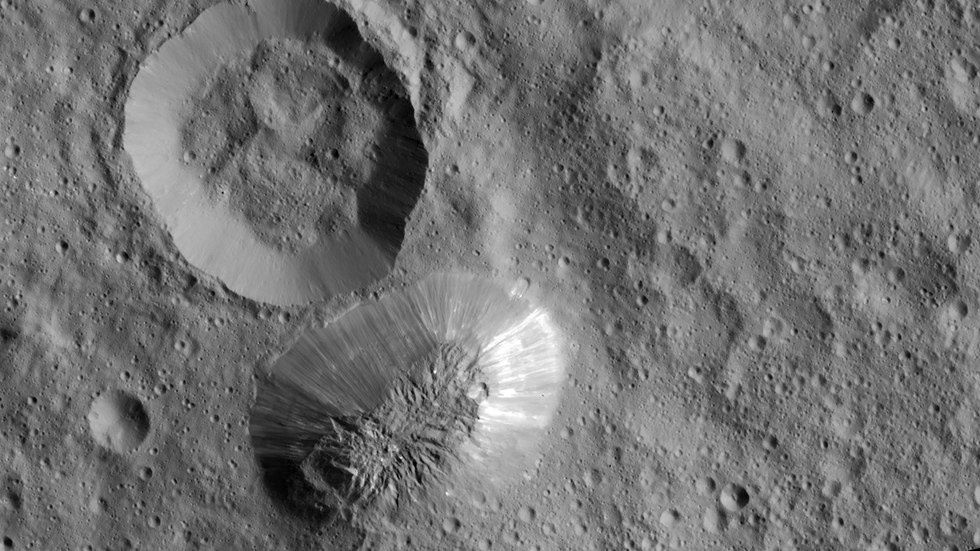
Here’s one for the clickbait headlines and conspiracy theorists. NASA’s Dawn Mission, currently orbiting the dwarf planet Ceres (the largest object in the asteroid belt between Mars and Jupiter), has been snapping photographs of a perplexing feature on the surface.
As Dawn draws closer to Ceres, more and more of the mysterious shape comes into clear view. Recent photographs show an oblong, smooth-sided pyramidal structure streaked with a glittering substance, which the team speculates may be salt. Christened Ahuna Mons by the team, the mountain is roughly four miles high, making it the equal of peaks like Kilimanjaro and Denali back on Earth.
Ceres has always been an oddball. It was first classified as a planet, then downgraded to a lowly asteroid before being bumped back up to dwarf planet status. Researchers now suspect that it may have at one time been a moon, and with every exploratory mission this shady planet seems to reveal a new set of mysteries.
Befuddled by this new discovery, the Dawn team is currently soliciting ideas from the public about how the structure could have formed—and says they’re taking this feedback “very seriously.”
5. NASA To Light Biggest Man-Made Fire In Space
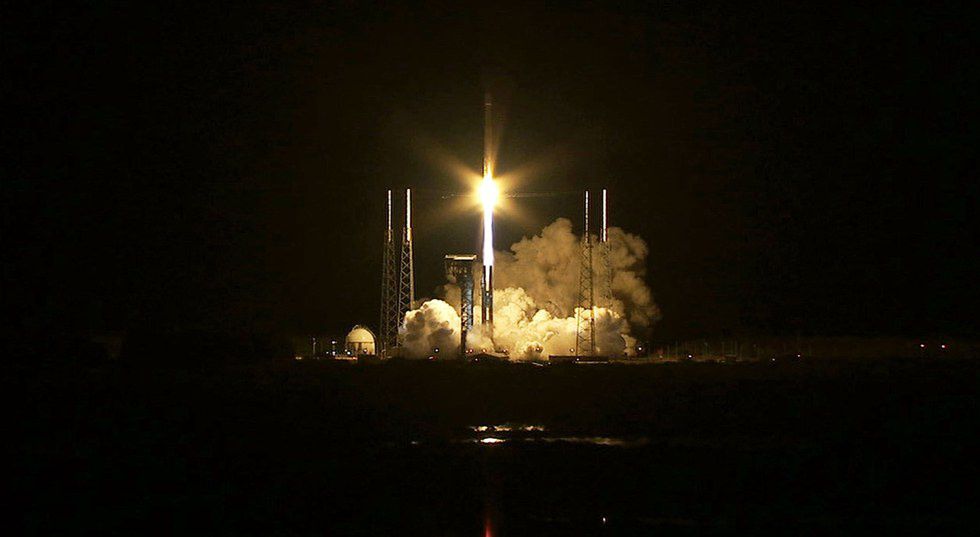
NASA meets "Mythbusters"!
That’s right: NASA is going into space with the explicit intention of blowing things up. On March 22nd NASA launched a robotic spacecraft called Cygnus, which is initially bound for the International Space Station to deliver hardware and supplies to astronauts stationed there. After this stage of the mission, however, Cygnus will set fire to a box full of technical equipment and flammable materials. It will be the largest man-made fire outside of Earth.
But this isn’t just a publicity stunt. The project—officially known as the “Spacecraft Fire Experiment,” but usually shortened to “Saffire”—is intended to collect new data about the way fires behave in space. This planned simulation is vitally important for the future of space travel, because it will offer NASA and other exploration agencies crucial information about how unplanned blazes can spread inside spacecraft, and how to handle them when they do.
In space, most of the usual methods of combating a fire are rendered impossible. Use precious water to douse the flames? Not an option. Open a window? Even worse idea. We don’t even have a fully developed understanding of how fire behaves in zero gravity. With so many unknown variables, this project has the potential to save lives.
6. Challenger Engineer Says Goodbye

While not technically a new development, this story still deserves a place on the list. On March 21, engineer Bob Ebeling passed away. Back in 1986, Ebeling was working as an engineer on the booster rockets that powered the space shuttle Challenger. On the night before the vessel’s historic first launch, the January air was a chilly 36 degrees—far below any temperature at which the O-rings that sealed Challenger’s booster joints had never been tested. Ebeling doubted that they would function properly, but his warnings fell on deaf ears at NASA. Only 75 seconds after liftoff the O-rings failed, and Challenger exploded. None of the seven crew members survived.
Despite the fact that there was little that he or the other engineers could have done to convince NASA higher-ups to postpone the mission, Ebeling spent the next 30 years of his life tormented by remorse over his failure to protect the crew.
Thankfully, the story has a happy ending. This January, NPR aired an interview with Ebeling in which he gave his account of the Challenger disaster, and offered a brutally honest description of his guilt. Over the next few months, hundreds of encouraging letters poured in from fellow engineers, space enthusiasts and even former NASA officials.
Rest in peace, Bob Ebeling. Enjoy the stars.