


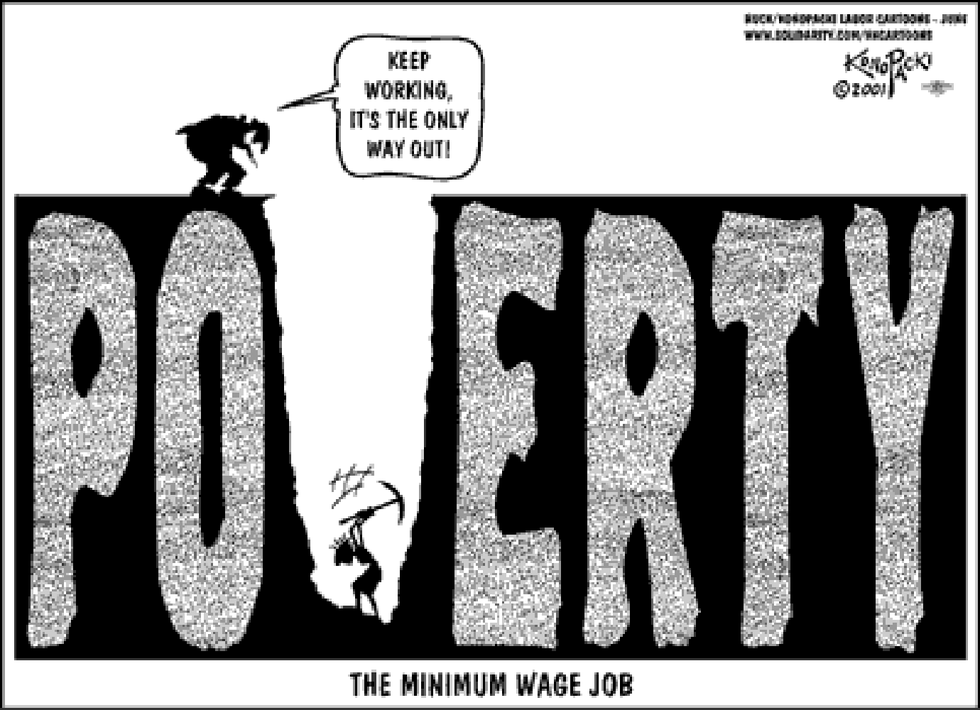
In my freshman year of college, I noticed several things that I dealt with growing up that most other kids didn't have to deal with. For one, growing up queer and religious, and growing up Armenian-American. However, the one that still hasn't really been hit on by mass media is being from a low-income household and the stigma behind it.
This article is in response to some comments I've heard and the reality I've lived.
1. Being a poor college student and a low-income student are two different things.
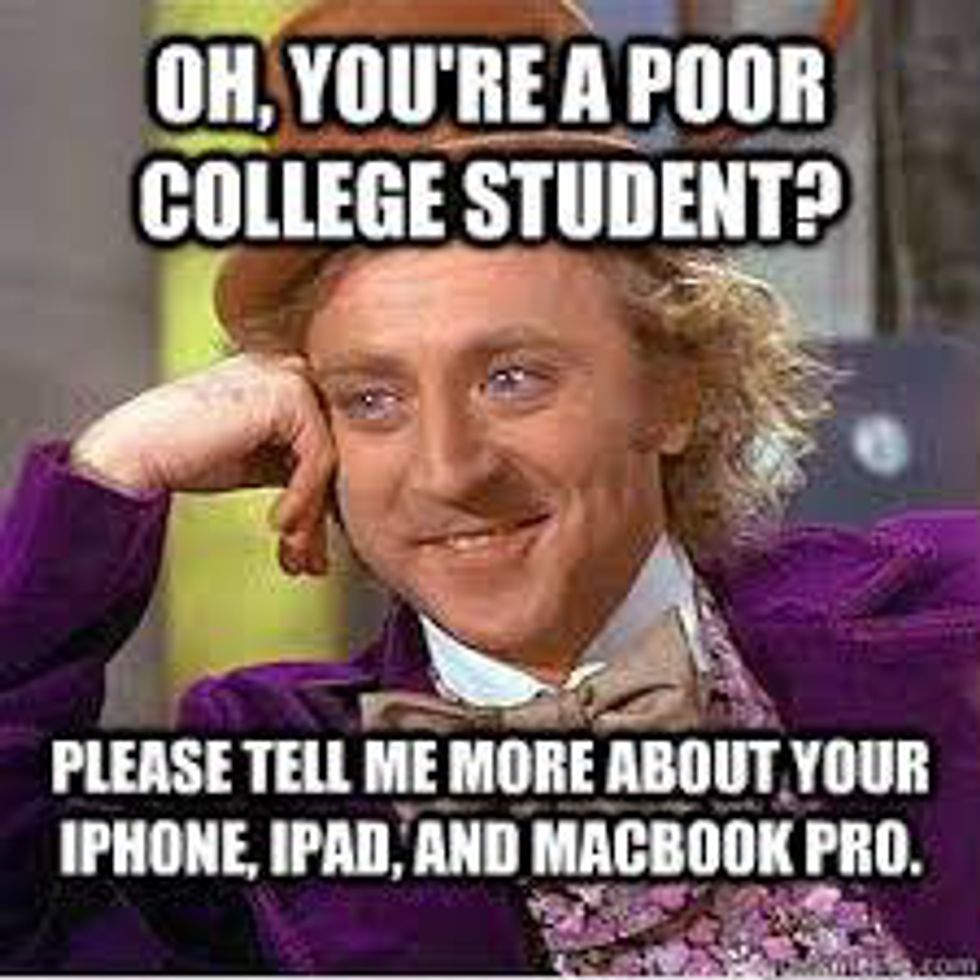
When a person is a poor college student, it means they themselves have no money. They need to find a way to get the biggest bang for their private loans. If worst come to worst and they need money for basic necessities, they can ask their parents/guardians.When a person is a low-income student, it means their family as a whole lacks the finances to afford basic necessities, like healthcare and food. Growing up in a low-income household can have several effects on a child's development, which I will get into later in the list. But for a college student, it means that they better pray that F.A.F.S.A covers all of it. In most cases, it covers the cost of in-state tuition and ask the eldest student in the household at that school for verification almost every year. Furthermore, if they are in a state like Idaho, whose major colleges fall below the national average graduation rate, their education is limited. If a low-income student goes out of state, they need scholarships, grants and tuition waivers to cover the cost due to lack of eligibility for private loans.
2. When people say that low-income people "should just work harder,” they have no clue what they're talking about.
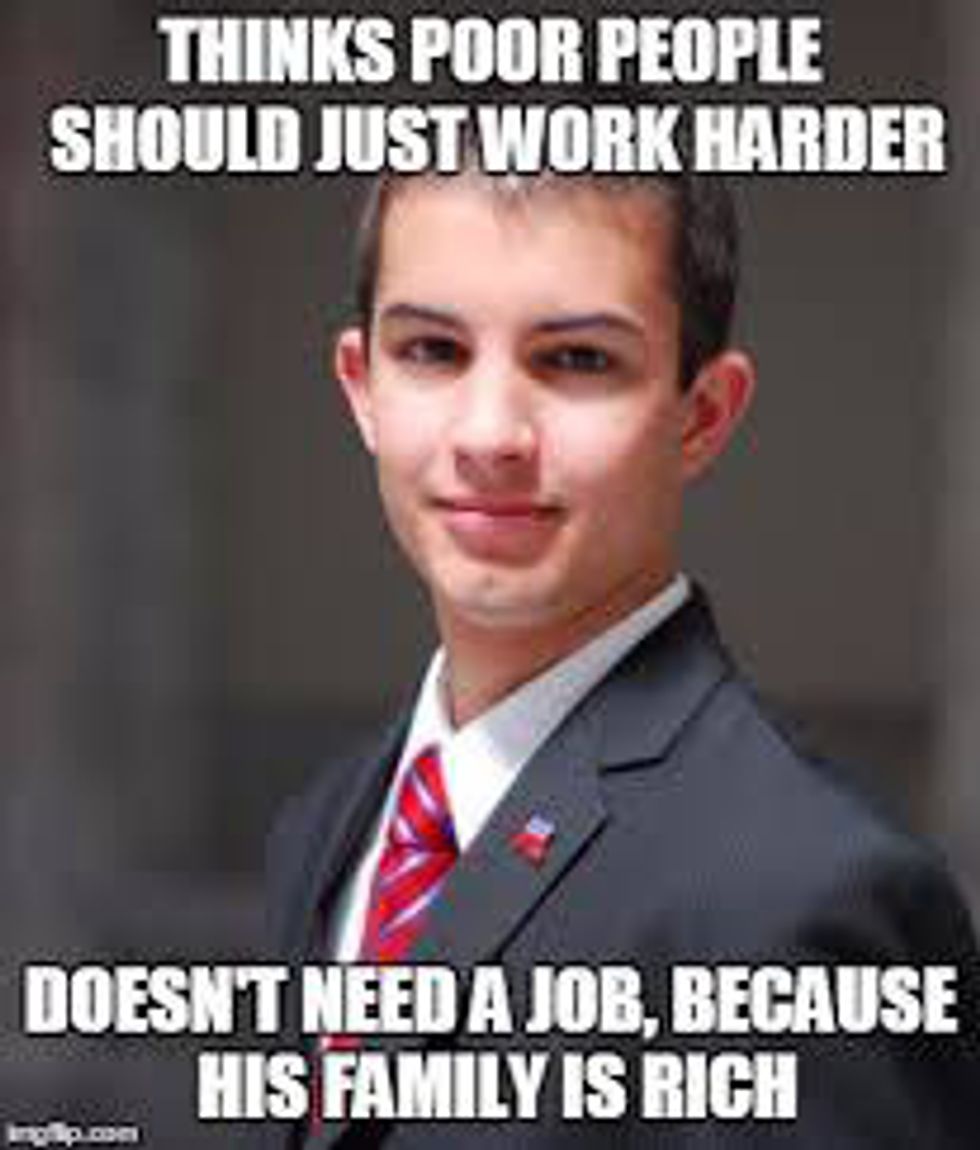
While some people can get out of being low-income through getting more jobs, it is unfeasible to anyone dealing with disabilities, mental health problems, going to school, or being a single parent. They can't just get another job. Everyone should be able to live at least semi-comfortable if they are working a full-time job, and the fact is that many low-income families cannot afford to keep a roof over their heads and dinner on the table even while working full time. Also, people with higher income can receive better education and medical care. It's not something that can just be fixed with "getting another job" when that's nearly impossible for kids in school trying to make it in life, and single parents trying to be there for their kids.
I asked a friend with a low-income status about their experience in low-income households and how hard their family works in response to this tired argument and they responded with this:
“My mother has three solid jobs and four others that come and go year round. It is impossible what she already does. With a mentally ill father who has a hard time holding down a job and little resources for him to get help, he is still trying to work. My mother can't work any harder, and with kids trying to get through college, she feels the need to. How wrong is it that my mother works so hard and were still on food stamps, seriously?”
They wished to remain anonymous.
3. Classism is taught in schools.
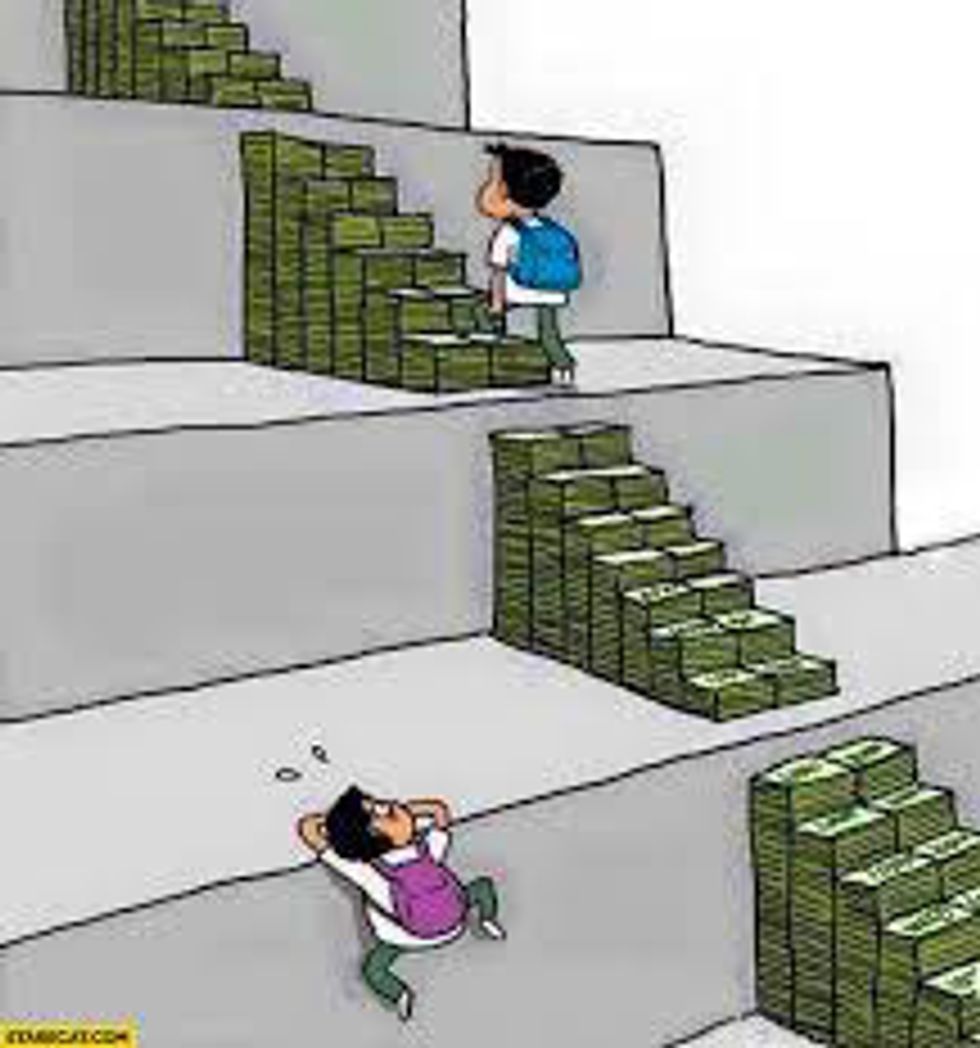
Schools are funded through the property taxes of that school's area. This means that the schools with families of higher incomes get better teachers, books, buildings, etc., because they have the money to afford it. This helps those students further their education because they get the best of the best while lower income schools get the leftovers.
I had the privilege of being a low-income student at Idaho's richest public school, which coincidentally made it the best school in the state. My high school had the best teachers in the state, the most AP classes in the state, and the largest amount of perfect scores on the SAT and ACT in the state. However, it was never talked about how the majority of students in those classes and getting those scores were part of the schools economic elite.
I was in an AP class when a Food Drive was going on at my school, and a teacher got angry with the class about our lack of effort in participating. He said that we all had the means to donate to the Food Drive and he was ashamed that we had put so little help forward. He, without fully knowing it, made me feel like I didn't belong in that classroom. The same thing happened when my government class discussed wealthfare.
Now, this feeling of being out of place is normal among low-income students due to several factors that stem from what they wear to what's going on at home.
I interviewed another person, Maddie Quinn, about their experience in school, and they told me about what they went through.
“I grew up in a low income home, and it was terrible how many people looked down on my family for it. I had kids tease me for my hand-me-downs, and missed many meals to try and make ends meet. It's not easy to grow up in poverty, and people who haven't probably won't understand how it can make life 10 times harder.”
There is far more to classism in school than I can put in one point in an article. Here are some resources to educate yourself on the topic.
4. Food stamps and Medicaid aren't easy to get.

The list of requirements for food stamps delves into household resources like bank accounts for everyone over 18 and not in school. There are also the external factors on how to get to a Health and Welfare office, how long it will take to get into the office, how you're treated at the office. When a person gets food stamps, they can only afford to spend around $1 max per person per meal, and that's if they get the maximum amount of benefits for the size of their household.
Medicaid is a whole other ball game. It's a joint federal-state program, so if the state doesn't believe in the expansion of the system, it won't cover as many people as it needs to. This also means that the gross income is different state to state to be eligible for Medicaid. In Idaho, a household of four has to make less than $3,746 and month and $44,925 a year for their children to get coverage, but would have to make less than $439 a month and $5,268 a year for themselves to get coverage, as well.
Conversations are centered around upper- and lower-middle class, but not about low-income households.
We've all heard the rhetoric around how the USA needs a strong middle class. Politicians have been fighting about the best way to strengthen this middle class since the recession hit in the 2000's. However, lower class households have been left out of the conversation. There is a plan to cut back food stamps over the next 10 years and it's been on the media's back burner. The same goes for how "No Child Left Behind" damaged low-income students during the 2000's. The focus of that conversation was the testing and literacy rates. When the conversation was centered around low-income students, it was around what those kids need to do in order to get higher test scores. These are two examples of how the lower class is ignored in conversation across policy and media in the United States.
5. Don't blame people for being low-income.
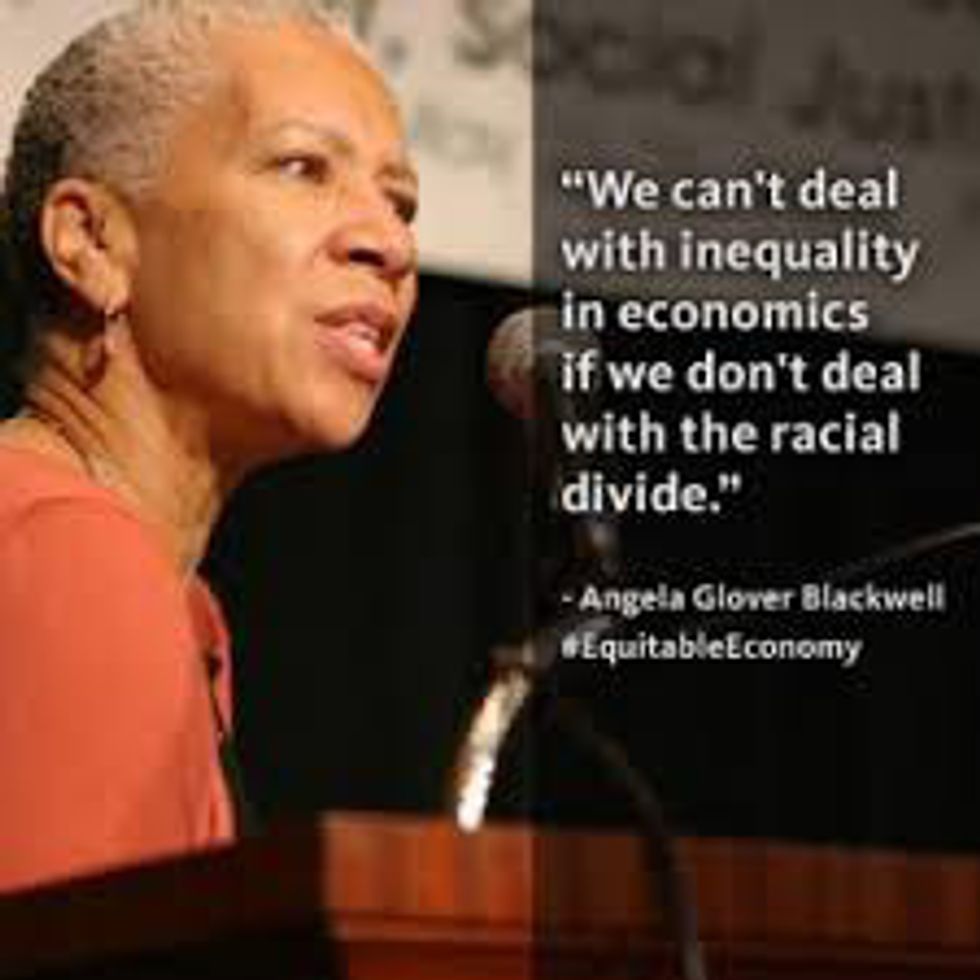
There are so many forces at work in the USA that oppress its citizens, and they've become very apparent when you see the distribution of wealth. Check out this link and explore how inequality in America is structured.
Another way to see how wealth is distributed is by looking at the CEOs of companies in the USA. They are predominantly white, male, cis-gender and straight. The same goes for policy makers across the country.
Stop looking at low-income households as the problem and look at the systems of oppression that led to them being low-income. There is a vast history of oppression based on race, gender and sexuality that is wrapped into oppression based on wealth.
6. Lastly, educate yourself.
This topic is vast and I've only written five points out of a multi-leveled issue that spans centuries and across different races, genders and sexualities. I wanted to respond to these statements because I'm sick of the lack of education on wealth in the Untied States, and most notably from my own friends. Educating the populace on these issues isn't up to me or other people in low-income households. It is a responsibilities of each individual to go out and seek knowledge on these issues to better the lives of everyone as a whole.

















