

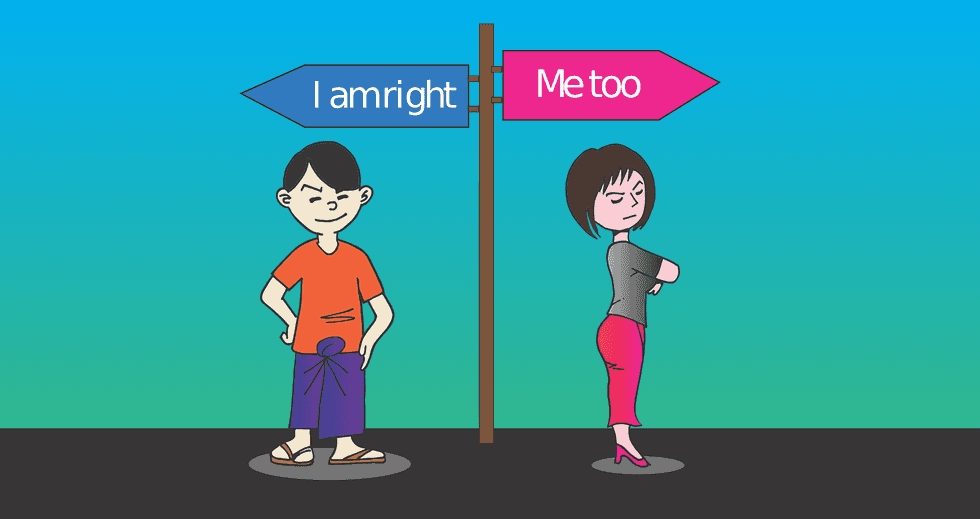
Argument- something that surrounds our daily lives whether we know it or not. It sounds like such a bad word. We see it on television, hear it on radio, read about it in books, overhear it during (heated) dialogues between people, and (unfortunately) see irate comments using it on Facebook. It can be used to make points and learn from two or more sides. The nature of argument can be good for constructive thought, but it can also be bad during heavy disagreement or discontent. The latter point, as most of us know, probably has planted our minds as to what are arguments.
I'm going to share what you preferably should not do while attempting to make a point. Some of these could possibly go a long way.
5. Talking over each other
This is, understandably, a common mistake most of us are guilty of while arguing. However, this can be a huge problem while the other person can't get a word in edgewise. Even if you have a feeling you know what that person might say, and I'm sure you do, let that person speak completely before giving your point(s).
This one actually bugs me the most during television mini-debates on certain shows where you have the main host of the show and another guest (or more...). One reason is because during shows you have airtime which includes time constraints. Once the host says, "We only have a few seconds." while the guests have been talking over each other the whole time is inconvenient. I actually wanted to know what each person had to say individually and speak from their expertise (or lack thereof). When it's time to cut to commercial, you know that's it, unless they will come back afterward. The point here is you both should give each other space to allow constructive discussion.
4. Shouting (or using ALL CAPS)
This is it- the person said something that you don't like. You have lost all hope that the opposite person understands you. You know you're right, so you need to SHOUT IT FROM THE ROOFTOPS WHY YOU ARE RIGHT AND DARNIT THEY ARE GONNA KNOW YOU'RE RIGHT.
Oooh, try again!
This is actually a barrier that we think works quite well to say we're right, but we just end up sounding deranged.
Whether it's in person or on Facebook, this can be concerning. If you find you have this problem, consider why you think shouting is going to work and then realize it actually won't. If you really want to emphasize something without seeming like you're shouting online, use asterisks in between your sentences or phrases.
If an argument can turn from good to bad in one second, or if you think it can't get worse, shouting or using all caps will pretty much make you lose credibility. No matter how right you may be, you end up being a jerk. Don't be that one jerk.
3. Insulting/Name Calling
Example-
Person 1: "...which is why this is the reason we hold these beliefs."
Person 2: "You're a sick, mean, twisted narrow-minded, stupid excuse of living!"
Growing up, I remember hearing from my teacher/principal, "If you can't say anything nice, don't say anything at all." Not that arguing points is really supposed to be "nice" anyway, but if you want to leave a bad impression on the person with whom you're arguing with, go ahead and say what Person 2 said. Sure, people may have different beliefs and that may be something different between you two. However, they are probably not as bad as you may think! You both took the time to attempt to see why you two believe differently. At least attempt to make it so that you both learn something. Plus, neither insulting nor name calling present themselves as arguments.
2. Throwing things
Before you get confused, yes, I have seen this happen in my personal life.
Generally, self-control is necessary. You don't want things to get physical if your opponent also happens to be bellicose. You are debating, but you're not in a fighting ring.
1. Cussing
Simply put- don't use "those words."
For those of us who are Christ-followers, one verse that can be applied is John 15:12 - “This is my commandment, that you love one another as I have loved you.’’
Another verse, which allows debate but commands respect, is 1 Peter 3:15 - "but in your hearts honor Christ the Lord as holy, always being prepared to make a defense to anyone who asks you for a reason for the hope that is in you; yet do it with gentleness and respect,"
For all of us regardless, let's keep in mind how we present ourselves when the opportunity of argument presents itself.