As a person who has always loved cartoons and all forms of animation, I have often looked back into the art form’s history and have discovered a treasure trove of cartoons from the World War II era. While these vary in form and quality, and include platforms from Minnie Mouse and Pluto collecting bacon grease for the war effort, to Superman saving a plane (sabotaged by the Japanese) from diving into Metropolis, what is striking to me is that many of the best cartoons have been banned. What I mean by “best” is that these particular cartoons are ones that can instill in me, a college student in the year 2015, some sort of patriotic sentiment or joy. However, these cartoons are banned because they portray something no longer politically correct: caricatures and stereotypes of other races. In what follows, I hope to propose accurate descriptions of and valid reasons for the unbanning of these cartoons, not to simply reinforce the stereotypes of the past, but rather to show why the ideas shown are so vital to history and contemporary audiences.
The first cartoon I wish to discuss is an American favorite: Popeye the Sailorman in You’re a Sap, Mr. Jap.
(Links to all cartoons are at the end of the article)
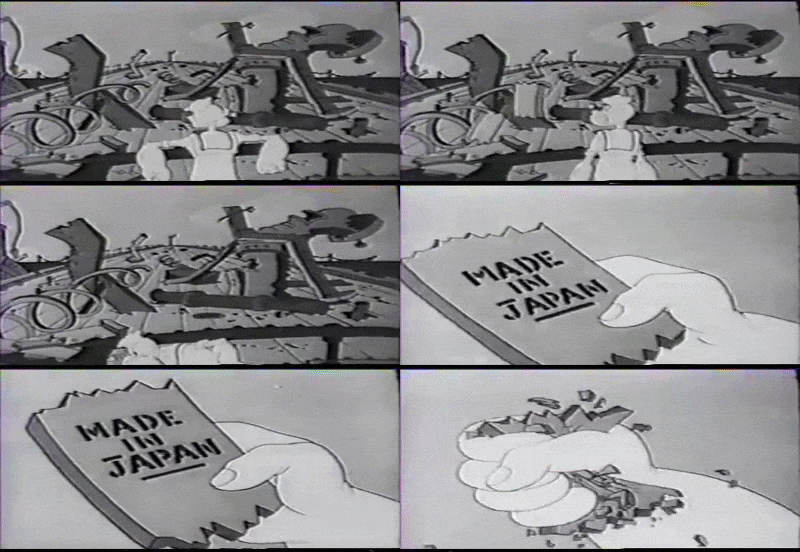
After he has destroyed the boat.
The cartoon features Popeye peacefully at sea, until he discovers a Japanese ship. Upon introducing himself, they reveal their warship, hiding underneath their tiny sailboat. Popeye destroys the ship, supposedly having luck with this because the ship was “Made in Japan.” This cartoon is not potentially racist or offensive—IT IS. The cartoon makes fun of the way the Japanese speak, their dress, the quality of their workmanship, and much more. The cartoon also features the head Japaneseman swallowing gasoline, then eating firecrackers and dropping a match down his stomach. This causes the ship to explode, and sink into the sea, as Popeye watches from afar, and an all-male choir sings, hitting a triumphant final chord, “You’re a sap, sap, sap, Mr. Jap.” It is mildly horrifying to watch in the modern day because of the brutality and overt racial stereotyping, but it is still fun to watch all the same. It is this quality that I find makes it worthy of being unbanned: if we, in the modern day, can still get whipped up and feel patriotic—watch in pleasure as the ship sinks—it is rather hard to imagine exactly to what degree audiences would have reacted in the cartoon’s original run, but as the issue of the Japanese in WWII was obviously far more present back then, the reaction was likely even much larger. This can then, more so than any history book, show what Americans were feeling.
The second cartoon I reference is Disney’s Der Fuhrer’s Face, in which Donald Duck dreams he is a worker in Nazi Germany, and becomes increasingly saddened with the war production process, eventually going mad.
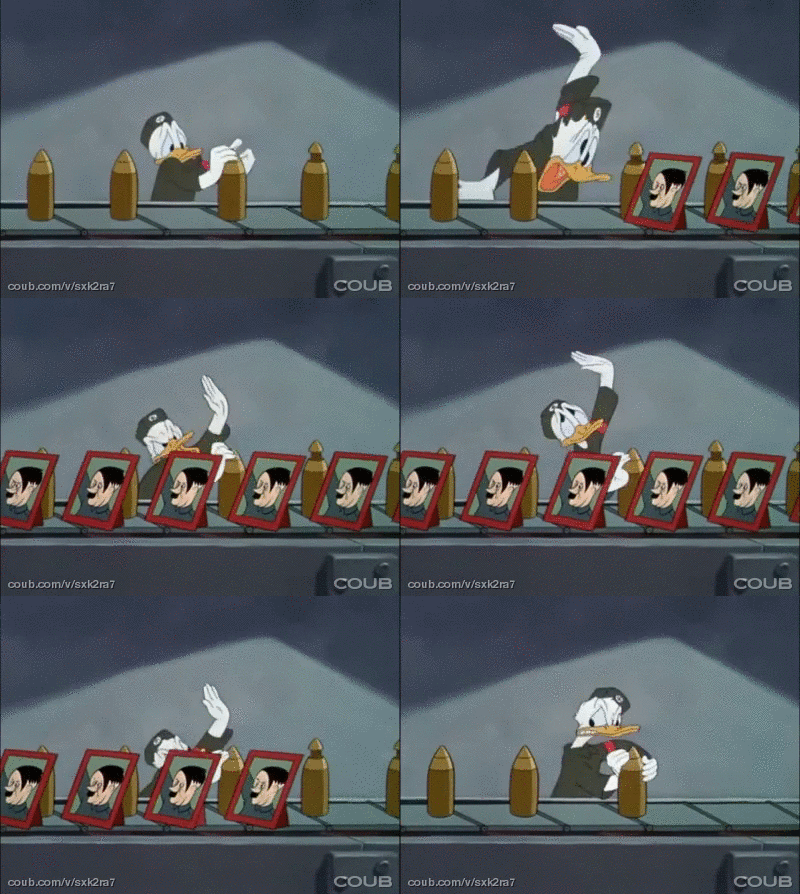
The production line.
The stereotype played on in this cartoon comes in the form of the German band, appearing overly goofy in their step and melody. What, however, makes the cartoon so effective is its ending, as Donald sinks into Nazi-induced madness: the animation style turns into a highly detailed fever dream accompanied by suddenly frantic and almost uncontrolled music. No matter how many times I watch or listen to this section, it never fails to whip me up into a frenzy. Much like with You’re a Sap, Mr. Jap, it seems plausibly imaginable that its original audience would learn and take to heart its message quite clearly. The message is stated quite plainly by Donald at the end after he wakes from his nightmare, and hugs a mini statue of liberty: “Am I glad to be a citizen of the United States of America!” The combination of music and animation most definitely creates a sense of patriotism in any viewer, and as such, ought not to be banned simply because it reflects the values of a different time. Censorship at this level prevents a modern audience from gleaning the deeper meanings present.
My final piece of evidence (and also my favorite cartoon ever) is Russian Rhapsody, which is banned largely for the sense of violence and positive depiction of Stalin, to whom history has not been kind (with good reason).

"I'm a Gremlin, from the Kremlin. OW!"
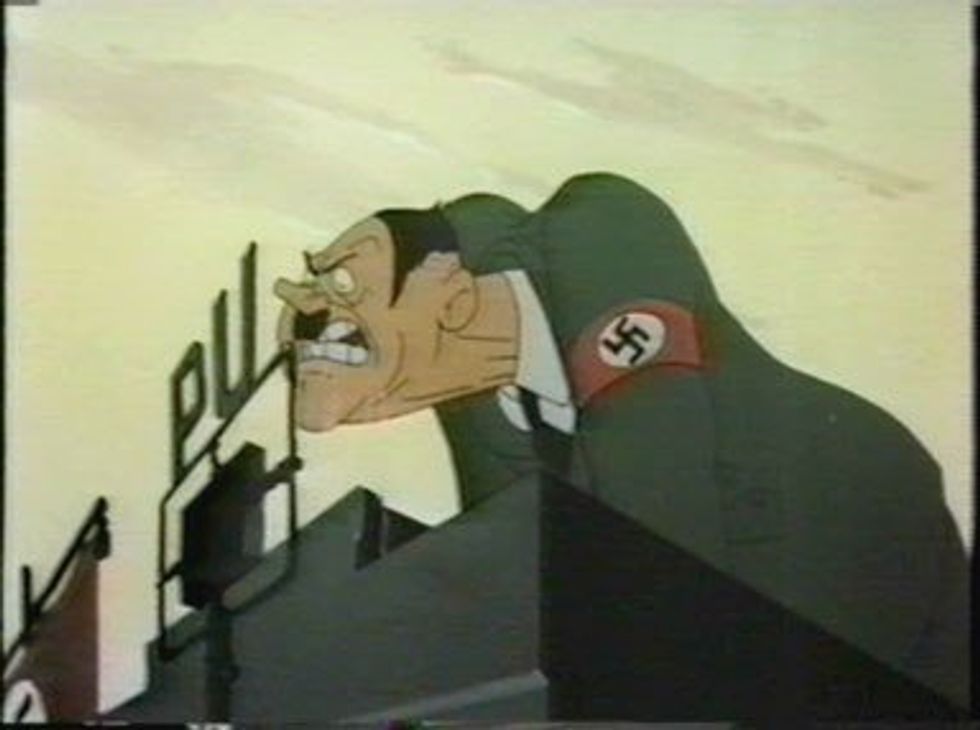
This cartoon features Hitler deciding to bomb Moscow, but little does he know Gremlins from the Kremlin have snuck onboard the plane to take it apart, and thwart him. These gremlins eventually poke Hitler with needles, electrocute him, hit him with hammers, and, after being chased by Hitler with a knife, scare him with a mask of Stalin. They then crash the plane on top of him. The cartoon features top notch animation, political symbolism, gratuitous violence, an orchestral version of the Russian folk song “Ochi Chernye,” and an overwhelmingly patriotic and brotherhood-like sense toward the Russians (after all, they were our allies). But because of this very depiction of the Russians as heroes, the cartoon has been banned. What more could show how we felt at the time than this cartoon? Surely it is not worthy of being banned if it accurately shows us how things actually happened?
I use these examples all to try and show that they represent things as they were, no sugar coating. WWII was not a time of overwhelming joy and mirth. There was more to the war than conserving bacon grease, as Minnie and Pluto have us do. There were enemies, and they were the Nazis. They were bad, and were treated as such, and the effect of these cartoons is extremely compelling. As we are today, in 2015, I don’t really see things like this anymore. Yet, when I think about how I don’t see anti-X cartoons, I feel like it is because we don’t truly know who our enemies are anymore. In the aftermath of the Paris attacks, and everything else we’ve seen recently, we know ISIS is evil. We know the terrorists responsible for 9/11 are evil. But their severity speaks for themselves. We don’t need a cartoon to show us how terrible these people are. But I think a cartoon would be nice. So somebody give the Warner Brothers a call: they’ve done it before, they can do it now.