

Today, in 2016, we live in a world where escaping from the atrocities that occur on a daily basis is nearly impossible. When you turn on your television, it is evident that there are some major domestic and international problems. Gun control, terrorism and overall violence claims the main theme of the news and what people consider is important.
However, the millennial generation, those born in the early 1980s through 2000, has a notoriously bad reputation with the Baby Boomers and Generation X. We are spoiled, have an overwhelming sense of entitlement and are lazy. However, as a millennial baby, I think our biggest issue does not have involve work ethic or intelligence. To me, it is that this generation does not know how, when and why to romantically love.
It might sound strange that love could be that pressing of an issue, but hear me out. Millennials grew up with all of the aforementioned horrors of the world, with a good portion still being relatively young when extremely significant, horrible acts happened, like Sept. 11. Technology is about the same age as millennials; so as millennials grew, so did technology and the speed in which information is spread throughout the world. This generation was basically raised to see the world in an "every man for themselves" kind of way, and to accept that bad intentions are more prevalent than one would think.
So how does this tie into romantic love? Well, there are three main reasons why everything I said so far has impacted the millennial generation's ability to show emotion.
1. We never shut off from the world.
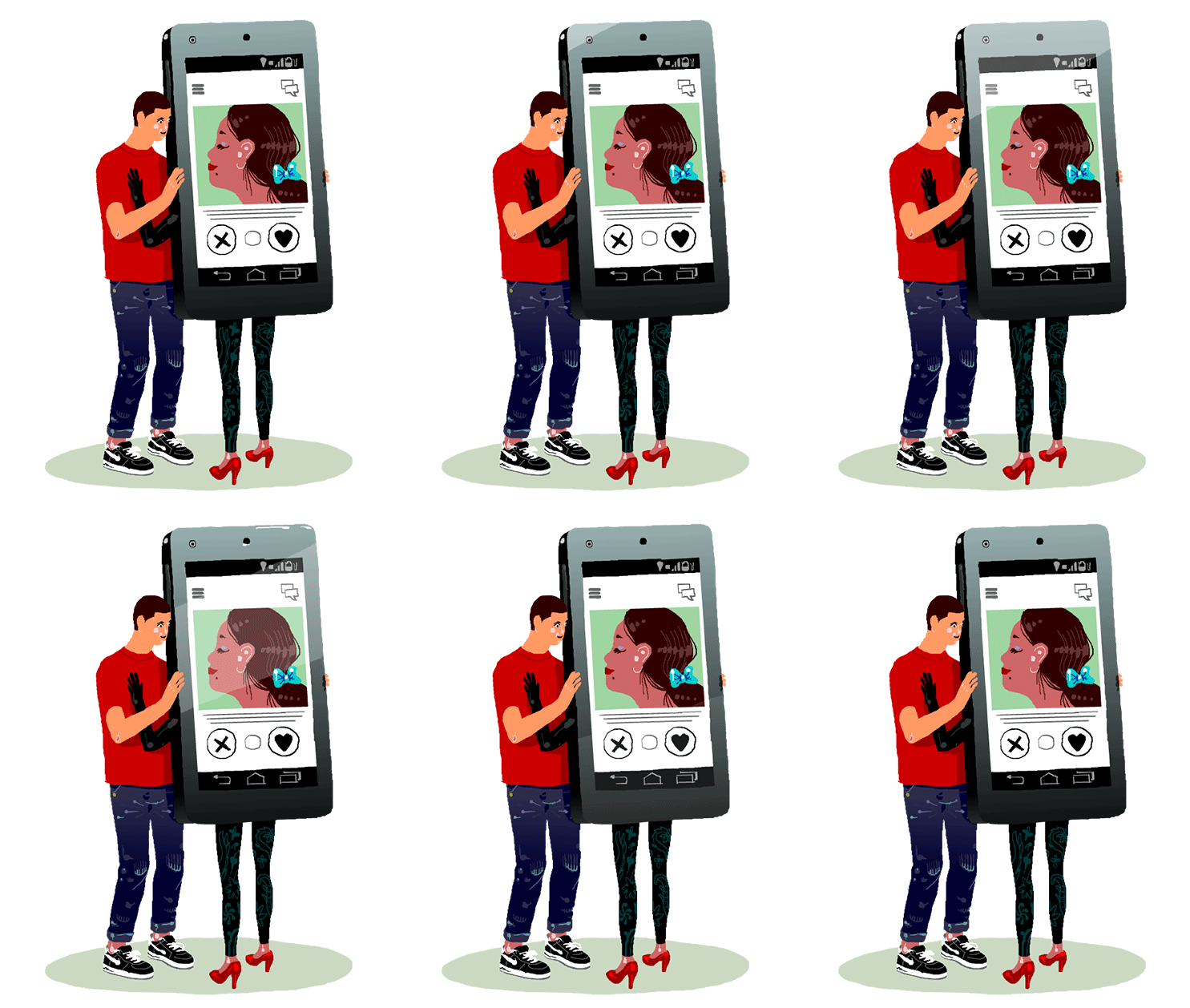
The technology we all grew up with made us accustomed to talking to all of our friends all the time. If there is a person that you "like" or are interested in, you can find out everything about them almost immediately, with a Google search or some "stalking" on social media accounts. The ideas of "blind dates" are irrelevant now, as are the days of small talk or even dates in general. Millennials post every thought on social media, so someone can know a lot about you (maybe more than they should) just by looking at your social media accounts. Whether or not it is an accurate representation of you varies, but it still forms an idea in that person's head of who you are. There are no more days of waiting by the home phone with the spiral cord, waiting for that boy to call you and ask you to go to dinner. It is text messages and "hanging out" and instant gratification, and real friendships are never formed. Therefore, true love cannot form.
2. We receive disappointment about our original definitions of love.
Many of our parents participated in the awkward-yawn-arm-stretches-in-movies dates, and actually got to know people the "old fashioned way." However, that does not mean they all ended up happily ever after.
The parents of millennials, Generation X, have a 50 percent divorce rate. How could one not be afraid to love after witnessing a tumultuous divorce or an abuse relationship? However, I think this will actually help millennials in the long run. While they are afraid of the idea of love and marriage and so on, children of divorced parents might be more likely to wait longer to get married and really think it through, not wanting to go through what their parents did. So perhaps our parents' mistakes may actually make us stronger.
3. We are trained to hide extreme emotions, which love is considered part of.
Perhaps the biggest reason why we can not or will not love is because we have been raised to hide emotions or even to be numb to certain things. The world is a corrupt place and millennials have grown up with a front row seat to it. Seeing a murder on the news is not disturbing anymore. A person killing another person should be disturbing. This kind of news is constantly all around us, so it is easy to just "get used to" hearing that another person died in an accident or even a mass shooting.
This lack of fear propels millennials into risky situations; short, dramatic and intense relationships or "friends with benefits" situations. I know that even now, I am astounded when I hear that a couple my age has been together for more than a year. In these short relationships, people are obsessed with each other but quickly lose interest when the flames burn out. This happens because "relationships" these days mean "hanging out" once and then "going out," sometimes without even ever going anywhere.
The idea of "friends with benefits" is even worse; it is essentially one or both people using each other. In all of these situations, an ignorance to the world around us and just accepting that people are bad keeps us from loving and makes us appear like it's "not a big deal" when we are hurt by someone we do start to have feelings for. It seems that now showing emotions is obviously the worst thing that could happen in the world.
Ultimately, millennials were born into a stormy part in history. And this has affected our lives in every way, especially with the way we feel about each other. How do we fix it? Well, I think everyone just needs a little more honesty and a willingness to show emotion.
People are so caught up with playing games or trying to be the one that "doesn't get hurt" that no one is taking risks associated with finding the right person for you. It is scary to trust other people with your feelings, but this generation needs to learn to do it. I have friends that are very guarded, and it will be difficult for them to ever break past that and see when someone is actually good for them; they are so used to seeing the bad. If you "like" someone, tell them. If you think a girl is pretty, tell her.
I think that we can take certain lessons from Generation X and the Baby Boomers, both good and bad, and create some of the best and most productive relationships. Stop being afraid to be with one person, stop being afraid of commitment, and stop being afraid of feeling. The next time someone asks you to "hang out," offer to go out to an actual place, and maybe you will learn that this is a person you actually enjoy spending time with.