Most of the population hasn't heard of Gabriel Garcia Marquez— I can wholeheartedly assume that to be fact. He's a Nobel Prize winner, but that's hardly enough to survive in the mainstream these days.
Even while hurriedly preparing for a procrastinated class presentation, the Colombian-born author caught my attention and opened my eyes to a reality often ignored. He grants his readers insight into the Latino experience and writes as a watchdog for la violencia, or social injustice.
However, the greatest gift that Marquez possesses is his expression of an unexpected and, often, untouched subject— death.
Even upon hearing the word, flashes from Western texts, films, religion, philosophy, and memory should burst through the mind as unwarranted reactions. As an American and, above all, a Millennial, life often acts as the ultimate reference to death. While the inevitable pairing can be painted as yin and yang, there's no preventing the internal shudders that accompany any mention of the permanent ending.
Those born between 1980 and the mid-1990s exist as one of the most awkward generations to date. The Silent Generation lived through the history recorded in textbooks today. It literally earned the nickname, the "Greatest Generation." What? How do we even compete with that? The Baby Boomers had a purpose— legacy, deeply rooted in creation, tradition, and admiration of the value system. For the most part, even Generation X fulfilled that trademark American patriotism and, alternately, found its rebellious voice through the Vietnam War.
Along come the Millennials, who are torn between living up to these unrealistic standards that aren't even applicable anymore and running far away. Our intimidating capitalistic system has us seemingly divided in half.
On one hand, we want to make our lineages proud. We can appreciate that golden dream of the set career with five or six figures, the partner, the children, and that damned house in the suburbs with the classic white picket fence. We've had the words "work ethic" shoved down our throats since we emerged screaming from wombs. We stifle disappointment when we earn those degrees and walk out into the world where, 50 years ago, we could have made it with determination and the shoes on our feet. What our parents and grandparents don't understand is that it's different now and it isn't our fault. You can't blame a 20-year-old for the state of our economy or the value of a college degree.
On the other hand, we've developed into our own. We're the aged versions of the youth who grew up being told that we could do absolutely anything. That's what we want to do. We want to be the explorers and adventurers of the world. We want to change things for the better. We want to help people. We want to channel our wanderlust into passports and visas, then disappear for our early twenties, only to re-emerge as these enlightened, well-rounded, and cultured individuals. We think, "Someday," and glue ourselves to social media, in order to be as close to the world as possible.
So, if and when you mention death to us, we freeze up and ignore it. It is not a reality. It is the bane of our existences. If we don't carry out these coveted hopes and dreams in time, then what were we born to do?
Instead of dealing with death, we numb ourselves to it and, worse still, feed our fears of it. We surround ourselves with the unforeseen and futuristic, but we're terrified. At its most surface level, death translates to zombies, skeletons, poltergeists, and decaying corpses. Death could be punishment, but, on top of that, it could mean that our lives were disappointments. Not only are we afraid that death will cut everything short, but we are also distressed that the dread of it will keep us from reaching out into the world. We're scared of death and the possibility that, because of fear, we could be 79 years old with nothing accomplished— safe and sound, but incomplete.
The insignificant Powerpoint and four-page paper on Marquez occurred over a year ago and could have easily been scrapped out of my consciousness. It stuck for good reason, though, because it acknowledged something that our society avoids so blatantly: the outright plague of death anxiety. As the embodiment of the West's brassiest elements, Americans in particular view death as the ultimate adversary— something we can fool, cheat, or beat, if only we try hard enough.
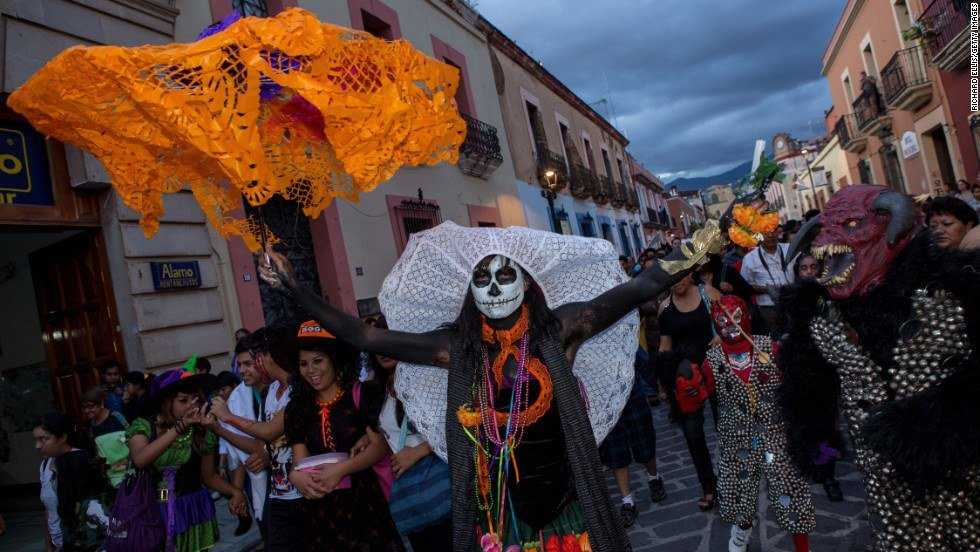
Marquez uses his writing to showcase one of the strongest Latin American sentiments: the hearty embrace of death. He spins tales from the viewpoints of both the recently deceased— struggling to come to terms with fate— and those still living. In cultures outside of the Western mainstream, it can be common practice to sleep and gather in the same room as those who just passed, keeping them company way before the funerals. Valerie Aguilar's "Latin American Death and Funeral Rites" said it best: "Latin American culture encourages imagining your death, preparing for it and living intensely until death arrives." One of the most common and best examples of this behavior is Mexico's famous Dia de los Muertos, or Day of the Dead. Some Americans may cringe at the thought of being surrounded by skeletons, but the holiday is a serious observance, based on the recognition of death and remembrance.
Even outside of Latin America, so many societies take note to never forget the loved ones who passed away by honoring their memories and celebrating their ancestors. Unlike American children, other populations of youth aren't isolated from this fact of life, but pushed to welcome it.
Now, as an American Millennial, I've come to a crossroads. In a society resistant to this transition of acceptance, how do I shed the phobia that I've been conditioned to develop?
In "The Labyrinth of Solitude" by Octavio Paz, he writes, "The word death is not pronounced in New York, in Paris, in London, because it burns the lips. The Mexican, in contrast, is familiar with death, jokes about it, caresses it, sleeps with it, celebrates it, it is one of his favorite toys and his most steadfast love. True, there is perhaps as much fear in his attitude as in that of others, but at least death is not hidden away: he looks at it face to face with impatience, disdain, or irony."
Maybe, the answer to the purpose of the Millennials lies in dealing with this very human problem. Maybe, our self-fulfillment will come to us by adjusting our age-old ways to those of our brethren and addressing both risk and death with calculated, daring courage. Maybe, this is not the solution at all, but how can we know if we do not take those first steps and try?