Anyone who hasn’t seen up to the end of season six of Game of Thrones should beware, for the night is dark and full of spoilers.
Apparently this is a controversial opinion to have, but I wasn’t the biggest fan of this last season of Game of Thrones; I thought the episodes tended to set up things that seemed important but were never paid off (Melisandre being a prototypical old crone in a magical disguise, for example), and sometimes the plot seemed to veer towards the illogical for the sake of having specific iconic scenes realized. Lord Baelish manages to bring an entire mounted army from the Vale to Winterfell seemingly overnight whereas in previous seasons a trip to King’s Landing from the same city took about a month, and Varys apparently teleports from Dorne back to Meereen following his parley with the Queen of Thorns, conveniently arriving just in time to be included in the dramatic shot of all our favorite characters assembled on the deck of one of the ships in Daenerys’s brand new armada. But more than anything, I felt that there was a distinct lack of the continuous change in the power structure of Westeros that made me love the show in the first place; I love the feeling that comes when a character finally comes into their coveted position, and I cherish even more the gut-wrenching feeling following a beloved mainstay’s unexpected fall in the social hierarchy, and this season mostly kept an even keel where this is concerned, preferring to maintain the status quo rather than jostle the readers with another Red Wedding or Gregor v. Oberyn-style situation.
At least that was the case, until the last two episodes aired. Though I began the season thinking that the writers had either stalled out creatively, gotten too attached to specific characters to kill them off, or possibly just not have planned out the pacing of the sixth season as well as previous ones, the final episode completely turned it on its head and created possibly one of the best season finales of the series so far. Not only is the conclusion extremely effective in terms of changing the power dynamics of the Seven Kingdoms, but it also succeeds in retroactively making the season far more enjoyable that I thought on my initial viewing, and it did it by convincing me that the season was going to end on just as boring of a note as it began on.
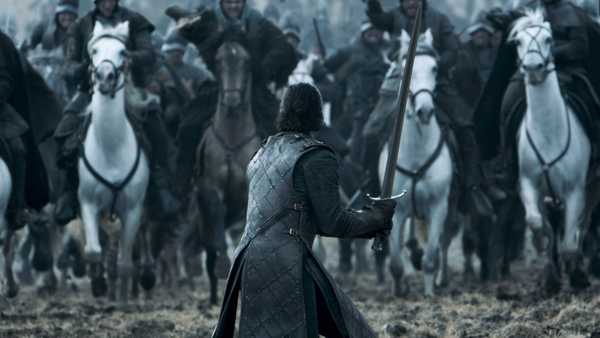
Now that the season is concluded and I’ve rewatched most of the episodes with the epic finale firmly in mind, I realize that the creators didn’t so much stall out as bide their time, weaving together several complicated ventures on the part of several characters that all coalesce into an extremely satisfying conclusion - at least when compared to the sum of its parts. Especially succulent was the final judgment of Ramsay Bolton, the Bastard of the Dreadfort and short-list contender for the title of Most Punchable (or, Most Punched) Face in Westeros, and his having threatened our heroes with that same fate earlier in the episode makes his punishment all the more sweet. The battle that leads up to the showdown with Bolton, while epic, is not the most visually pleasing; completely gone are the halcyon days of season one and two, when trumpets and motley were as commonplace as beheadings. The scene is almost straight out of Braveheart, with gore and dirt and screaming wounded surrounding Jon as he struggles to catch his breath in-between dodging blows from Bolton’s men, with the sight of his youngest brother Rickon dead and riddled with arrows no doubt still stuck in his mind. It’s a candid look at a straight-up medieval melee we haven’t seen often enough since the Blackwater, and the arrival of Petyr Baelish right at the last possible moment is a cause for jubilation given how dire Jon’s circumstances are at that point. In retrospect though, Baelish’s tardiness could possibly be read as biding his own time in the fashion of Walder Frey, waiting in the wings to see how the battle played out before taking any significant risks.
As great as the Battle of the Bastards came out to be, the highlight of this season was indisputably the events in King’s Landing during episode ten. Bummed as I was at the prospect of missing out on another trial by combat, the sequence we got instead was completely goddamn bananas. It begins with the High Sparrow self-assuredly promising Margaery that Cersei needn’t show up for her trial at all - everything can still go according to plan, given the terrifying legal system Westeros has. Then, in one spectacular explosion of green flame, they’re both dead. Everyone in the Great Sept is dead, tons of people outside are dead, and watching it all from a tower on the other side of the city is Cersei, drinking a cup of deep red wine and smugly satisfied as ever.
Cersei’s victory over the Tyrells and the High Sparrow was bittersweet, however; also watching the chaos from his window is King Tommen, who stands and watches the sept burn as he realizes that his mother has orchestrated the deaths of his beloved queen and her family. As he watches the smoke rise, we hear the door click shut behind Tommen. This is some of the best writing the show has given us this whole season. With no dialogue, the shutting of the door demonstrates that all of Tommen’s outlets for creating peace just burned down with the sept; his mother betrays him for her own personal gain, the Faith Militant is obliterated after a tentative peace has already been brokered, and the Tyrells are severely weakened following the deaths of their patriarch and two potential heirs. Realizing that he is trapped, Tommen takes off his crown and leaves on a table, unconcerned with where it goes after it leaves him. He steps up onto the windowsill, and calmly steps off without a moment’s hesitation.
During a spectacularly understated and nerve-wracking sequence in which the audience slowly realizes Cersei’s plan as it begins to unfold, ironically occurring at the Great Sept at the same time the once-Queen Regent was meant to be put on trial, I was at perhaps my most tense since the Red Wedding. As we see Lancel crawling wounded toward the barrels of wildfire in an attempt to quash the mass assassination attempt (and deprive us all of seeing how awesome it was), we hear echoes of Cersei saying those immortal words to Ned Stark all those years ago in King’s Landing – in the game of thrones, you win, or you die.