

In the United States, over-policing and mass incarceration has historically prompted the mass criminalization of Black people. The Black community's fight for civil rights under chattel slavery gave rise to the enactment of the Thirteenth Amendment which legally abolished slavery in 1865.
However, there was a loophole in this precedent which inevitably became exploited by the government. According to Section I of the Thirteenth Amendment, "... neither slavery nor involuntary servitude, except as a punishment for crime whereof the party shall have been duly convicted, shall exist within the United States, or any place subject to their jurisdiction."
As a result, forms of institutional slavery did not cease, but instead took alternate forms — Jim Crow segregation, the rise of the KKK, voting poll taxes and literacy tests, the grandfather clause, lynching, redlining, and white flight persisted during the Reconstruction Era, even subsequent to the adoption of the 13th Amendment. Systemic oppression against the Black community has persisted over time in America.
Hegemonic systems like Black mass incarceration and police brutality have transfigured into redesigned, reincarnated, and contemporary forms of slavery.
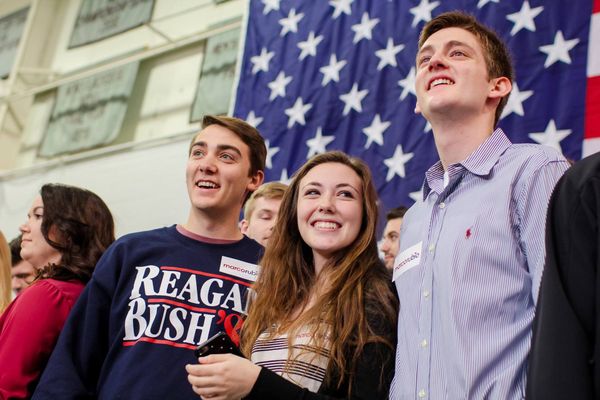
The United States is home to 5% of the world's population, yet 25% of the world's prisoners. In 1972, the U.S. had a prison population of 300,000. However, today, due to Richard Nixon's "law and order" era, Ronald Reagan's "war on drugs," and Bill Clinton's "three strikes" policy, mandatory minimums, truth-in-sentencing laws that kept people in prison for 85% of their sentence, and the nearly $30 billion federal crime bill of1994 that was heavily loaded toward law enforcement incarceration, 2.3 million are behind bars, amounting to the highest rate of incarceration in the world.
Also, something important to note is that in most states, U.S. citizens that are currently incarcerated automatically loses the right to vote. Accordingly, mass incarceration soon became a tool to systematically target people of color and to place them behind bars, so Black and Brown Americans would conveniently lose their right to vote.
Also, modern policing in the United States disproportionately incarcerates Black people. Although Black Americans accounted for only 13% of the United States population in 2012, Black people amounted to 31% of police killing victims. In fact, even though a Black individual is less likely to use or sell drugs, Black people are more likely to be arrested for drug use and trade and almost three times more likely to be killed by police than white people. While the lifetime likelihood of imprisonment for white men is merely 1 in 17, the lifetime likelihood of imprisonment for Black men is strikingly 1 in 3.
And it's not about crime either. Fewer than one in three Black people killed by police were suspected of a violent crime and allegedly armed. Furthermore, there is no accountability for over-policing; most police killing cases have not resulted in any officer(s) involved being convicted of a crime.
Ultimately, the prison-industrial complex relies historically on the inheritance of slavery. Today, we statistically now have more Black Americans under criminal supervision than all the enslaved Black people back in the 1850s. The Black Lives Matter movement signifies that when Black lives matter everybody's life matters, including every single person that continues to challenge racial marginalization, entering our broken criminal justice system in the United States today.