

I’m pretty sure everyone can recall learning about sex and STDs at some point in their lives, whether it be in health class or from your parents. However, long before any of us even fathomed of a sexual thought, our gender identity had already developed, typically by the age of 4 or 5. And, ironically enough, you probably did not learn about this in health class.
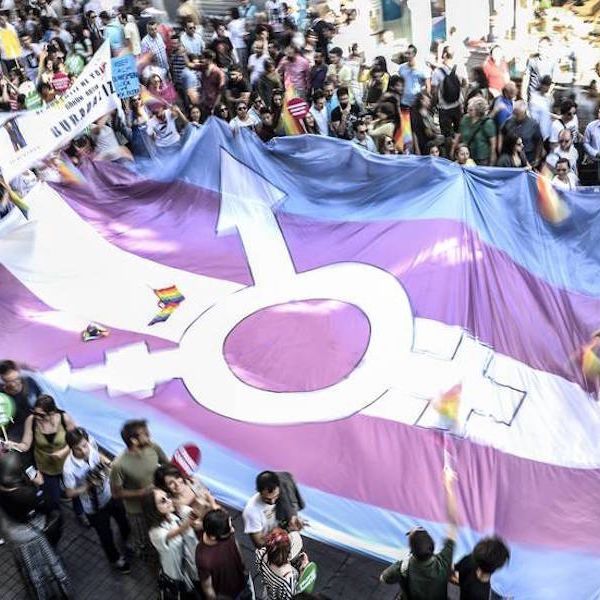
There are many misconceptions surrounding gender, people assuming that just because most people identify as “male” or “female,” that everyone must identify under this binary. However, this is not the case. The first misconception I want to dispel is that gender and sex are the same thing. While sex is simply the biological state of being male, female or intersex, gender is the cultural and social range of characteristics differentiating between and from masculinity and femininity. It exists on a spectrum; a person may identify as cisgender, Transgender, agender, genderqueer or gender fluid to name a few. Your gender is assigned at birth according to your sex, the doctors assume that they will match up. Although for most people this is the case, it is not the same for Transgender people. Trans people have a condition called “gender dysphoria,” which is the intense discomfort due to the mismatch between a person’s gender identity and biological sex. According to the American Psychiatric Association, it may also cause clinically significant distress or impairment in social, occupational or other important areas of functioning, as well as depression, anxiety and suicidal thoughts.
Another misconception is that gender identity and sexual orientation are related. Here’s an easy way to envision it: gender identity is who you go to bed as, while sexual orientation is who you go to bed with. That being said, a Trans person can be either gay, straight, bi or asexual, etc., just like cisgender people. Cisgender people, which include gay people, are people who do identify with the sex they were born with and gender they were assigned at birth. Like everything I have been speaking of, gender dysphoria can occur on a spectrum; some people can live with it, while others cannot and must undergo transition in order to feel at ease. This is another misconception, being transgender does not mean you underwent gender affirmation surgery. It has absolutely nothing to do with what’s in your pants. Going through transition is not required; in fact, only about one-third of trans individuals go through it. Many do not transition due to high costs, lack of access or simply because their gender dysphoria is not severe enough for them to need to transition. Since I’m pretty sure people don’t go around asking straight people what’s in their pants, extend that respect to Trans people and don’t ask them.
In recent months, you may have heard about people like Caitlyn Jenner, Laverne Cox or Janet Mock, and may have thought to yourself: “Why am I just hearing about transgender people now?” or, “Being transgender must be the next trend.” Trans people have existed for thousands of years, but have been ostracized due to their non-conformity, even by members of the gay community. They are now finally being recognized due to the advent of social media giving them a platform and voice. The advancement of medicine has also allowed more Trans people to transition and become who they were born to be. Trans people, although still oppressed and condemned in many cultures and religions, have been documented in many indigenous, Western and Eastern cultures and societies from antiquity until the present day. However, the meaning of gender nonconformity may vary from culture to culture. In India, the Supreme Court recognizes the existence of Transgender people as a third gender, known as “hijra.” Native Americans see people who fulfill societal roles of both genders as “two-spirited.” Being Transgender is not something that is caused by the environment. In fact, a study conducted for ABC Science by researchers from multiple Universities, including Melbourne and California, found that transgender women are “more likely than cisgender men to have a longer version of a receptor gene for the sex hormone androgen or testosterone.” They also found that many had a decrease in testosterone levels during fetal development, which is an explanation for their gender dysphoria. Another study conducted by Dr. Swaab for the 19th volume of Gynecological Endocrinology has shown that “sexually dimorphic brain structures in transgender people are shifted away from what is associated with their birth sex and towards what is associated with their preferred sex.” This essentially means that when the brains of trans people were analyzed, they were similar to the brains of people with the gender they identify with.
So why are Transgender rights so important right now?
According to the Gay & Lesbian Alliance, Transgender people face staggering levels of discrimination and violence. In 2013, 72 percent of anti-LGBT homicide victims were transgender women. According to "Injustice at Every Turn," a report by the National Center for Transgender Equality and The Task Force:
- Transgender people are four times more likely to live in poverty.
- Transgender people experience unemployment at twice the rate of the general population, with rates for people of color up to four times the national unemployment rate.
- Ninety percent of transgender people report experiencing harassment, mistreatment or discrimination on the job.
- Forty-one percent of respondents reported attempting suicide, compared to one point six percent of the general population.
- It is legal in 32 states to fire someone for being transgender.
With all the struggles that life already comes with, Trans people have to deal with all of this on top of it. Until 2013, gender dysphoria was considered a mental disorder (“Gender Identity Disorder”). Imagine living in a world where your sheer identity is considered a disorder. Next time you meet someone and you aren’t sure what their gender or pronouns are, just refer to them as “they.” It may be technically grammatically incorrect, but we already do this, subconsciously, all the time when speaking about someone whose gender we don’t know. Many agender or genderqueer people also use this pronoun. Once you get to know them you may learn what their pronouns are, but if not, just ask them “what are your preferred pronouns.” Respecting someone’s pronouns is respecting someone’s identity, which is something that everyone deserves.
Because people are usually so unaware of what it means to be Transgender, they dismiss the existence of trans identities altogether. Ignorance breeds fear and hate, and the only way to stop the propagation of ignorance is through education. In order to achieve equality for trans people, as well as all members of the queer community, we must begin to teach people, from a young age, about sex, gender, sexual orientation and gender expression. These are things that every single person has to grapple with at some point in their lives. We are all born with unique identities and deserve to be respected equally. This diversity within the human condition is what makes us human.

















