After spending an asinine amount of time trying to find an image of little black children playing in nature for my headline photo, I finally decided on the silhouette of the kids above, because google clearly cannot transcribe those simple details (pronounced deh-tailz), but can tell me in 0.94 seconds anything I want to know about the Kardashians.
Okay, here we go.
Every child grew up dreading the moment their parents would go into their room, sit at the edge of the bed, let out a "hey bud," and dive into a rigorous ten minute course on the birds and the bees.
But that is not the talk I'm writing about. I'm writing about the talk that could happen at just about any age in adolescence. This talk in particular is usually triggered by a certain word, gesture, phrase, or mannerism from the child's peers. Unfortunately, this could occur in an incident where the child's peers are not involved, rather it is an adult such as their teacher or coach. I'm talking about the culture talk.
You see, African-American kids get two talks growing up. One on sex and another on culture (as opposed to other kids who probably only get the sex talk and perhaps an in-depth lecture on Rock 'N Roll Hall of Fame inductees). I did not receive the talk until much later in life, when I turned thirteen and started taking Purity Classes at Church, where the missionary in charge would give us lessons on more than just abstinence. She explained the difference between the "er" and the "ah" suffix when using the "N" word. She followed by how we should not use it, but know what both mean and how to tell the difference between a colloquial cultural euphemism and an insult. While neither forms are okay nor accepted in my household, they are still used in society.
If I was given "the talk" by my parents, it might have went a little something like this:
"Have you ever heard the word (insert N word here)?" Has anyone ever called you that? Well, it comes from a long time ago, way before now, when people that look like you and I were not treated the same as people like your father. That is because white people used to own black people- called slavery. When you get into high school you will learn more about this and so we want to prepare you for that. Now, you should know that we have come a long way since then, and that is why your father and I are allowed to love each other. While the law says things have changed, it might not always feel that way, and so if you ever feel like you are not being treated fairly because you have darker skin than some of your peers, you should know the word "discrimination" and tell your father and I right away. We love you and you are beautiful."
But since my parents got divorced and I got most of "the talk" from movies like Lean on Me, Coach Carter, and Ruby Bridges- I had a better understanding of the insults I received and what they meant.
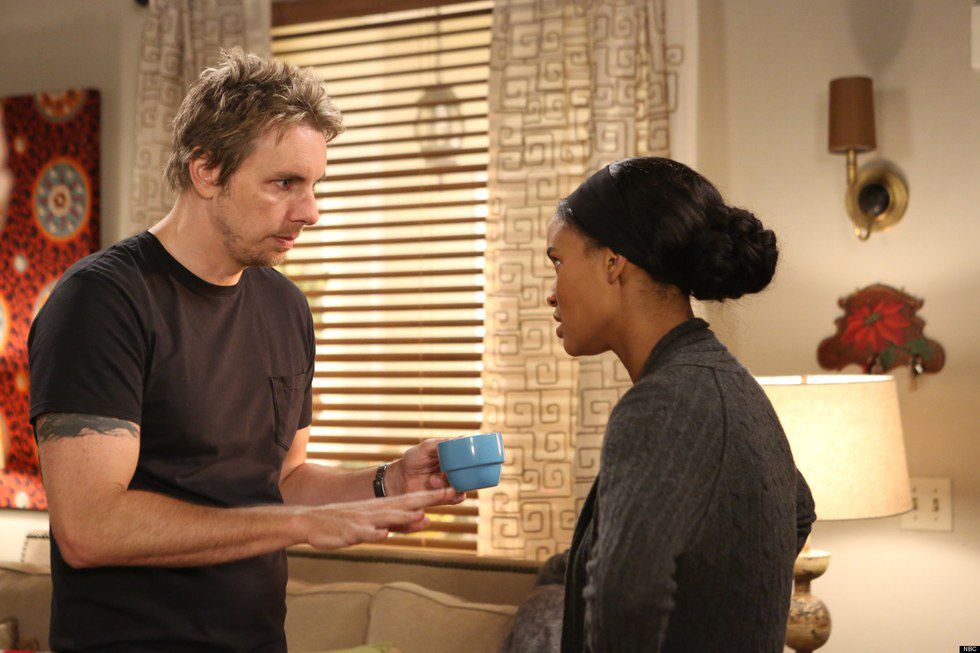
So how do you give your younger sibling, niece or nephew "the talk?" I thought Jasmine and Crosby from the NBC hit show Parenthood did a stand up job. Watch here.
There is no age too young. There is no better education than the personal history lesson they share because of their ancestors. Set them up for success and prepare them for future history classes where, for an entire lesson they are called on with questions and comments such as "anything you'd like to add?" or "I'll assign you Rosa Parks." Trust me, it will happen. Do not fear shattering innocence, because that is a myth, and they would rather here it from you than an uncultured, uneducated swine.