
Did you ever think that something as a women's monthly bleeding cycle, a perfectly normal physiological process, could be one of the main reasons for female reproductive tract infections, cervical cancer, and decreased school attendance for women?
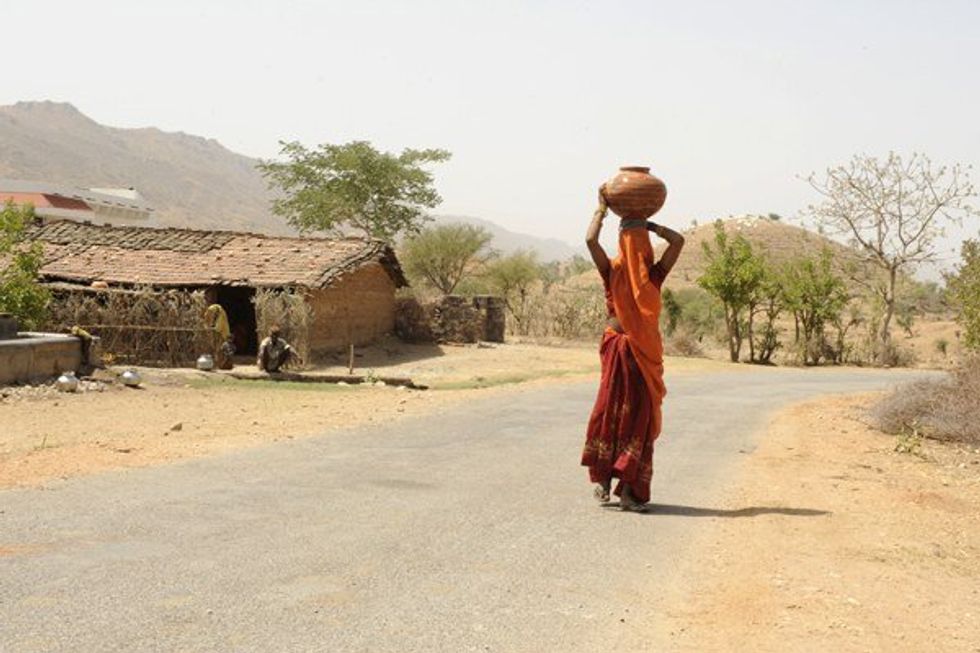
Adolescent girls constitute a vulnerable population in rural India. The onset of menstruation and schooling have been directly correlated. This can be attributed to many factors such as improper physiological education and lack of access to private toilets at school. The most shocking statistics were that 97.5% of girls did not know about the source of menstrual bleeding, and more than half of those girls were not aware of sanitary pads. Those that used cloths, as opposed to leaves or husk, did not wash them properly. Many do not have covered toilets and do not have the privacy to wash cloths. Many also store cloths in unhygienic places until the next cycle. These problems stem from a deeper cultural taboo around menstruation This taboo is demonstrated through the restrictions placed on women and girls by society during menstruation.” “70.59 percent girls did not attend any religious occasion, 42.65 percent girls did not play, 33.82 percent girls did not perform any household work, 16.18% girls did not attend school and 10.29 percent girls did not attend any marriage ceremony during the menstrual period.” Check out the full journal here. It's a good read.
Not only is menstruation considered a dirty act, but the taboo around it has developed into serious ramifications. Adolescent girls from rural areas drop out of formal schooling due to their monthly cycles, reproductive tract infections develop from improper sanitation, and the cycle of damage continues- long after a girl's cycle is over. This issue may seem small, but the damage lasts for generations. When girls drop out of school once they reach childbearing age(which biologically is determined by when they get their period) they lose the ability to invest in their future.
Women’s health is an ambiguous topic in India. It is considered taboo to openly speak about women’s health, and vaginal health in particular. The primary source of information for most women is passed down from mother to daughter. This is especially true in rural areas where other forms of education are unavailable. This, through generations, can lead to false, ambiguous, and incomplete information.
So, how can we change this? Taboo is something that is tough to erase. But, what we can do, as a community, is make sanitary pads accessible to rural populations, provide education through community modules about proper vaginal upkeep, and support organizations that strive to alleviate the taboos around women's health. In last week's article, I introduced a TED Talk where a Chennai philanthropist developed a sustainable machine for sanitary pads. Muruganatham addresses a taboo in many developing countries: menstruation. One day, he noticed his wife using an old, dirty, bloody rag, which is what most women in rural India use if they're lucky. After learning that sanitary pads were not affordable for most women, he embarked on a mission to generate sanitary pads for the benefit of rural women. He is on a journey to make every woman in India have access to sanitary pads, not just the two percent that do. So far, he's on his ninth year of sustaining this cheap manufacturing of pads against multinational corporations. Organizations like these train rural women to generate their own sanitary pads, as well as supplying a source for local employment.
Another individual, Swati Bedekar, developed the rudimentary pad design further. She simplified the production process and added wings. Her husband Shyam developed an electricity-dependent incinerator that that created a discreet method of disposing of sanitary pads while avoiding odor.
These innovations happening in India are great, and we should learn from them. These challenges that the rural women face in third world countries are not isolated. These very same challenges exist in America. Homeless women incarcerated women, and low-income women face the same challenges in procuring sanitary products. The world definitely needs to address menstruation hygiene management, and we can start by erasing that stigma here in our community. Eliminate the subtle judgments that question a woman's ability to do her job. Yes, Donald Trump, I’m looking at you.
My partner Julia and I are embarking on a trip this winter where we will address these rampant issues in developing countries. Our vaginal infections module focuses on how to improve menstruation for women, and how to protect them against the majority of vaginal and reproductive tract infections. We've spent months developing brochures, presentations, scripts and giveaways for the people of Southern India. We're so excited to be able to contribute to a cause we both feel so passionately about.
We're doing our part to make a difference - are you?