

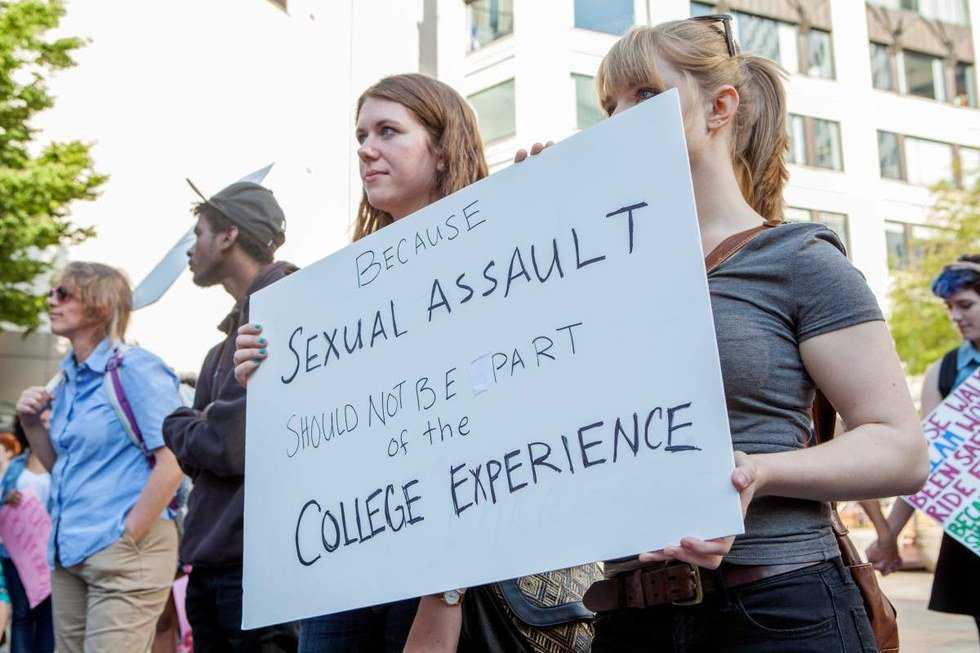
Before starting school at Oklahoma State this semester as a college freshman, I was excited and nervous for the journey into the unknown world of adulthood. Living on my own and making my own choices seemed intimidating and yet oh so exciting. My parents were so excited for me as well, taking me shopping for my dorm and chatting up about how much I was going to love my college experience. We engaged in many conversations about what to expect in being an adult and how to have fun while being successful and making grades. However, one of the conversations my parents had with me stuck out to me as something that is unfortunate to have to talk about.
My parents started off the conversation asking me if I had heard about the recent Brock Turner case, in which a 20 year old Stanford student raped a girl behind a dumpster on university property, and how he had gotten off on six months in prison. They then started to explain to me the statistical likeliness of this happening to a non-consenting, innocent girl like me.
Studies show that 22 percent of college girls will be sexually assaulted at their campus. Now, in comparison to the wide number of people on a college campus, this percentage may not seem like a lot. However, seeing as the average number of women attending colleges are 11.7 million as of the fall of 2016, about 258,000 of these women will be sexually assaulted. This number seems more real now, doesn't it?
Now that we have that reality down, lets get back to the conversation with my parents. My parents stated that they trusted me wholeheartedly, and knew that I would never purposely want to be raped or sexually assaulted. However, they also stated that they were aware of the risks that college students take, like drinking at parties and sometimes being around people you don't know. While a lot of times these situations can be harmless, sometimes they can result in danger, and these are the types of situations that the 258,000 college women might find themselves in.
My parents advised me with tips like, "don't let anyone mix your drink," "never put your drink down," and "don't drink with people you don't know." They told me to not hang out with people that I was uncomfortable around, and to not go somewhere if I didn't know the area or if I wasn't with someone I really trusted. While all these tips seem reasonable and like something everyone should know, this conversation opened my eyes to the harsh reality that this conversation even had to happen in the first place.
We live in a dark world, a world where people take control of other people even when they are asked not to. We, especially females, have to grow up learning not to "tempt" boys by not showing too much and closing our legs completely when sitting down and not wearing spaghetti straps and short skirts to school because it is a "distraction." Girls have to learn to be cautious of their surroundings, constantly checking to make sure someone is around that can be trustworthy enough to help them out of a bad situation.
It is especially saddening to know that our world and society is so dark that no actually doesn't mean no at all; that it is purely a suggestion, or a cry out to be taken advantage of. To know that incoming college boys are not sat down and talked to about how to treat a woman and about sexual consent, but instead are sent off under this "boys will be boys" attitude that allows male dominance to become a central motif in boys' minds. To know that many parents are so afraid for their daughters' safety in college because no one wants to teach boys how to respect women and their bodies.
Within the 22 percent of college women who are sexually assaulted, it is shown that only about half of these women will even report or tell someone they trust about their abuse. And even if they tell, many girls tell when it is too late to press charges because they are too scared to say anything, or are told to keep quiet and their problems are swept under the rug. But as shown through recent events, even women who do tell don't get the best of luck in the end. For example, Brock Turner only served half of his six-month prison sentence and was released this week under court approval. So if we cannot even get our law system to adequately represent women and help them when they have been wronged, how can we even begin to expect the same for parents of boys?
It is a sad realization when looking back on all the facts of sexual abuse, especially with college women. Of course there can be plenty of other reasons or excuses people can think of for why men rape women, but a simple prevention method would be to simply teach and show boys, starting when they are young, that women are more than just objects and deserve respect. Sadly, though, these conversations do not occur in most homes, and will be a cause for more sexual abuse to run rampant in universities across the country.