

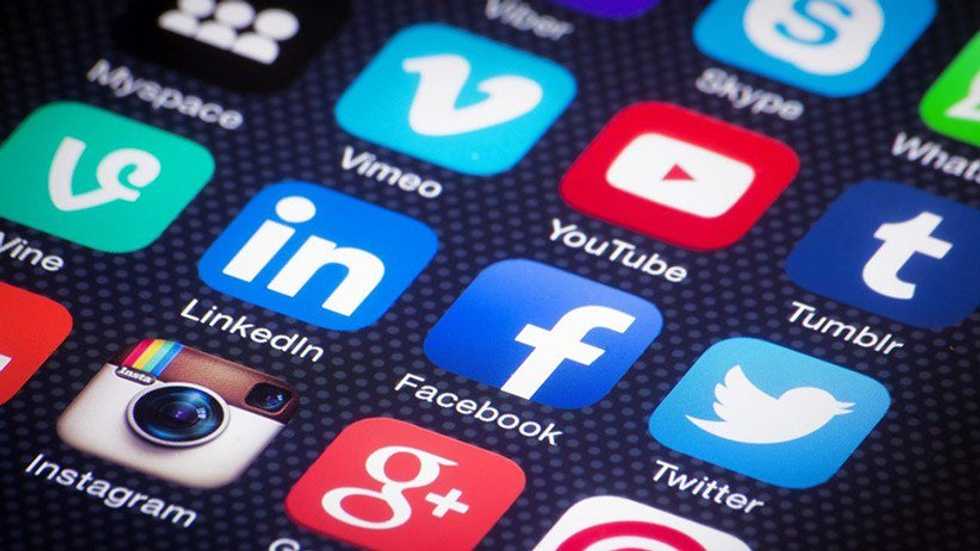
"Trapped in our phones and we can't make it stop."
As a lifeguard, I often watch tweens play in the pool for hours at a time. This gives me the opportunity to see how games have changed over time. When I was younger, I spent hours in the water, playing games that I made up with my friends and savoring every second of it until my parents had to force me out of the pool. Today, I am horrified to see young children in the water taking photos of themselves with a GoPro underwater or taking videos of their friends doing jumps into the pool, reveling over the cool editing options they can use. This is now their form of entertainment.
We live in a society dominated by social media. It manifests in our thoughts daily, acts as a primary marketing tool, serves as personal entertainment and more. We once lived our lives with only a few audience members, such as our family and friends, but now we have an audience of hundreds or even thousands.
It seems like a long time ago when we did not need an audience. We didn't feel the immediate desire to share our intimate, cherished experiences with others. Many people feel as though they can’t even fully enjoy an experience anymore without capturing it to share - for others to “experience” through their phone screens. Perhaps you’re even disappointed if you miss the opportunity to capture something great to share. You wish you could have captured it to show other people or to watch later and to re-live that experience yourself. I’m not writing this article to prove to you that this phenomenon is ridiculous because I’m completely guilty of it too. Instead, I’m writing this article to highlight the reality of what we are doing and give some advice to our generation on how we can be more aware of what we are doing.
What We Need to Do
There is no way to change what has become of social media. There are many positives that social media brings with it, however, we need to work on canceling out the abundance of negatives, such as the harmful psychological impact that it has on its users. We are showing young people that our lives need to be a competition and that is far from how it should be. What we should be encouraging is to be real and to use social media to please themselves and not others.
There is scientific evidence that social media correlates with unhappiness. The thing about social media is that we generally only post picture-perfect moments. We take hundreds of photos to achieve the best possible moment and pretend they are genuine. Why? The answer is that we are trying to “prove ourselves” in a sense and to show others that we are happy. We need to learn how to be happy with our lives without an audience and how to live without the positive confirmation from others.
Imagine that you're scrolling through your Instagram feed and you had to "like" every photo. Would it bother you to give everyone a "like?" Would it make you uncomfortable? Why?
The fact is that we need to stop silently competing with one another through social media. We need to stop feeling inadequate compared to others and live our own unique lives. We need to savor real relationships and cherish real moments, not those created to please an audience. We need to live in real time.
Bo Burnham, a famous comedian, writer, and musician, recently came out with his latest special called "Make Happy" which is available on Netflix. What is unique about this special is that Bo critiques the meaning of happiness and social media's effect on it. He says, "Social media is just the market’s answer to a generation that demanded to perform, so the market said 'Here, perform everything, to each other, all the time for no other reason.' It’s prison, it’s horrific. It’s performer and audience melded together.
What do we want more than to lie in bed at the end of the day and just watch our lives as a satisfied audience member? I know very little about anything, but I do know this: that if you can live your life without an audience, you should do it."