


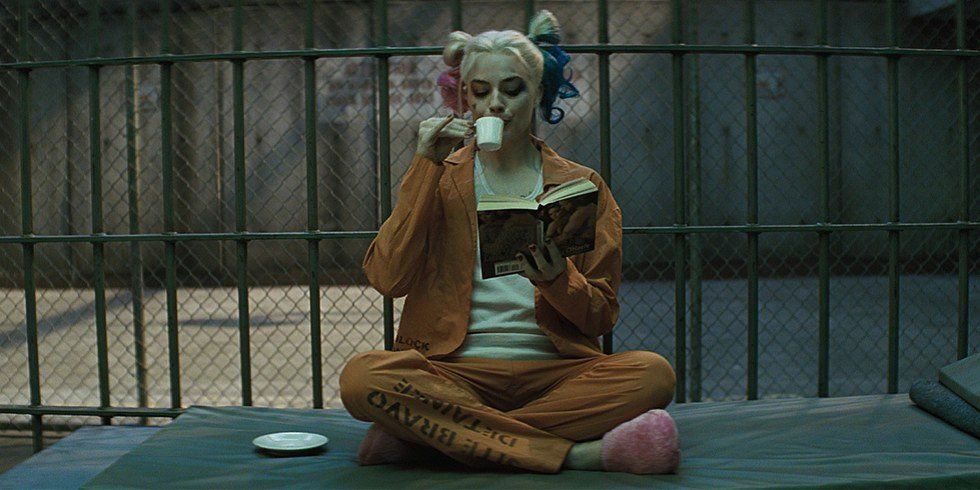
We're currently in the midst of a superhero movie renaissance.
Every year features at least one blockbuster hit starring these tightly-clad, occasionally caped crusaders, either creating a new take on an older movie, or introducing a hero for the first time under the format of the silver screen. Marvel has dominated this field over the past decade, pumping out multiple movies a year, extending their own cinematic universe tenfold (along with their revenue). DC is finally catching up to them, in terms of popularity and giving their heroes a darker, savvier rehash. The most widespread news coming out of events like the San Diego Comic-Con regard the announcement and teases of a barrage of superhero movies, set for release when you nestle into your rocking chair. It's immensely difficult to ignore this fad, and even more difficult to pledge neutrality to a studio/respective comic franchise.
With all of the attention turned to superheroes, where's the spotlight on villains?
They're receiving the same treatment as their protagonistic counterparts -- some have completely different personas, while others still remain loyal to their original renditions. Some are even promoted to "anti-hero," blurring the lines between altruism and amorality. Not every villain leaves the scene cackling and satisfied with defeating the hero; practical or fantastical, they have their own motives, and, much like the heroes, seek to achieve by any means possible.
The very recently-released DC film, "Suicide Squad," takes on this narrative, twisting any anti-hero/villain tropes in order to better answer the question, what would a villain do in a hero's position?
Save the world while causing some trouble, of course. Yet critics aren't sure if the aforementioned squad fully succeed in this, cast and characters alike.
Characters like the Joker and Harley Quinn were promised new identities and outlooks as per a DC cinematic universe revival. It's a canonical story within it, given that it follows this year's "Batman vs. Superman" in terms of continuity and plot. The idea of a new Joker especially piqued the interest of fans, who would follow in the footsteps of the late Heath Ledger, whose portrayal of him was Oscar-worthy and still lauded as "perfection." Who would befit one of the most (in)famously and cheerily psychotic villains in the fictional universe?
When it was announced that it would be fellow method actor and Thirty Seconds to Mars leadman Jared Leto, fans were erupting with excitement. How would this portrayal develop and pay off?
As reviews and audiences are saying, underrepresented, but still self-glorified. Leto digested his role à la Ledger, but to the point where his supposed character-inspired antics endlessly frustrated his fellow actors. He, of course, received the most media attention whether through praise for his character approach or public disdain for it. Allegedly this is because most of his scenes were cut. Critics are torn on this: some are disappointed, saying they wish they saw more of him as the Joker, while others say they should've cut him from the movie entirely, as he didn't add anything to the dynamic, other than being Harley's romantic interest.
Harley's own portrayal is a critical debate in itself. While the majority believes that her actress, Margot Robbie, was exceptional as her role and instigated a lot of the inter-cast/character chemistry, fans and critics alike aren't in agreement over how she's portrayed. Personality-wise, she doesn't stray far away from Harley's original character, an ex-psychiatrist with a goofy and deranged demeanor. Physically, however, is where fans are divided. Some, including Robbie herself, see Harley's look in the movie as "grittier" and more attuned to reality, while others don't like it, as it joins the trend of over-sexualizing Harley, to the point where they see it as unnecessary. I agree with the latter; there's nothing wrong with somebody donning shorts and fishnets. In fact, Robbie rocks it, but it further perpetuates her as jazzed-up eye-candy with desperate amounts of devotion for her lover. Plus, this style isn't game-changing for her character. The only thing it truly succeeds in doing is adding to the movie's overall Hot Topic-esque aesthetic, which dually plays in its favor while failing to give it that so-called realistic, "gritty" vibe.
Thusly, that's what "Suicide Squad" is reportedly lacking -- a consistent sense of identity. It bears an overly gritty atmosphere with a lighthearted cast of characters, mismatched and confused on what it's trying to portray. With villains like the Joker and Harley, it's guaranteed that dark humor, served with a wide, creepy grin, will follow. It doesn't mean it will save the movie. The performances and banters of the cast might, but it won't offset the direction. Should it have stayed loyal to the nihilistic tone akin to "Deadpool" and even boasted by other superheroes, it may have provided a quirky, yet appropriately somber mood.
As a "New York Times" review of the movie commented: "For a film about a gang of outlaw brawlers, 'Suicide Squad' is awfully careful to stay inside the lines." Baddies are notorious for not playing it safe. Maybe this squad should take some notes.


















