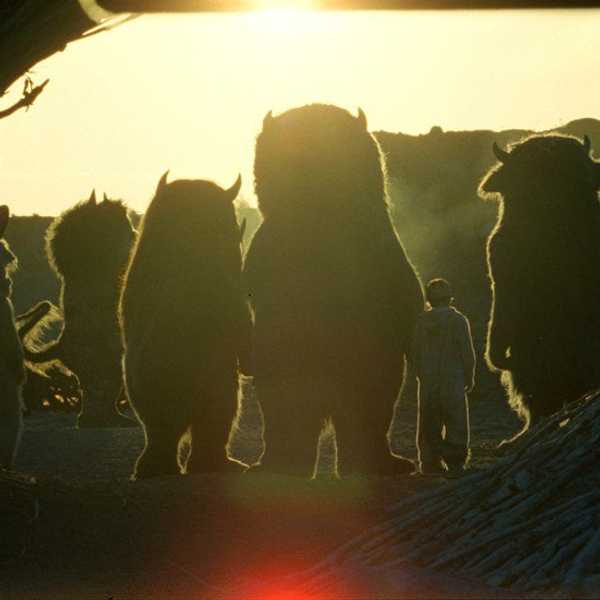
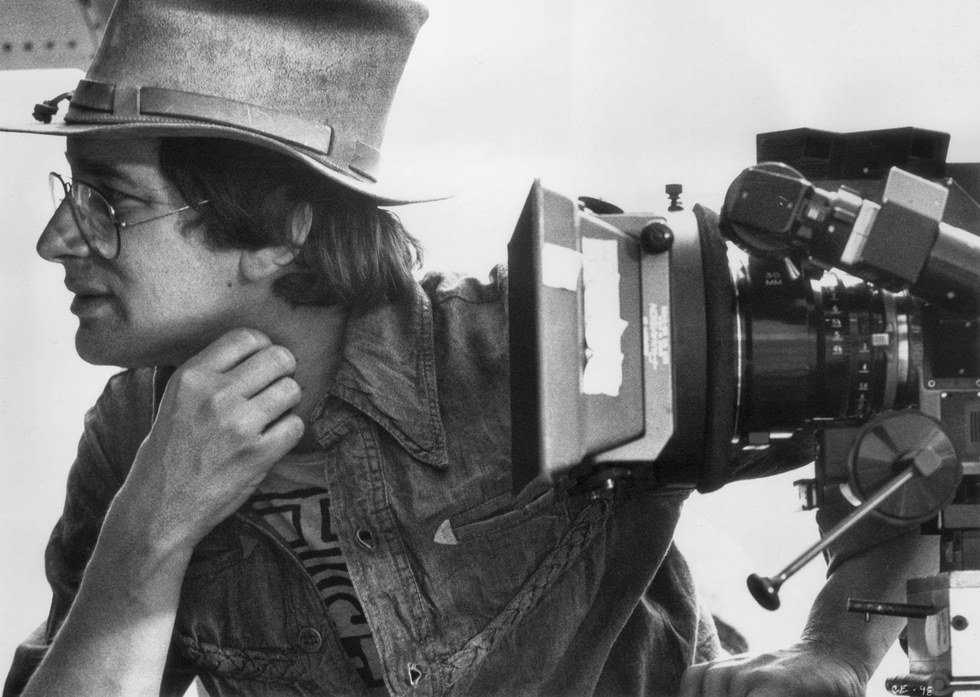
Film has a short standing history as a means of expression. Considered a craft by some, and entertainment by others, the product of filmmaking is comparably a form of communication a la literature, art, and music. Compared to these other forms of culture, however, film is barely past its infancy. People have only been recording things on film for little more than a hundred years, while mankind has been making pretty pictures and merry melodies for millennia. What makes film different is its lack of bias for any single sensory appeal; at least since sound recording was invented, film is the premiere blend of both visual and auditory stimuli. You don’t just look at it or listen to it— you can live it.
For as long as we’ve had movies, we’ve had movie-makers, and for as long as we’ve had good movie-makers, we’ve had awful movie-makers. But despite the notion that nothing is actually new in this medium, and that everything is a regurgitation of something we’ve seen dozens of times, new discoveries with storytelling can still be found. And they have. It is thanks to craftsmen like Stanley Kubrick ("2001: A Space Odyssey," "The Shining") and James Cameron ("The Abyss," "Titanic," "Avatar") that science itself has made new discoveries, as the technical demands of making a movie call for devices that, before movies, hadn’t been made. For example, Alfonso Cuarón’s "Gravity" took place entirely in “zero gravity,” which called for a rigging system which suspended Sandra Bullock for nearly the entirety of the shoot.
From a narrative standpoint, there are still revelations to be had, as well. Some filmmakers have found tremendous success in creating stories that break the molds of genres and conventions, such as James Gunn’s "Guardians of the Galaxy," the Marvel movie that’s barely a Marvel movie. In a world where the superhero studio conglomerate has been repeating a process of hero-versus-similarly powered villain, the director of "Slither" and "Super" brought us a blockbuster team-up of the least-heroic scoundrels we’ve ever seen. In 1964, during the height of the Cold War, Stanley Kubrick portrayed global nuclear warfare with the Soviet Union as a comic sketch with "Dr. Strangelove." That’s right— the master of dramatic thrillers’ only shot at humor was a comedy about the nuclear apocalypse, during a time when there may have actually been a nuclear apocalypse. Great storytelling is nothing more than observation. Creating a perfectly new formula for a story is extremely difficult, thanks to Joseph Cambell’s "The Hero's Journey" pretty much proving that every story ever told is the same. However, intrigue can be found by bending the rules of a story to create something fresh and inventive.
Some of the most renowned movies in recent memory have a lot in common: they are unremarkably remarkable, seemingly without worldly consequence, and in some cases, barely tell a story at all. They are considered dark comedies, and they have consistently been some of the most beloved films, thanks to their reminding us just how sick we all are. Tarantino’s trademark brand has made us fall in love with "Pulp Fiction" and "Inglourious Basterds," and through their expansive career, the Coen brothers Joel and Ethan’s most successful works have been their twisted takes on reality, as seen in "The Big Lebowski," "Burn After Reading," and of course, "Fargo." Irish playwright Martin McDonaugh surprised audiences with his life-affirming violences, "In Bruges" and "Seven Psychopaths," while Alejandro González Iñárritu cleaned out the 87th Academy Awards with "Birdman" With analysis, the truth reveals that people love to be reminded just how bleak and R-rated real life can be.
The use of film as a medium for storytelling has had a giant impact on a global level. "The Interview" nearly started World War III, and the "Hunger Games" franchise has spawned real-world revolutions. The fact of the matter is that film is something that we as people should keep in high regard, something to be respected at the level of the finest paintings and the most notable novels. The beauty of film is most definitely in its interpretation; it is neither craft nor escapist, but both— a storytelling format that pulls us into and out of reality, reveals the parts of ourselves we never thought known, and shows us what life really means.